
Introduction[1]
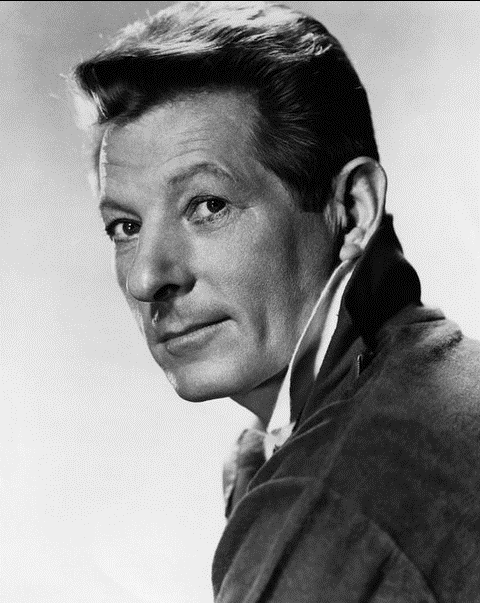
Danny Kaye was a multifaceted American entertainer known for his acting, singing, dancing, and comedic talents. Born as David Daniel Kaminsky on 18th January 1911 in Brooklyn, New York, he became one of Hollywood’s most beloved stars in the 1940s and 1950s.
Kaye’s parents were Ukrainian Jewish immigrants (his father was a tailor). Danny dropped out of high school and worked a variety of jobs before finding his path in entertainment. His early career included performing in vaudeville and nightclubs, where he honed his skills in comedy, singing, and acting.
Quick Overview
- Kaye made his Broadway debut in 1939 in The Straw Hat Revue, but it was his performance in the 1941 musical Lady in the Dark that made him a star.
- He transitioned to films in the 1940s, with his first major movie role in Up in Arms (1944). This marked the beginning of a successful film career that included hits such as The Secret Life of Walter Mitty (1947), The Inspector General (1949), Hans Christian Andersen (1952), and White Christmas (1954). More about his film career later.
- Kaye was known for his rapid-fire delivery of dialogue, his ability to mimic accents, and his physical comedy. He often performed songs in his movies, showcasing his vocal talent.
- Beyond film, Kaye had a successful television career, most notably with The Danny Kaye Show, which aired from 1963 to 1967 and won several Emmy Awards.
- He was also a talented conductor, often conducting orchestras in symphony halls across the country as part of his comedic performances.
Kaye was the first ambassador-at-large of UNICEF in 1954, dedicating a significant part of his life to humanitarian work. He received the French Legion of Honor for his efforts in 1986.

Copyright Information: Danny Kaye. Studio publicity portrait. Copyright details – see Page URL.
Attribution: Wikiwatcher1 at en.wikipedia, Public domain, via Wikimedia Commons
Page URL: https://commons.wikimedia.org/wiki/File:Kaye,_Danny.jpg
Early Life:
Kaye’s early life in New York was marked by the typical struggles of immigrant families. He dropped out of high school to pursue a career in entertainment, starting with small gigs in the Catskills’ Borscht Belt[2], which eventually led to vaudeville and Broadway.
Personal Life
He married Sylvia Fine, a songwriter and pianist who was instrumental in his career, helping to craft many of the unique songs he performed. They were married for life, except for a separation in 1947 and 1948, when Kaye was involved with Eve Arden.[3]

Sylvia and Danny Kaye, 1945
Citation: Danny Kaye. (2024, January 16). In Wikipedia. https://en.wikipedia.org/wiki/Danny_Kaye
Page URL: https://commons.wikimedia.org/wiki/File:Sylvia_and_Danny_Kaye_1945.jpg
Dena Kaye
Dena Kaye, Danny Kaye’s daughter, is not as widely known as her father but has made her mark in her own right, primarily through journalism and philanthropy. Born to Danny Kaye and Sylvia Fine, Dena has worked to preserve and promote her father’s legacy while also pursuing her interests and career.
Dena has pursued a varied career, primarily focusing on journalism and philanthropy. As a journalist, she has contributed to several prestigious publications, covering topics ranging from travel to interviews with prominent personalities. Her work has appeared in outlets like The New York Times, where her writing often showcased her insightful perspectives on diverse subjects, reflecting her broad interests and expertise.
Beyond her professional endeavours, Dena has been involved in various charitable activities, often focusing on areas that were important to her father, such as music, children’s welfare, and the culinary arts. There isn’t a wealth of other public information available about Dena Kaye’s personal life or career details, as she has maintained a relatively low profile compared to her famous father.
Siblings and Their Careers
Danny Kaye had two older brothers, Mac and Larry Kaminsky. While Danny pursued a career in entertainment, there is limited or no public information about his siblings’ careers, suggesting they lived relatively private lives away from the spotlight.
Religion
Kaye was Jewish, born into a family of Ukrainian Ashkenazi Jewish immigrants. While not overtly religious in his public persona, his cultural heritage often influenced his work and philanthropy. However, detailed accounts of his personal religious practices are not widely documented.
Death
In 1983, Kaye had quadruple bypass heart surgery and contracted hepatitis C from a blood transfusion.[4] He died unexpectedly, at Cedars-Sinai Medical Center in the early morning hours of 3rd March 1987, aged 76, from complications of heart failure, internal bleeding, and hepatitis C.[5]
Danny Kaye’s Work as UNICEF Ambassador-at-Large
Danny Kaye’s work as a UNICEF ambassador was groundbreaking and set a precedent for celebrity involvement in global humanitarian efforts. His journey with UNICEF began in 1954, and over the next 33 years, he dedicated himself to advocating for children’s welfare worldwide. One of his first major contributions was the documentary Assignment: Children, which documented his tour of UNICEF projects across Hong Kong, China, India, Japan, Korea, Myanmar, and Thailand. The film reached an estimated 100 million viewers, significantly raising awareness for UNICEF’s mission.
Kaye’s commitment to UNICEF’s work involved more than just advocacy; he actively participated in field missions, engaging with children and communities to understand their needs and challenges firsthand. His ability to communicate with children, transcending language barriers with humour and empathy, was a hallmark of his approach. Kaye’s efforts helped make UNICEF a household name, leveraging his fame to educate the public about the organization’s lifesaving work through media interviews, public service announcements, personal appearances, and extensive travel.
One of Kaye’s notable achievements was his involvement in the Trick-or-Treat for UNICEF campaign, where he used his passion for aviation to promote the cause. He set a Guinness World Record as the World’s Fastest-Flying Entertainer by flying his own plane to 65 US and Canadian cities in just five days to enlist children as volunteers for the campaign.
Kaye’s legacy as a humanitarian is celebrated for the genuine passion and tireless effort he devoted to improving the lives of children around the world. His work provided not only immediate assistance to those in need but also inspired future generations of celebrities and public figures to use their platforms for philanthropy. His impact was such that, upon his passing, he was eulogized by figures ranging from presidents to the children he aimed to help, reflecting the wide-reaching influence of his dedication to UNICEF’s mission.[6]

Quote Credit and Acnowledgement: UNICEF, at: https://www.unicef.org/goodwill-ambassadors/danny-kaye
Range of Talents
Kaye’s versatility extended beyond acting and singing to include talents in dancing, mimicry, and instrumental performance. His ability to learn and perform complex tongue twisters and his mastery of multiple accents and languages became a hallmark of his performances.
Polymathy
A polymath[7] is an individual with a wide-ranging knowledge, learning and skills across multiple areas. The term ‘polymath’ is sometimes used interchangeably with ‘Renaissance man,’ referring to a person whose expertise spans a significant number of different subject areas. Historically, notable polymaths include Leonardo da Vinci, who was skilled in art, science, and invention, and Benjamin Franklin, known for his contributions to politics, science, and literature, among many others.
Danny Kaye was a man of so many talents, with a wide range of interests and skills, suggesting that he should be considered a polymath.
International Appeal
Danny Kaye’s appeal was not limited to the United States. He was a global star, performing in concerts and shows around the world. His charisma and humour transcended language barriers, making him beloved by international audiences.
Contribution to Music and Recording
Kaye recorded numerous albums and singles throughout his career, many of which included songs from his films as well as children’s storytelling records. His recordings continue to be cherished by fans of all ages.
Celebrity Friends and Encounters: The Star-Studded World of Danny Kaye
Danny Kaye, a luminary in the world of entertainment, was not only famous for his unparalleled talent on stage and screen but also for his remarkable relationships with fellow celebrities and influential figures. His magnetic personality and genuine warmth attracted a constellation of stars, leaving behind a trove of delightful anecdotes and heartwarming stories that shed light on the man behind the laughter, as can be seen from the selection below.
A Royal Performance and Friendship
Kaye’s charm and wit transcended the boundaries of the entertainment world, captivating none other than Queen Elizabeth II. During a royal command performance, Kaye, ever the entertainer, reportedly had the Queen in stitches, showcasing his ability to connect with audiences of all calibres. This event was a testament to Kaye’s universal appeal and his knack for bringing joy to even the most auguste audiences.
The Bonds of Comedy: Kaye and the Greats
The world of comedy in the mid-20th century was a tight-knit community, and Kaye counted among his friends the likes of Groucho Marx and Lucille Ball. With Marx, Kaye shared a love for sharp wit and linguistic playfulness, often engaging in banter that delighted those lucky enough to witness their exchanges. Lucille Ball, a comedic genius in her own right, found a kindred spirit in Kaye. Their collaborations on-screen were few but memorable, highlighting a mutual respect and a shared commitment to their craft.
Humanitarian Encounters: Audrey Hepburn and UNICEF
Kaye’s role as UNICEF’s ambassador-at-large brought him into the orbit of Audrey Hepburn, another staunch supporter of the organization. Their shared passion for humanitarian work fueled a deep mutual respect, with both stars using their fame to shine a light on the needs of children around the world. Their efforts helped raise awareness and funds, proving that their talents extended far beyond the stage and screen.
A Laugh Among Legends: Kaye and Sinatra
Frank Sinatra, the iconic crooner and a giant of the entertainment industry, was another of Kaye’s notable acquaintances. Although they came from different musical traditions, Sinatra and Kaye shared a mutual admiration. Stories of their encounters, filled with laughter and music, underscore the camaraderie that existed among entertainers of the era, bound together by a shared love for performance.
Musical Camaraderie: Kaye and Bernstein
Leonard Bernstein, the renowned conductor and composer, found a playful counterpart in Kaye. Together, they performed in concerts that blended Kaye’s comedic talent with Bernstein’s musical genius, particularly in performances for children. Kaye’s ability to demystify classical music for young audiences, with Bernstein by his side, was a gift to the world of music education.
Influence on Later Performers
Danny Kaye influenced many performers who came after him, particularly those who combined music, dance, and comedy in their acts.
One notable entertainer who was influenced by Kaye’s style was Dick Van Dyke, who has spoken about Kaye’s influence on his own performance style, especially in terms of physical comedy and musicality. Van Dyke’s roles in musical films and television, where he often incorporated a blend of slapstick, dance, and song, show a clear lineage from Kaye’s multifaceted performances.
Apart from Dick Van Dyke, other entertainers were influenced by Danny Kaye’s versatile talents. To name a few:
- Sid Caesar – Known for his work on Your Show of Shows, Caesar was a contemporary of Kaye and was influenced by the same comedic era, often incorporating similar humour and musicality into his work.
- Robin Williams – Williams’s rapid-fire comedy and ability to switch between characters were reminiscent of Kaye’s style. Though Williams developed his unique style, the energy and improvisational skill that Kaye brought to the screen can be seen as a forerunner to Williams’s performances.
- Jim Carrey – Carrey’s physical comedy and facial expressions bear a similarity to the slapstick and flexibility that Kaye exhibited in his films.
- Steve Martin – An actor and comedian known for his stand-up comedy as well as acting, Martin’s witty and sometimes absurdist humour is in line with the comedic tradition that Kaye helped to shape.
These performers and others have absorbed aspects of Kaye’s comedy, timing, and emotive expressions, incorporating them into their own unique performances. Danny Kaye’s legacy in the arts is thus both direct and diffuse, influencing many individuals across multiple generations of entertainers.
Additionally, Kaye’s humanitarian work, especially with UNICEF, set a precedent for celebrities engaging in philanthropy, influencing the way public figures approach their platforms and the causes they support. His legacy in this area continues to inspire entertainers to use their influence for charitable work.
These anecdotes serve as a window into Danny Kaye’s life, revealing the depth of his connections and the breadth of his influence. His friendships with celebrities and notable figures highlight a man who was beloved not just by the public but also by his peers. Through laughter, music, and shared causes, Kaye left an indelible mark on the hearts of those he encountered, cementing his legacy as a cherished figure in entertainment and beyond.
Work in Theatre
In addition to his Broadway performances, Kaye starred in a memorable production of Two by Two in 1970, playing Noah. His role required him to perform on crutches after injuring his leg, yet he turned the mishap into a part of his character, demonstrating his ability to adapt and entertain under any circumstances.
Public Perception and Critical Reception: The Evolving Legacy of Danny Kaye
At the Pinnacle of Fame
At the peak of his career, Danny Kaye was celebrated as one of Hollywood’s most versatile talents. His unique blend of comedy, music, and dance, coupled with an innate ability to connect with audiences, made him a beloved figure across the globe. Critics lauded him for his performances in films like The Secret Life of Walter Mitty and Hans Christian Andersen, praising his comedic timing, musical ability, and on-screen charisma. The public adored Kaye for the joy and laughter he brought into their lives, making him a household name.
Kaye’s television and stage performances further cemented his reputation as a dynamic entertainer. The Danny Kaye Show on television showcased his wide-ranging talents and won him accolades, including Emmy Awards, underscoring his appeal across different mediums. His humanitarian work added a layer of admiration and respect to his public image, highlighting his compassion and dedication to making a difference.
A Legacy Reassessed
Over time, Danny Kaye’s legacy has been reassessed, with modern audiences and critics recognising not only his contributions to entertainment but also the breadth of his talents and the depth of his impact on the industry. While some of his films and performances have aged better than others, his pioneering work in incorporating physical comedy, linguistic dexterity, and musical performances into his act continues to be celebrated.
Kaye’s influence on subsequent generations of comedians and entertainers has been noted, with many citing his innovative approach to comedy and performance as a source of inspiration. His humanitarian efforts, particularly with UNICEF, have also gained renewed appreciation, setting a precedent for celebrity involvement in global causes. However, as with many figures from the golden age of Hollywood, certain aspects of Kaye’s work and persona have been critiqued through a contemporary lens. Discussions around the portrayal of different cultures in his films and performances, for instance, reflect changing societal attitudes towards representation and sensitivity.
Enduring Influence
Despite these reassessments, Danny Kaye remains an emblematic figure whose contributions to entertainment and philanthropy have left an indelible mark. His ability to evoke laughter, joy, and empathy stands as a testament to his multifaceted talent and his profound understanding of the human spirit. As we continue to enjoy his work and reflect on his legacy, Kaye’s place in the pantheon of great entertainers is assured, celebrated not only for the laughter he brought into the world but also for the compassion he demonstrated offstage.
Philanthropy, Awards and Honours
Apart from his work with UNICEF, Kaye was involved in other charitable endeavours, often using his fame to raise awareness and funds for causes he believed in. His commitment to philanthropy is a significant part of his legacy.
Throughout his career, Kaye received numerous awards and honours, including the Jean Hersholt Humanitarian Award from the Academy of Motion Picture Arts and Sciences in 1982, recognising his humanitarian work.
Danny Kaye – The Pilot
Danny Kaye, widely celebrated for his multifaceted career as an actor, singer, dancer, and comedian, also had a lesser-known but significant passion – aviation. He was an accomplished pilot, an aspect of his life that showcased his deep interest in aviation and his pursuit of mastery beyond the entertainment industry.

Theatrical poster for the American release of the 1956 film The Court Jester
Attribution: English: “Copyright 1955 Paramount Pictures Corporation”, Public domain, via Wikimedia Commons
Page URL: https://commons.wikimedia.org/wiki/File:The_Court_Jester_(1955_poster).jpg
Kaye obtained his pilot’s licence in the mid-1950s and was known for flying his own aircraft. He owned several planes over the years, including a twin-engine Piper Aztec. His love for flying was not just a hobby but also became an integral part of his life and work. He often flew himself to performances and events across the country, combining his professional commitments with his passion for aviation.
Serving as a goodwill ambassador for UNICEF (United Nations Children’s Fund), his ability to pilot his plane enabled him to reach remote areas around the world as part of his humanitarian efforts. His involvement with UNICEF and his use of aviation to support its mission highlighted how he leveraged his personal interests for broader, benevolent purposes.
CBE
Kaye’s contribution to the aviation community was recognised when he was awarded the title of Honorary Commander of the Order of the British Empire (CBE) in 1983 for his humanitarian work, including his efforts that involved aviation. His passion for flying, combined with his achievements in entertainment and philanthropy, illustrates a remarkable life lived with enthusiasm and dedication to multiple pursuits.
Legacy
Danny Kaye left an indelible mark on the entertainment industry, not just as a performer but as a humanitarian. Museums and collections around the world, including the Library of Congress, hold archives of his work and contributions to the arts and society.
His legacy is also preserved by the work of the Danny Kaye and Sylvia Fine Kaye Foundation, which supports the arts, education, and children’s health.
Danny Kaye’s multifaceted career and his dedication to improving the world through entertainment and philanthropy have made him a timeless icon whose work continues to inspire and entertain generations.
The Kaplan Character
The ‘Kaplan’ character refers to a comedic persona that Kaye developed, which played on malapropisms and linguistic confusion for humour. This character appeared in various sketches and performances, showcasing Kaye’s linguistic agility and comic timing, often resulting in humorous misunderstandings and situations.
The name ‘Kaplan’ for Danny Kaye’s comedic character possibly stems from a tradition in comedy and theatre of choosing names that sound familiar or stereotypical to the audience, making the character immediately relatable or recognisable. Kaplan is a common Jewish surname, and Kaye, born to Ukrainian Jewish immigrants, often drew upon his cultural background for his comedic material.
In his portrayal of Kaplan, Kaye would often misinterpret words, jumble sentences, or invent nonsensical phrases, all while maintaining a straight-faced sincerity that made the confusion even more amusing. This character likely drew on Kaye’s mastery of languages and accents, allowing him to navigate through various linguistic twists and turns with ease.
The Kaplan character is a testament to Danny Kaye’s genius in creating and embodying characters that were not only entertaining but also highlighted his unique talents in voice modulation, timing, and linguistic play. This aspect of his performance art contributed significantly to his popularity and enduring legacy as a versatile entertainer.
Musical Career
Kaye’s musical career was intertwined with his work in film and theatre. He was known for his impeccable timing, vocal range, and ability to perform complex, fast-paced songs. Some of his most memorable musical performances were in films like Hans Christian Andersen and The Court Jester. Kaye also recorded several albums featuring songs from his movies as well as children’s storytelling and songs.
Cooking Skills
Danny Kaye was an accomplished cook known for his culinary skills almost as much as his entertainment career. He had a particular interest in Chinese cuisine and often cooked for friends and guests. His cooking was not just a hobby; he was respected in culinary circles, demonstrating his skills on television shows and in interviews.
Rumours
Rumours of an affair between Danny Kaye and British actor Laurence Olivier have circulated for years, fuelled by their close friendship and the memoirs of people who were part of their social circle. However, these rumours have never been definitively confirmed. Both Kaye and Olivier were married to women, and their personal lives remained private. This aspect of Kaye’s life is part of the speculation and intrigue that surrounds many historical figures in the entertainment industry.
Film Career
Danny Kaye starred in numerous films throughout his career, showcasing his versatile talents in comedy, drama, and musicals. Here’s a list of some of his most notable films, the roles he played, and their release dates:
- Up in Arms (1944) as Danny Weems
- Wonder Man (1945) as Edwin Dingle/Buzzy Bellew
- The Kid from Brooklyn (1946) as Burleigh Sullivan
- The Secret Life of Walter Mitty (1947) as Walter Mitty
- The Inspector General (1949) as Georgi
- On the Riviera (1951) as Jack Martin/Henri Duran
- Hans Christian Andersen (1952) as Hans Christian Andersen
- Knock on Wood (1954) as Jerry Morgan/Papa Morgan
- White Christmas (1954) as Phil Davis
- The Court Jester (1956) as Hubert Hawkins
- Merry Andrew (1958) as Andrew Larabee
- Me and the Colonel (1958) as S.L. Jacobowsky
- The Five Pennies (1959) as Red Nichols
- On the Double (1961) as Pvt. Ernie Williams/General Sir Lawrence MacKenzie-Smith
- The Man from the Diners’ Club (1963) as Ernest Klenk
These films highlight Kaye’s range from slapstick comedy to more dramatic roles, often incorporating his skills in singing and dancing. He worked with many of the era’s top directors and actors, leaving a lasting impact on the film industry.

White Christmas trailer
Attribution: Trailer screenshot, Public domain, via Wikimedia Commons
Page URL: https://commons.wikimedia.org/wiki/File:Bing_Crosby_and_Danny_Kaye_in_White_Christmas_trailer.jpg
A Quotation by Danny Kay as Hubert Hawkins (The Court Jester)[8]
Hubert Hawkins: I am prepared to make a statement: When I was a lad, I was gloomy, as I was from the day I was born. When other babes giggled and gurgled and wiggled, I proudly was loudly forlorn. My friends and my family looked at me clammily, thought there was something amiss: when others found various antics hilarious, all I could manage was this [looks at his hands]
Hawkins: or this [gives a small smile]
Hawkins: or this [gives a short giggle]
Hawkins: or this [gives a weird giggle/whimper]
Hawkins: My father, he shouted, “he needs to be clouted, his teeth on a wreath I’ll hand him!” My mother, she cried as she rushed to my side, “You’re a brute, and you don’t understand him!” So they sent for a witch with a terrible twitch to ask how my future impressed her.
She took one look at me… and cried, “He, he, he, he, he, he, he, he, he, *HE*! What else could he be but a jester?” A jester? A jester? A funny idea, a jester. No butcher, no baker, no candlestick maker, and me with the look of a fine undertaker impressed her as a jester? But where was I to learn any comical turn? It was not in a book on a shelf. No teacher to take me, to mould me and make me a merryman, fool or an elf. But I’m proud to recall that in no time at all, with no other recourses but my own resources, with firm application and determination… I made a fool of myself.
Hawkins: I started to travel to try to unravel my mind and to find a new chance. When I got to Spain it was suddenly plain that the field that appealed was the dance. The Spanish were clannish but I wouldn’t vanish and learned every step they had planned. The first step of all wasn’t hard to recall ’cause the first step of all is to stand. And stand. And stand. And stand…
Conclusion: The Timeless Legacy of Danny Kaye
As we reflect on the remarkable journey of Danny Kaye from a bright-eyed boy in Brooklyn to an international superstar and humanitarian, it’s clear that his legacy is as vibrant today as it was during his lifetime. Kaye was more than just a master entertainer; he was a visionary who used his platform to bridge cultures, advocate for children, and spread joy and laughter around the globe.
His films continue to enchant audiences with their blend of whimsy, humour, and heart, showcasing Kaye’s unparalleled artistry and compassion. Yet, it was his work with UNICEF that perhaps most vividly captured the essence of his spirit—a relentless dedication to making the world a better place for children everywhere.
Kaye’s influence extends far beyond the silver screen and the footlights of Broadway. It lives on in the countless performers he inspired, from Dick Van Dyke to Robin Williams, whose careers are testaments to Kaye’s enduring impact on the world of entertainment. His approach to comedy, his humanitarian work, and his boundless energy continue to inspire new generations to follow in his footsteps, blending talent with purpose.
When The Court Jester first showed at the Orion cinema in my home village, I loved the film. When I see the film nowadays, I still chuckle when the scene crops up with Herbert Hawkins (Danny Kay) being given advice:
The pellet with the poison’s in the vessel with the pestle…
In an interview with Kaye’s daughter Dena, she recalled that whenever her father was approached by a fan, Kaye was often asked to recite the dialogue of the famously difficult tongue twister.” Apparently, Kaye never refused and recited it verbatim.[9]
In celebrating Danny Kaye’s life, we’re reminded of the power of entertainment, which is not only to entertain but to educate, inspire, and mobilise. Kaye showed us that laughter could be a force for good, that art could transcend boundaries, and that one person’s passion can indeed make a difference in the world.
As I look back on the life of this extraordinary man, I’m reminded of his own words, which encapsulate the ethos by which he lived: Life is a great big canvas, and you should throw all the paint on it you can. Danny Kaye did just that, colouring the world with his talent, his kindness, and his humanity.
Danny Kaye’s legacy is that of a renaissance man in the entertainment industry, remembered for his extraordinary range of talents and his contributions to humanitarian causes. He left behind a body of work that continues to entertain and inspire, and his efforts for UNICEF set a precedent for celebrity involvement in global humanitarian efforts.

Singer Nancy Wilson appearing on Kaye’s show in 1965
Attribution: News service, Public domain, via Wikimedia Commons
Pae URL: https://commons.wikimedia.org/wiki/File:Danny_Kaye-Nancy_Wilson_-_1965.JPG
Relevant Reading
Books:
- A Summer World: The Attempt to Build a Jewish Eden in the Catskills From the Days of the Ghetto to the Rise and Decline of the Borscht Belt, by Stefan Kanfer (1992), published by Farrar, Straus & Giroux, available from https://www.amazon.co.uk/Summer-World-Attempt-Jewish-Catskills/dp/0374271801
- Danny Kaye: King of Jesters, by David Koenig (2012), published by Bonaventure Press, available from https://www.amazon.co.uk/Danny-Kaye-Jesters-David-Koenig/dp/1937878015/
- Danny Kaye’s Stories from Many Lands, by Danny Kaye (1960), published by Random House, available from https://www.amazon.co.uk/Danny-Kayes-Stories-Many-Lands/dp/B000EISCDU/
- Nobody’s Fool: The Lives of Danny Kaye, by Martin Gottfried (1994), published by Simon & Schuster, available from https://www.amazon.co.uk/Nobodys-Fool-Lives-Danny-Kaye/dp/0671864947
- Secret Life of Danny Kaye, by Michael Freedland (1985), published by W.H. Allen / Virgin Books, available from https://www.amazon.co.uk/Secret-Life-Danny-Michael-Freedland/dp/0491039808/
CAUTION: This paper is compiled from the sources stated but has not been externally reviewed. Parts of this paper include information provided via artificial intelligence which, although checked by the author, is not always accurate or reliable. Neither we nor any third parties provide any warranty or guarantee as to the accuracy, timeliness, performance, completeness or suitability of the information and materials covered in this paper for any particular purpose. Such information and materials may contain inaccuracies or errors and we expressly exclude liability for any such inaccuracies or errors to the fullest extent permitted by law. Your use of any information or materials on this website is entirely at your own risk, for which we shall not be liable. It shall be your own responsibility to ensure that any products, services or information available through this paper meet your specific requirements and you should neither take action nor exercise inaction without taking appropriate professional advice. The hyperlinks were current at the date of publication.
End Notes and Explanations
- Source: Compiled from my research and using information at the sources stated throughout the text, together with information provided by machine-generated artificial intelligence at: bing.com [chat] and https://chat.openai.com ↑
- Explanation: Catskills’ Borscht Belt or Yiddish Alps is a colloquial term for the mostly defunct summer resorts of the Catskill Mountains in parts of Sullivan, Orange, and Ulster counties in the US state of New York, straddling both Upstate New York and the northern edges of the New York metropolitan area. A source interviewed by Time magazine stated that visits to the area by Jewish families were already underway “as early as the 1890s … Tannersville … was ‘a great resort of our Israelite breathren [sic]’…from the 1920s on [there were] hundreds of hotels”. A 2019 review of the history is more specific: “in its heyday, as many as 500 resorts catered to guests of various incomes”.These resorts, and also the Borscht Belt bungalow colonies, were a popular vacation spot for New York City Jews from the 1920s through the 1960s. By the late 1950s, many began closing, with most gone by the 1970s, but some major resorts continued to operate, a few into the 1990s. Grossinger’s Catskill Resort Hotel closed in 1986 and the Concord Resort Hotel struggled to stay open until 1998, and was subsequently demolished for a possible casino site. Source: https://en.wikipedia.org/wiki/Borscht_Belt
The name for the resorts comes from borscht, a soup of Ukrainian origin, made with beetroot as the main ingredient giving it a deep reddish-purple colour, that is popular in many Central and Eastern European countries and brought by Ashkenazi Jewish and Slavic immigrants to the United States. The name is a play on existing colloquial names for other American regions (such as the Bible Belt and Rust Belt). The name the Yiddish Alps was used (possibly coined) by Larry King and is satirical: a classic example of borscht belt humour. Source: https://en.wikipedia.org/wiki/Borscht_Belt ↑
- Source: A Song Is Born”. Turner Classic Movies. Retrieved 8 September 2012. Cited at: https://en.m.wikipedia.org/wiki/Danny_Kaye#cite_note-TCM_Review-93 ↑
- Source: “Danny Kaye, comedian who loved children, dead at 74”. Wilmington Morning Star. Associated Press. 4 March 1987, cited at: https://en.m.wikipedia.org/wiki/Danny_Kaye#cite_note-Star-20 (note that other reports say he died at age 76). ↑
- Source: Martin Gottfried (1994). Nobody’s Fool: The Lives of Danny Kaye. New York: Simon & Schuster. ISBN 978-0-6718-6494-1. Cited at: https://en.m.wikipedia.org/wiki/Danny_Kaye#cite_note-fool-102 ↑
- Further Information: For more details on Danny Kaye’s impactful work with UNICEF, visit UNICEF’s official site and the UNICEF USA page dedicated to his legacy. See: https://www.unicef.org/goodwill-ambassadors/danny-kaye and https://www.unicefusa.org/about-unicef-usa/partnerships/supporters/celebrities/celebrities/danny-kaye ↑
- Definition: A polymath is an individual whose knowledge spans a substantial number of subjects, known to draw on complex bodies of knowledge to solve specific problems. In Western Europe, the first work to use the term polymathy in its title was published in 1603 by Johann von Wowern, a Hamburg philosopher. Source: https://en.wikipedia.org/wiki/Polymath ↑
- Source and Acknowledgement: https://en.wikiquote.org/wiki/The_Court_Jester ↑
- Source and Acknowledgement: IMDB Bio at https://www.imdb.com/name/nm0001414/bio/ ↑


.jpg)

