
Introduction[1]
This paper aims to explore the first-century Vesuvius eruption that brought devastation on a massive scale to the people living in Herculaneum and Pompeii. Mount Vesuvius is located 12 kilometres (7.5 miles) southeast of Naples, Italy, and is one of the few active volcanoes on Europe’s mainland. It is part of the Campanian Volcanic Arc, which includes the Campi Flegrei caldera/geothermal field to the west of Naples near Agnano and Mount Etna in Sicily.[2]
In the Appendix, I have described features of volcanoes which I hope will be useful for readers.

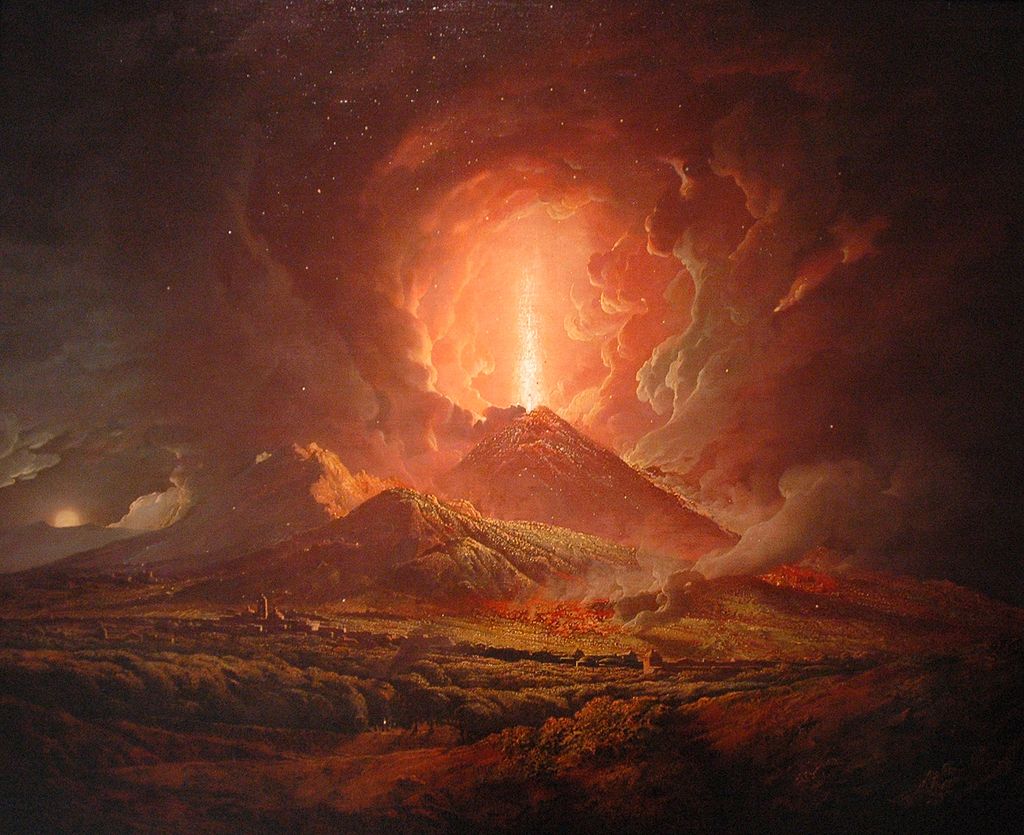
Title: An eruption of Vesuvius seen from Portici, by Joseph Wright (ca. 1774–6)
Attribution: Joseph Wright of Derby, Public domain, via Wikimedia Commons
Page URL: https://commons.wikimedia.org/wiki/File:Joseph_Wright_of_Derby_-_Vesuvius_from_Portici.jpg
Ancient Scrolls
Later, I will explain the Herculaneum Scrolls, examining the historical context of their creation and the innovative technological advancements that have facilitated their deciphering. I shall delve into the scrolls’ content, highlighting their contributions to our understanding of ancient Greek and Roman philosophical thought.
I will also present a comparative analysis to position the Herculaneum Scrolls in relation to other significant ancient manuscript discoveries, such as the Dead Sea Scrolls and the Nag Hammadi Library. This comparison aims to highlight the unique role and importance of the Herculaneum Scrolls within the wider array of ancient texts. Through this exploration, I aim to demonstrate the significant impact the Herculaneum Scrolls have on our comprehension of the ancient world, connecting past and present through these remarkable artefacts that have withstood the test of time.
Daily Life of the Romans in the cities of Pompeii and Herculaneum
Life for the Romans in the cities of Pompeii and Herculaneum before the eruption of Vesuvius in AD 79 was prosperous and sophisticated, reflecting the wealth and cultural depth of the Roman Empire during this period. Herculaneum was a small ancient city with an estimated population of 4,000 to 5,000 people before it was obliterated by the eruption. Herculaneum, along with Pompeii, Torre Annunziata, and Stabiae, faced annihilation under a thick blanket of volcanic ash and pumice, followed by deadly pyroclastic flows.
These cities were bustling centres of trade and commerce, with a high standard of living, advanced infrastructure, and vibrant cultural life, as a closer look at various aspects of their daily life shows:
Economy and Social Structure
- Economy: Both cities were important for trade, agriculture, and fishing. The fertile volcanic soil was excellent for vineyards and farms, producing abundant wine and olive oil, which were significant for trade.
- Social Structure: Society was hierarchically structured with a clear distinction between the wealthy elite, the free middle classes (including artisans and merchants), and slaves. Wealth and status played crucial roles in social interactions and opportunities.

Image: Pompeii and Herculaneum, as well as other cities affected by the eruption of Mount Vesuvius. The black cloud represents the general distribution of ash, pumice, and cinders. Modern coast lines are shown.
Citation: Mount Vesuvius. (2024, March 17). In Wikipedia. https://en.wikipedia.org/wiki/Mount_Vesuvius
Daily Life
- Housing: The wealthy lived in luxurious villas and domus (large houses) with intricate frescoes, mosaics, gardens, and private baths. The less affluent lived in smaller homes or apartments above shops and workshops.
- Diet: The diet was varied, including bread, fruits, vegetables, meat, and fish, complemented by wine. Dining practices often reflected social status, with elaborate feasts for the elite.
- Public Baths: Bathing was a significant part of Roman culture, serving social and hygienic purposes. Public baths were common meeting places for relaxation and business discussions.
Infrastructure and Public Works
- Roads and Water Systems: Romans were renowned for their engineering prowess, evident in their sophisticated road networks and water systems, including aqueducts and public fountains, ensuring fresh water supply.
- Public Buildings and Spaces: Cities housed impressive public buildings, such as forums (public squares), theatres, temples, and amphitheatres, serving as hubs for political, religious, and entertainment activities.
Culture and Entertainment
- Art and Education: Education was valued, with a focus on literature, rhetoric, and philosophy. Art, including sculpture, painting, and theatre, was an integral part of life, often reflecting religious and mythological themes.
- Sports and Games: The amphitheatre hosted gladiatorial games and animal fights, drawing large crowds. Chariot racing, although more associated with larger cities like Rome, was also popular.
Religion
- Polytheistic Beliefs: Romans worshipped multiple gods and goddesses, and religious rituals played a central role in daily life. Temples dotted the cityscape, serving as places of worship and community gatherings.
Before the catastrophic eruption of Mount Vesuvius, the Roman cities of Pompeii and Herculaneum exemplified the prosperity and cultural achievements of the Roman world. Their subsequent destruction preserved a snapshot of Roman life, providing invaluable insights into the past for archaeologists and historians. The sudden tragedy encapsulated the lives, homes, and daily activities of its inhabitants, offering a poignant reminder of the power of nature over human civilisations.
The Day of the Eruption
Mount Vesuvius erupted over two days on the 24th and 25th of August 79 AD. At around 1 pm on the eruption’s first day, Mount Vesuvius violently ejected volcanic ash and debris high into the sky, reaching between 17 and 21 miles high. Pliny the Younger[3] described the massive cloud as resembling a stone pine tree because it spread out at the top after reaching its maximum height. The wind patterns at the time despatched most of this material southeast towards Pompeii, thereby sparing Herculaneum, which was located to the west of the volcano, from the initial brunt of the eruption. Pompeii suffered badly as buildings collapsed under the weight of the volcanic deposits, whereas Herculaneum experienced only a light dusting of ash that prompted many residents to leave, causing minimal damage initially.
As the eruption continued, the volcano emitted a towering column of volcanic material. Then, in the early hours of the following day, this column collapsed, leading to the first of several pyroclastic surges that raced through Herculaneum at 100 mph. These surges eventually buried the city under approximately 66 feet of debris. Some parts of Herculaneum were preserved almost intact under the layers, while other sections sustained severe damage, with the force of the surges strong enough to displace large statues and lift skeletons off the ground.
The traditional date of the eruption in August has been questioned, with evidence suggesting it occurred no earlier than 17th October 79. This revision is based on several clues, including the attire of the victims, which was more suitable for cooler weather, the presence of autumnal fruits and vegetables, and the timing of wine production processes. Additionally, coins found with the victims date to a period after early September.
Research focusing on the effects of the eruption near Pompeii and Herculaneum indicates that the intense heat from the pyroclastic surges, rather than suffocation by ash, was the primary cause of death for individuals within a 6-mile radius of Vesuvius. Exposure to temperatures of at least 480°F would have been lethal for those in the vicinity, including those seeking shelter indoors.
Attempts to Escape
The eruption produced a massive column of volcanic ash and pumice that was thrust into the stratosphere, raining down on the surrounding area. For Herculaneum, the situation was somewhat different from Pompeii. Herculaneum was hit by pyroclastic surges—fast-moving, extremely hot clouds of volcanic gases, ash, and debris. These surges could move at speeds of up to 700 km/h (approximately 435 mph) and had temperatures of about 500°C (about 932°F). These surges were responsible for the instant and almost total devastation of Herculaneum.
The residents of Herculaneum had more time to react than those in Pompeii, as the initial phases of the eruption were less immediately threatening to Herculaneum, given its position on the other side of the volcano. This might have allowed a significant number of Herculaneum’s inhabitants to evacuate. However, the town was eventually engulfed and buried by pyroclastic flows.
Some records mention that all but 300 residents had escaped. This may be a reference to the discovery of around 300 skeletons in the boat houses (fornici) at Herculaneum’s ancient beachfront. These individuals might have been awaiting rescue or had sought refuge there, only to be overcome by the lethal pyroclastic flows. It’s difficult to ascertain the exact number of people who managed to escape versus those who perished, as the skeletal remains found at Herculaneum represent only a fraction of the town’s estimated population.

Title: Most likely a posthumous painted portrait of Cleopatra VII of Ptolemaic Egypt with red hair and her distinct facial features, wearing a royal diadem and pearl-studded hairpins, from Roman Herculaneum, mid-1st century AD.
Citation: Herculaneum. (2024, February 11). In Wikipedia. https://en.wikipedia.org/wiki/Herculaneum
The devastatingly fast and hot flow of volcanic material that hit Herculaneum led to catastrophic loss of life. The exact number of survivors versus fatalities remains a topic of archaeological and historical investigation. The discoveries at the boat houses poignantly illustrate the tragic fate of those who were unable to escape the fury of Vesuvius.
Rediscovery of Herculaneum
The city of Herculaneum disappeared under the onslaught of the eruption but was accidentally rediscovered in 1709 during well-drilling, although there had been earlier encounters with its remnants through various construction works. Herculaneum was entombed under about 20 metres (66 feet) of ash, preserving it until its gradual rediscovery. Despite continuous excavation efforts, more than three-quarters of the town remains buried. The modern Italian towns of Ercolano (formerly Resina until 1969) and Portici now stand over the ancient site of Herculaneum.
In the early years after its discovery, the site saw a wave of treasure hunters who dug tunnels and removed artefacts. Systematic archaeological excavations started in 1738 and have been conducted intermittently up to the present, revealing only a portion of the ancient city. Nowadays, the emphasis has shifted towards conserving the unearthed parts rather than uncovering new areas.
Herculaneum was an Affluent Community
Despite being smaller than Pompeii, with an estimated population of around 5,000, Herculaneum was a more affluent community. It served as a vacation spot for Rome’s upper class, evident in the high concentration of opulent homes adorned with colourful marble. Significant structures include the Villa of the Papyri and the “boat houses,” where over 300 human skeletons were found.
Herculaneum’s Origins
The city’s origins trace back to mythical and historical layers; it was said to be founded by the Greek hero Heracles or Hercules in Latin, according to Dionysius of Halicarnassus. However, Strabo[4] attributes its foundation to the Oscans[5]. The area saw various rulers, including the Etruscans and Greeks, who called the town Heraklion and used it as a trading post due to its proximity to the Gulf of Naples. By the 4th century BC, the Samnites took over. In the 2nd century BC, city walls were constructed, which lost their defensive purpose after Herculaneum’s defeat in the Social War against Rome and were subsequently integrated into the city’s buildings. Herculaneum became a Roman municipium in 89 BC.
Not the First, Nor the Last
Herculaneum, much like its more famous neighbour Pompeii, fell victim to the catastrophic eruption of Mount Vesuvius. However, its path to destruction was uniquely marred by a preceding disaster. Only a few years earlier, a powerful earthquake rocked the region, causing extensive damage to both public structures and private homes within the city. By the time of the eruption that devasted Herculaneum and Pompeii, the people of Herculaneum had not fully recovered or repaired the earthquake-induced damages. This earlier calamity likely exacerbated the destruction and loss of life caused by the volcanic eruption.
Initially, the recovery of relatively few human remains led scholars to believe that most of Herculaneum’s inhabitants had managed to flee towards Naples, escaping the deadly shower of volcanic debris that was primarily directed away from them – contrasted with the situation in Pompeii, where many victims were entombed in ash and pumice.
However, this perception changed dramatically in the 1980s. New excavations on what was once the shoreline of the Bay of Naples, but which has since become inland due to geological changes unearthed over 120 skeletons. This grim discovery indicated that a significant number of the city’s residents had attempted to flee but were overtaken by the disaster. They likely fell victim to nuées ardentes or pyroclastic flows—fast-moving, extremely hot surges of volcanic gases, ash, and debris. These flows can reach temperatures of up to 1,000 degrees Celsius (1,832 degrees Fahrenheit) and speeds of up to 700 kilometres per hour (435 miles per hour), obliterating virtually everything in their path.
This evidence has shed new light on the final hours of Herculaneum, revealing a more complex and tragic scenario of the eruption’s impact. Unlike the slower accumulation of ash and pumice that entombed Pompeii, Herculaneum was hit by the more sudden and deadly force of pyroclastic flows, which explains the preservation of organic material and the fatal circumstances of those attempting to escape.
A Brave Military Officer
The recent analysis of a skeleton, referred to as skeleton number 26, found in 1982 on the beach of Herculaneum near a boat, has provided fascinating insights into the events surrounding the eruption of Mount Vesuvius in 79 AD. This skeleton, which is displayed in the boat pavilion, has been identified as that of a military officer. This conclusion is based on the presence of an elaborate dagger and belt found with the remains – items typically associated with individuals of military rank in ancient Rome. The significance of this discovery lies not just in the identification of the individual’s social or military status but also in the implications it has for our understanding of the response to the disaster.
The presence of a military officer in such a context suggests that there might have been organised rescue efforts underway to evacuate the population or to assist those affected by the eruption. It implies that despite the catastrophic conditions, there were attempts by individuals, possibly under official orders, to help the victims.
Bizarre Preservation
The Ancient Scrolls of Herculaneum are a significant collection of texts that were preserved by the catastrophic eruption of Mount Vesuvius. This event paradoxically preserved one of the most intriguing libraries from antiquity, known as the Herculaneum papyri. Without enough oxygen to burn, the scrolls were baked into charcoal—a blessing because it allowed them to join the small trove of papyri that has managed to endure since antiquity, all of it protected from humidity in some way or another, whether inhumed in Egyptian sands or charred by fire. But it also means they cannot be unrolled without turning to dust.[6]
Discovered in 1752 within the grand seaside Villa of the Papyri in Herculaneum, these carbonised scrolls have opened a unique and invaluable window into the intellectual life of the ancient world. The Villa was thought to have belonged to Julius Caesar’s father-in-law, Lucius Calpurnius Piso Caesoninus and contained a library filled with papyrus scrolls, which were carbonised by the intense heat of the volcanic eruption and preserved under layers of ash and pumice.
There is more to this story than carbonised Scrolls, though, since the Vesuvius eruption consumed more than just papyrus records – bodies, furniture, jewellery, statues, houses, animals, and a unique snapshot of Roman life in the first decade of the millennium. But first, an explanation of Scrolls and Codices:
Scrolls [7]
A scroll (from the Old French escroe or escroue) is a roll of papyrus, parchment, or paper containing writing.[8] The history of scrolls dates back to ancient Egypt. In most ancient literate cultures, scrolls were the earliest format for longer documents written in ink or paint on a flexible background, preceding bound books[9], rigid media such as clay tablets were also used but had many disadvantages in comparison. For most purposes, scrolls have long been superseded by the codex book format, but they are still produced for some ceremonial or religious purposes, notably for the Jewish Torah scroll for use in synagogues.
Scrolls were the first form of editable record-keeping texts used in Eastern Mediterranean ancient Egyptian civilisations. Several early civilisations used parchment scrolls before the codex, or bound book with pages, was invented by the Romans[10] and popularised by Christianity.[11] Nevertheless, scrolls were more highly regarded than codices until well into Roman times.
Codices [12]
The codex (plural codices) was the historical ancestor of the modern book. Instead of being composed of sheets of paper, it used sheets of vellum, papyrus, or other materials. The term codex is often used for ancient manuscript books with handwritten contents. A codex, much like the modern book, is bound by stacking the pages and securing one set of edges by a variety of methods over the centuries, yet in a form analogous to modern bookbinding.
Groundbreaking Discovery of the Herculaneum Scrolls
The discovery of the Herculaneum Scrolls was groundbreaking for several reasons, particularly in terms of content and its implications for our understanding of ancient philosophy:
- Unparalleled Access to Epicurean Thought: These scrolls offer unprecedented access to the works of Philodemus of Gadara[13], a prominent Epicurean philosopher. Prior to this discovery, much of what was known about Epicurean philosophy came from secondary sources, often from critics of the school. The scrolls provide direct insight into Epicurean thought, presenting it in a more nuanced and comprehensive light. This allows scholars to reassess the contributions of Epicureanism to ethics, epistemology, and natural philosophy, broadening our understanding of ancient philosophical diversity.
- Rediscovery of Lost Works: These scrolls contain works that were previously thought lost to history, including writings by major figures of ancient philosophy not limited to Epicurus[14] and Philodemus. They potentially hold versions of texts or entire works that are not preserved elsewhere. This means that the discovery can fill in significant gaps in the historical record, offering new texts for study and potentially revising our understanding of the philosophical landscape of the Greco-Roman world.
- Insights into Hellenistic Philosophical Culture: The scrolls also shed light on the philosophical culture of the Hellenistic period, particularly the kind of works that were collected, read, and discussed in an affluent Roman household. This contextualises the reception and adaptation of Greek philosophical thought in Roman society, providing a tangible connection to the intellectual life of the time. Understanding the scope and focus of the library in the Villa of the Papyri offers insights into the intellectual priorities and cultural values of its owners and their contemporaries.
- Methodological Advances in Philosophy and Humanities: The methods developed to decipher, read, and interpret the scrolls have led to advances in technology and methodology that benefit not only the study of ancient philosophy but also the humanities more broadly. Techniques such as multispectral imaging[15] and X-ray phase-contrast tomography[16], developed or refined in the process of studying the scrolls, open new doors for the examination of other ancient texts and artefacts. These technological advances enhance our ability to recover and understand ancient texts, potentially leading to the discovery of more philosophical content and further expanding our knowledge of ancient thought.
- Broadening the Canon of Ancient Philosophy: The content of the Herculaneum Scrolls challenges the traditional canon of ancient philosophy, which has been predominantly focused on Platonic, Aristotelian, Stoic, and Sceptic texts. By introducing significant Epicurean material[17], the scrolls invite a re-evaluation of the philosophical canon, suggesting a more inclusive understanding that recognises the diversity and complexity of ancient philosophical discourse.
The discovery of the Herculaneum Scrolls was groundbreaking not only because it brought to light a significant number of previously unknown texts but also because it significantly broadened and deepened our understanding of ancient philosophy. This discovery challenges existing narratives about the philosophical landscape of the ancient world and underscores the importance of preserving and studying ancient texts to gain a fuller understanding of human intellectual history.
Deaths
The exact number of people who died in the eruption of Mount Vesuvius in AD 79 is not known, but various estimates suggest that it could be in the thousands. The cities of Pompeii and Herculaneum, which were the most affected, had a combined population of approximately 20,000 people at the time of the eruption.
In Pompeii, more than 1,000 bodies have been discovered in the archaeological excavations that have taken place since the 18th century. However, large portions of the city have yet to be excavated, and many more victims likely remain buried beneath the volcanic material. The death toll in Pompeii is often estimated to be around 2,000 people, but this is speculative, based on the area’s population and the number of remains found so far.
Herculaneum, which was smaller than Pompeii, also suffered significant casualties, but the exact number is unclear. Excavations in Herculaneum have uncovered hundreds of skeletons, particularly in waterfront chambers where many inhabitants sought refuge from the eruption. These findings suggest that many people did not flee far from their homes or were unable to escape the city. The death toll in Herculaneum is less well-documented than in Pompeii, but it is also believed to be in the hundreds or possibly more.
It’s important to note that Vesuvius’s eruption affected not only Pompeii and Herculaneum but also other nearby settlements, including Oplontis, Stabiae, and more rural villas and farms. Casualties in these areas would add to the overall death toll of the disaster.
The exact number of fatalities remains uncertain due to the incomplete excavation of the affected sites and the possibility that some victims’ remains have decomposed without leaving traceable evidence. Nonetheless, the AD 79 eruption of Vesuvius in AD 79 is one of the deadliest volcanic events in European history, with a significant loss of life and the complete burial of entire communities.
The Significance of Ancient Scrolls: What’s the Big Deal?
The significance of ancient scrolls lies in their ability to provide us with valuable information about the history, language, culture, and beliefs of past civilisations:
- First, ancient scrolls can provide us with insights into the daily life and customs of people in the past. For example, letters, diaries, and legal documents found in ancient scrolls can tell us about people’s relationships, social hierarchies, and legal systems.
- Secondly, ancient scrolls can help us understand the evolution and development of writing systems and literacy. By studying ancient scripts, we can see how writing evolved over time and how different civilisations used writing for different purposes, such as religious texts, historical records, and literature.
- Thirdly, ancient scrolls can provide us with information about the beliefs and practices of different religions and cultures. The sacred texts and religious artefacts found in ancient scrolls can give us insight into the beliefs, practices, and rituals of past civilisations.
- Fourthly, ancient scrolls can reveal the artistic and literary achievements of past civilisations. For example, ancient scrolls have been found that contain poetry, stories, and other forms of literature that offer insight into the artistic sensibilities and literary traditions of different cultures.
- Fifthly, ancient scrolls can shed light on the political and economic systems of past civilisations. For example, royal decrees, tax records, and trade agreements found in ancient scrolls can help us understand the political and economic structures of different societies.
- Sixthly, ancient scrolls can provide evidence of cultural exchange and influence between different civilisations. For example, the discovery of Sanskrit manuscripts in Central Asia has provided evidence of cultural dialogue between Indian and Central Asian cultures.
The significance of ancient scrolls lies in their ability to help us understand the rich and diverse history of human civilisation, providing us with glimpses into the lives, cultures, and beliefs of those who came before us.
Why were Scrolls made and then hidden?
The reasons why the scrolls were written and their current locations depend on the specific collection of scrolls. Ancient scrolls have been discovered around the world, although the Herculaneum Scrolls and the Dead Sea Scrolls are two of the most famous and significant collections.
The Herculaneum Scrolls found in the Villa of the Papyri in Herculaneum, Italy, were likely written as part of a private library and may have been used for study and reference. They are primarily philosophical works, including texts by Epicurus, Philodemus[18], and other ancient Greek philosophers. The scrolls are currently housed at the National Library of Naples in Italy.
What prompted the ancients to make scrolls and then hide them, and what were they hoping to achieve?
The exact reasons for hiding scrolls in ancient times may have been complex and multifaceted and likely varied depending on the specific context and culture. The ancient practice of creating and hiding scrolls was likely driven by various reasons depending on the culture and time period. Possible motivations include:
- Preservation of knowledge: Before the invention of the printing press, written materials were typically produced by hand, making them scarcer and more valuable. By creating scrolls and hiding them in places such as tombs, ancient people may have been attempting to preserve important knowledge or cultural artefacts for future generations.
- Protection from theft: In some cases, hiding scrolls may have been a way to protect them from theft or destruction by invaders or rival groups.
- Spiritual or religious beliefs: Many ancient cultures believed in the power of sacred texts or objects. Hiding scrolls in special locations such as temples or shrines may have been seen to protect them from harm or to ensure their mystical power was not misused.
- Secrecy: Some scrolls were created for specific groups or individuals and were not intended to be shared publicly. In these cases, hiding the scrolls may have been a way to keep them secret and prevent unauthorised access.
The discovery of ancient scrolls has provided scholars and historians with a window into the lives and cultures of the past. From the Dead Sea Scrolls to the Herculaneum papyri, these fragile documents contain valuable information about the history, language, and customs of ancient civilisations. Studying these scrolls has shed light on the beliefs and practices of long-forgotten peoples and has even led to new insights into the development of writing and literacy in human civilisation.
The Content of the Herculaneum Scrolls
The Herculaneum Scrolls are primarily Greek philosophical texts, with a significant portion attributed to the Epicurean philosopher Philodemus of Gadara. They provide invaluable insight into Epicurean philosophy and other philosophical discussions of the time. They also include several previously unknown works, including lost works by Aristotle and other ancient writers.
The library seems to have had a particular focus on Epicureanism, the school of philosophy founded in the 4th century BC by Epicurus.
What exactly are the Herculaneum Papyri?
They are more than 1,800 papyri found in the 18th century in the Herculaneum Villa of the Papyri that were carbonised by the eruption of Mount Vesuvius in 79 AD.
The papyri, containing many Greek philosophical texts, come from the only surviving library from antiquity that exists in its entirety. As many as 44 of the works discovered were written by the Epicurean philosopher and poet Philodemus.
The Herculaneum papyri are a collection of ancient manuscripts discovered in the ancient Roman town of Herculaneum. The manuscripts were found in the Villa of the Papyri, owned by a wealthy Roman named Lucius Calpurnius Piso Caesoninus[19].
The manuscripts are written on papyrus scrolls, which were carbonised by the intense heat of the eruption, and as a result, the texts are extremely fragile and difficult to read. The papyri were first discovered in the mid-18th century and were initially mistaken for charcoal or burned wood. It was not until the 20th century that new techniques were developed, allowing the papyri to be unrolled and read.

Title: Herculaneum plan showing the ancient site below the modern (1908) town and the 1631 “lava” flow
Attribution: Internet Archive Book Images, No restrictions, via Wikimedia Commons
Page URL: https://commons.wikimedia.org/wiki/File:Herculaneum,_past,_present_and_future_(1908)_(14596114730).jpg
The process of unrolling and deciphering the papyri has been slow and painstaking, and only a small percentage of the papyri have been successfully read and translated. Many of the scrolls are still in a fragile state and require further conservation efforts to preserve them for future generations. Despite these challenges, the Herculaneum papyri represents an important and unique window into the intellectual life of the ancient world.
The Herculaneum papyri are some of the most important surviving texts from the ancient world, offering valuable insights into the philosophical and literary traditions of the Greco-Roman world. The texts include works by many well-known authors, including the Epicurean philosopher Philodemus, whose writings were highly influential in the ancient world but whose works had been largely lost to history before the discovery of the papyri.
One of the most significant discoveries from the Herculaneum papyri is the treatise “On the Nature of Things” by the philosopher Epicurus. Previously, the only surviving copy of this work was a heavily redacted version preserved in a poem by the Roman poet Lucretius. The discovery of a more complete version of the text in the Herculaneum papyri has shed new light on Epicurean philosophy and has allowed scholars to understand the teachings of this important philosopher better.
The unrolling and deciphering of the Herculaneum papyri has been a slow and difficult process due to the fragile state of the scrolls. In the early 21st century, a new technique called X-ray phase-contrast tomography was developed that allowed researchers to read the papyri without unrolling them, which has helped to preserve them for future generations.
Despite the challenges involved in deciphering and preserving the Herculaneum papyri, they continue to be a valuable resource for scholars studying the ancient world. The texts offer a fascinating glimpse into the intellectual life of ancient Rome and Greece and have the potential to shed new light on a wide range of historical and philosophical topics.
Who wrote the Scrolls, when, and why?
The authors of the Herculaneum papyri were primarily ancient Greek philosophers, and the texts were likely written between the 3rd century BC and the 1st century AD. The texts were found in the Villa of the Papyri, which was owned by the wealthy Roman Lucius Calpurnius Piso Caesoninus, and it is believed that the manuscripts were part of his personal library.
The Herculaneum papyri include a wide range of philosophical and literary texts, many of which were previously unknown or had been lost to history, making their discovery at Herculaneum an important contribution to our understanding of the ancient world. It is believed that the texts were written and preserved for the same reasons that many ancient works were written and preserved: to share knowledge and ideas, to contribute to ongoing philosophical debates, and to preserve important works for future generations. The Villa of the Papyri, where the manuscripts were found, was known for its impressive library, and the texts in the Herculaneum Papyri were likely considered valuable works of literature and philosophy in their time.
Comparison with Other Ancient Texts
The Herculaneum Scrolls should be compared with other significant discoveries of ancient texts, such as the Dead Sea Scrolls and the Nag Hammadi Library, to contextualise them within the broader spectrum of ancient manuscript discoveries. Highlighting the similarities and differences in content, preservation, and impact on modern understanding of ancient cultures could provide valuable insights.
Here is a brief overview of some of the major collections of ancient scrolls and their purposes and locations:

Title: Two Dead Sea Scrolls jars at the Jordan Museum, Amman
Citation: Dead Sea Scrolls. (2024, March 18). In Wikipedia. https://en.wikipedia.org/wiki/Dead_Sea_Scrolls
- The Herculaneum Scrolls – The scrolls found in the Villa of the Papyri in Herculaneum, Italy, were likely written as part of a private library and may have been used for study and reference. They are primarily philosophical works, including texts by Epicurus, Philodemus, and other ancient Greek philosophers. These scrolls are currently housed at the National Library of Naples in Italy.
- The Dead Sea Scrolls – The Dead Sea Scrolls were likely written by a Jewish sect known as the Essenes and were found in caves near the Dead Sea in Israel. The scrolls include copies of the Hebrew Bible, as well as other religious and apocryphal texts. The scrolls were discovered in 1947 and are now housed at the Israel Museum in Jerusalem and the Jordan Museum in Amman.
- The Nag Hammadi Library – The texts of the Nag Hammadi Library were likely written by Gnostic communities in Egypt and were discovered in the Nag Hammadi region in 1945. The texts include a wide range of religious and philosophical works, including the Gospel of Thomas and the Gospel of Philip. The Nag Hammadi Library is currently housed at the Coptic Museum in Cairo, Egypt.
- The Archimedes Palimpsest – The Archimedes Palimpsest is a 10th century manuscript that contains previously unknown works by the Greek mathematician Archimedes. The manuscript was discovered in a library in Istanbul, Turkey, and is now housed at the Walters Art Museum in Baltimore, Maryland.
- The Oxyrhynchus Papyri – The Oxyrhynchus Papyri were discovered in Egypt in the late 19th and early 20th centuries and include a wide range of texts, including literary works, letters, and legal documents. The papyri were likely produced for various purposes, including record-keeping, communication, and literary expression. The Oxyrhynchus Papyri include a wide range of texts in a collection of more than 500,000 papyrus fragments, including literary works, letters, and legal documents, and provide valuable insights into daily life in ancient Egypt. The Oxyrhynchus Papyri are currently housed at the Sackler Library at the University of Oxford in England.
- The Cairo Geniza (alternatively spelt Genizah) – A collection of some 400,000 to 500,000 Jewish manuscript fragments and Fatimid administrative documents that were kept in the Genizah or storeroom of the Ben Ezra Synagogue in Fustat or Old Cairo, Egypt. These manuscripts span the entire period of Middle-Eastern, North African, and Andalusian Jewish history between the 6th and 19th centuries AD and comprise the largest and most diverse collection of medieval manuscripts in the world. The Genizah texts are written in various languages, especially Hebrew, Arabic and Aramaic, mainly on vellum and paper but also on papyrus and cloth. In addition to containing Jewish religious texts such as Biblical, Talmudic, and later Rabbinic works (some in the original hands of the authors), the Genizah gives a detailed picture of the economic and cultural life of the Mediterranean region, especially during the 10th to 13th centuries. Manuscripts from the Cairo Geniza are now dispersed among several libraries.[20]
- The Book of Kells[21] – This is an illuminated manuscript Gospel book in Latin, containing the four Gospels of the New Testament together with various prefatory texts and tables. It was created in a Columban monastery in either Ireland, Scotland or England and may have had contributions from various Columban institutions from some or all of these areas. It is believed to have been created c. 800 AD.
The text of the Gospels is largely drawn from the Vulgate Bible, although it also includes several passages drawn from the earlier versions of the Bible known as the Vetus Latina. It is regarded as a masterwork of Western calligraphy and the pinnacle of Insular illumination. The manuscript is in Trinity College Library, Dublin, which usually has on display at any given time two of the four volumes it is now divided into, open to show a major illustration from one and a typical text page from the other, rotated frequently. A digitised version of the entire manuscript may also be seen online.[22]
Each of the above was written for various purposes, including religious, philosophical, literary, and practical. They provide valuable insights into the intellectual and cultural life of ancient societies and continue to be an important area of study for scholars and enthusiasts of the ancient world.
The Herculaneum Texts
The texts of the Herculaneum papyri cover a wide range of topics, including philosophy, literature, and science. Many texts are philosophical treatises, including works by the Epicurean philosopher Philodemus, who wrote extensively on ethics, politics, and rhetoric. Other texts include works by the philosopher Zeno of Citium, the founder of the Stoic school of philosophy, and the philosopher Chrysippus, who was a major figure in the development of Stoicism.
One of the most significant discoveries from the Herculaneum papyri is the treatise “On the Nature of Things” (De rerum natura) by the philosopher Epicurus[23]. This work provides an in-depth exploration of Epicurean philosophy, emphasising the pursuit of pleasure and the avoidance of pain as the key to a happy life. The text also includes important discussions of the nature of the universe, the existence of gods, and the role of reason in human life. In addition to philosophical works, the Herculaneum papyri include literary texts, including works by the Greek poet Pindar and the playwright and dramatist Menander. There are also scientific texts, including a work on botany by the Greek philosopher Theophrastus, the successor to Aristotle in the Peripatetic school.
To sum up, the Herculaneum papyri provides a fascinating glimpse into the intellectual life of the ancient world and has the potential to shed new light on a wide range of historical and philosophical topics.
Philosophical and Literary Revelations
Epicureanism
The scrolls have provided the most substantial body of work from the Epicurean school of philosophy outside of the writings of Lucretius, whose poem “De rerum natura” outlines Epicurean physics. Insights into ethics, metaphysics, and epistemology from Philodemus and other Epicureans challenge modern perceptions of this philosophical tradition, often misrepresented as merely advocating hedonism.
Lost Works and Authors
Herculaneum’s papyri have tantalised scholars with the possibility of discovering completely lost works from antiquity. Every so often, the identification of a previously unknown text or a known text by an author thought lost adds to the excitement and importance of the collection.
Cultural and Historical Context
- Insights into Roman Life: The Villa where the scrolls were found, believed to be owned by a prominent Roman family, offers a glimpse into the intellectual pursuits of the Roman elite. The collection suggests a keen interest in Greek philosophy, reflecting the cultural and intellectual integration between Greece and Rome.
- Preservation by Catastrophe: The manner of preservation of the Herculaneum scrolls—a direct result of the volcanic eruption that devastated the region—serves as a poignant reminder of the fragility and endurance of cultural artefacts. It’s a unique instance where a natural disaster has preserved a snapshot of ancient intellectual life.
Ethical Considerations
- Preservation vs. Examination: The fragile state of the scrolls poses a significant dilemma. Each attempt to read the scrolls risks damaging them further. Researchers must balance the desire for new knowledge with the imperative to preserve these ancient artefacts for future generations.
- Access and Collaboration: The global significance of the Herculaneum scrolls calls for international collaboration in their study and conservation. Questions about access to the scrolls and the technologies used to study them highlight the need for shared stewardship of cultural heritage.
The ongoing study of the Ancient Scrolls of Herculaneum not only enriches our understanding of the ancient world but also showcases the evolving relationship between technology and the humanities. As new tools and methodologies emerge, the potential to unlock further secrets from these ancient texts remains an exciting frontier in classical studies and beyond.
Preservation and Deciphering
Due to their carbonised state, the scrolls were initially thought to be unsalvageable. Early attempts to open them often resulted in damage or destruction. Over the centuries, various techniques have been developed to read these fragile texts, including mechanical methods and, more recently, sophisticated imaging technologies like X-ray phase-contrast tomography, which allows scholars to read the inside of the scrolls without unrolling them.
The Herculaneum scrolls are of immense historical, cultural, and philosophical significance. They represent the only surviving library from the classical world in situ and provide direct insight into the intellectual life of the ancient Mediterranean. The texts add to our understanding of Epicureanism and other philosophical traditions, offering perspectives that might have been lost to time otherwise.
Challenges and Future Prospects
Despite advances in technology, deciphering the scrolls remains a challenge due to their fragile condition and the difficulty of distinguishing between the carbonised papyrus and the ink. However, ongoing research and the development of new technologies continue to hold promise for uncovering more texts and potentially discovering new works of literature, philosophy, and science from the ancient world.
The Ancient Scrolls of Herculaneum represent a unique window into the past, offering scholars and historians the opportunity to gain new insights into the culture, philosophy, and daily life of the ancient Roman world. Their continued study exemplifies the intersection of humanities, science, and technology.
The intrigue surrounding the Ancient Scrolls of Herculaneum extends beyond their discovery and initial examination.
As scholars delve deeper into these texts, they uncover layers of ancient knowledge that challenge existing understandings of the classical world. Here are more insights and ongoing developments in the study of these ancient scrolls:
Technological Advances in Deciphering
- Digital Imaging and Virtual Unrolling: Technologies like multispectral imaging and 3D scanning have been crucial in revealing texts from the scrolls without physically opening them, which could lead to their destruction. These methods have allowed researchers to “see” the ink on the papyrus through carbonisation.
- Machine Learning: There’s growing interest in applying machine learning algorithms to enhance the readability of texts from the scrolls. By training artificial intelligence (AI) models on known ancient texts, researchers hope to improve the recognition of characters and words on the scrolls, making translation and interpretation more accurate.
Analysis
The discovery and study of ancient manuscripts like the Herculaneum Scrolls, Dead Sea Scrolls, Nag Hammadi Library, and others have revolutionised our understanding of ancient societies, their thought processes, cultural practices, and religious beliefs.
These collections serve as time capsules, offering unprecedented glimpses into the distant past. The comparative analysis of these texts not only underscores the diversity of ancient thought but also highlights how these differing insights can complement our understanding of ancient civilisations and their legacies.
Philosophical vs. Religious Insights: A Cultural Tapestry
The Herculaneum Scrolls, with their strong emphasis on Epicurean and other Greek philosophies, stand in contrast to the predominantly religious texts found among the Dead Sea Scrolls. The philosophical works from Herculaneum enrich our understanding of Greco-Roman thought, emphasising the pursuit of knowledge, ethical living, and the nature of the universe. These texts underscore the intellectual vibrancy of the Roman Empire and offer a counterpoint to the religious fervour captured in the Dead Sea Scrolls. The latter, containing Hebrew Bible texts and sectarian writings, provides critical insights into the religious beliefs, practices, and internal debates of a pivotal Jewish sect, thus illuminating the spiritual landscape of the time.
This contrast between the philosophical and religious texts highlights the rich tapestry of ancient intellectual life, demonstrating how societies grappled with the fundamental questions of existence in markedly different ways. The philosophical content of the Herculaneum Scrolls complements the religious narratives of the Dead Sea Scrolls by offering a broader spectrum of ancient thought, underscoring the diversity within ancient intellectual and spiritual pursuits.
Nag Hammadi Library: Gnosticism and Early Christianity
The Nag Hammadi Library, with its collection of Gnostic texts, offers another dimension to this intellectual tapestry. The Gnostic gospels, including texts like the Gospel of Thomas, reveal alternative Christianities that flourished in the first centuries AD. This corpus provides a contrast not only with the canonical texts of early Christianity but also with the philosophical and Judaic religious texts of the Herculaneum and Dead Sea Scrolls. The Nag Hammadi texts challenge our understanding of early Christian thought, suggesting a more pluralistic and contested landscape than previously acknowledged. They invite scholars to reassess the formation of Christian doctrine and its relationship to other contemporary philosophical and religious ideas.
Complementary Insights from Diverse Texts
The Archimedes Palimpsest and the Oxyrhynchus Papyri further expand our understanding of ancient societies by offering insights into the scientific ingenuity and daily life of ancient peoples. The mathematical genius of Archimedes, preserved through the palimpsest, complements the philosophical and religious insights of other collections by showcasing the intellectual achievements of antiquity in the realm of science. Meanwhile, the Oxyrhynchus Papyri provide a detailed picture of everyday life, economy, and culture, offering a grounding context for the more abstract philosophical and religious ideas found in other texts.
Implications for Modern Scholarship
The study of these ancient texts has profound implications for modern scholarship, providing a more nuanced and comprehensive understanding of ancient societies. By comparing the Herculaneum Scrolls’ philosophical content with the religious texts of the Dead Sea Scrolls and the Gnostic works of the Nag Hammadi Library, scholars can trace the evolution of thought and belief systems across different cultures and time periods. These comparisons not only highlight the unique historical and cultural significance of each collection but also reveal the interconnectedness of ancient intellectual traditions. They underscore the complexity of ancient societies, where philosophical, religious, and scientific ideas coexisted and influenced each other, shaping the foundations of modern Western thought.
In conclusion, the juxtaposition of these diverse ancient texts reveals a multifaceted portrait of antiquity, enriching our understanding of the past and its legacy. The insights gained from the Herculaneum Scrolls are invaluable, but they are further enhanced and contextualised by those from other ancient manuscripts, together weaving a complex narrative of human thought and culture that spans millennia.
Technological Frontiers in Deciphering Ancient Manuscripts

Title: [Cropped] Cupids playing with a lyre; Roman fresco from Herculaneum
Citation: Herculaneum. (2024, February 11). In Wikipedia. https://en.wikipedia.org/wiki/Herculaneum
The integration of advanced technologies in the study of ancient texts represents a pivotal shift in archaeological and historical scholarship. Techniques such as X-ray phase-contrast tomography and multispectral imaging have emerged as essential tools in the non-destructive analysis and interpretation of manuscripts, enabling scholars to access content previously deemed inaccessible.
X-ray Phase-Contrast Tomography: Unveiling the Hidden
X-ray phase-contrast tomography has been a revelation, particularly for examining fragile texts like the Herculaneum Scrolls. This technique goes beyond traditional X-ray imaging by exploiting the phase shift that occurs as X-rays pass through different materials.
It enhances the visibility of ink against the substrate, allowing for the digital unrolling and reading of scrolls without physical intervention. This method illuminates texts obscured for centuries, revealing lost philosophical discourses and scientific knowledge.
Multispectral Imaging: A Spectrum of Discovery
Multispectral imaging, meanwhile, offers a powerful lens for recovering overwritten or faded texts, such as those found in the Archimedes Palimpsest and the Dead Sea Scrolls. Capturing images across different light wavelengths enables the differentiation of texts from their backgrounds, even when traditional visual inspection fails. This approach has uncovered writings once thought permanently lost, providing fresh insights into ancient civilisations.
Transforming Scholarship and Preservation
The adoption of these and other digital techniques has transformed the landscape of manuscript study, bridging the gap between ancient wisdom and modern inquiry. They exemplify the confluence of humanities and cutting-edge science, highlighting the dynamic nature of archaeological research and the ongoing dialogue between past and present.
By enabling the recovery, preservation, and analysis of historical texts, these technologies have filled critical gaps in our understanding of ancient cultures. They underscore the meticulous balance required to safeguard fragile manuscripts while extracting the rich knowledge they hold. As these methods continue to evolve, they promise to unlock the mysteries of the ancient world further, offering new pathways for exploration and interpretation.
The impact of these technological advancements on scholarship has been profound, offering new narratives and perspectives on ancient civilisations. They have not only expanded our historical and cultural knowledge but have also revolutionised the methodologies for studying ancient texts, setting a new standard for future discoveries.
Has Herculaneum Revealed More?
The ancient city of Herculaneum, like its more famous neighbour Pompeii, was buried under volcanic ash and pumice following the eruption of Mount Vesuvius in AD 79. The excavation of Herculaneum has provided a wealth of archaeological finds that offer a snapshot of Roman life in the 1st century AD. Unlike Pompeii, the nature of the volcanic material that covered Herculaneum led to better preservation of organic materials, buildings, and artifacts. Here are some of the significant discoveries at Herculaneum:
Buildings and Architectural Features
- Houses and Villas: The city is renowned for its well-preserved houses and luxurious villas, which showcase the wealth and social status of its inhabitants. These include the House of the Mosaic Atrium, the House of the Deer, and the House of the Beautiful Courtyard.
- The Villa of the Papyri: This is perhaps the most famous Villa in Herculaneum, primarily because it housed a large library of papyrus scrolls (the Herculaneum papyri), providing invaluable insights into the philosophical and literary world of ancient Rome.
- Public Buildings and Baths: Excavations have uncovered the Central Thermae (public baths) and the Suburban Baths, which are noted for their preserved architecture and frescoes.

Title: [Cropped] “‘Apodyterium’ [dressing-room] of the female thermal baths at Herculaneum, buried by Vesuvius’ eruption on 79 AD” by Carlo Raso is marked with Public Domain Mark 1.0.
Art and Decor
- Wall Paintings and Frescoes: Many homes in Herculaneum are adorned with vibrant wall paintings and frescoes that depict mythological scenes, landscapes, and daily life, offering insights into Roman art and aesthetics.
- Mosaics: Beautiful floor mosaics have been found throughout the city, showcasing the artistry and craftsmanship of the time.
Organic Material
- Wooden Objects: The anaerobic conditions created by the volcanic material have allowed for the exceptional preservation of organic materials, including wooden furniture, doors, and even food items.
- Food and Daily Life Objects: Excavations have found carbonised loaves of bread still in their ovens, as well as fruits, nuts, and other foodstuffs, alongside everyday items like utensils, jewellery, and coins, providing a glimpse into the daily life and diet of the ancient Romans.
Human Remains
- Skeletal Remains: Unlike Pompeii, where plaster casts of voids left by decomposed bodies have famously been made, Herculaneum has yielded actual skeletal remains. These remains have been found mainly along the ancient shoreline, where people likely sought refuge in boat houses, indicating a sudden and tragic end.
Infrastructure
- Streets and Sewer Systems: The layout of the city, including its roads, homes, and sophisticated sewer systems, has been well preserved, offering insights into Roman urban planning and public health practices.
The archaeological findings at Herculaneum not only highlight the tragedy of the Vesuvian eruption but also serve as a valuable record of Roman life, culture, art, and architecture. These discoveries continue to inform and fascinate scholars, historians, and the general public, providing a direct link to the past that few other sites can offer.
The Textiles of Ancient Herculaneum
Herculaneum has provided an astonishing glimpse into the past, not only through its buildings and frescoes but also through the preservation of organic materials, including fabrics. This preservation is extraordinary, given the typical degradation of organic materials over time, especially in archaeological contexts.
What makes Herculaneum unique in the context of ancient textiles is the exceptional state of preservation of these fabrics, which is largely attributed to the unique and distinctive volcanic materials that buried the city. Unlike Pompeii, where ash and pumice fell, Herculaneum was engulfed by a series of pyroclastic surges—fast-moving, ground-hugging currents of hot gases, ash, and volcanic matter. As previously mentioned, these surges carbonised and preserved organic matter, including wood, food, and textiles, in a way that left them remarkably intact, albeit in a changed and often charred state.
The fabrics found at Herculaneum and, to a lesser extent, at Pompeii provide invaluable insights into the textile industry of the Roman world, including the materials used, the techniques of weaving, and the patterns and dyes favoured by Roman society. These textiles range from the fine linens and woollens worn by the city’s inhabitants to the heavy cloths that may have been used as furnishings or for other domestic purposes. Analysis of these fabrics has shown evidence of sophisticated dyeing techniques, including the use of natural dyes to achieve a wide range of colours and complex weaving techniques that point to a highly developed textile industry.
Moreover, the preservation of textiles in Herculaneum offers a rare opportunity to study the everyday life of its inhabitants. Clothing and household textiles can reveal much about social status, personal wealth, and even cultural identities within the Roman Empire. For example, the presence of certain types of fabrics or patterns might indicate trade connections with distant regions, reflecting Herculaneum’s role in the wider Roman world.
The archaeological evidence from Herculaneum, including tools related to textile production and the remains of textiles themselves, suggests that weaving and cloth production were important domestic activities and possibly commercial ones as well. Loom weights, spindle whorls, and needles have been found, indicating that weaving was a common household task, likely carried out by women.
Although Herculaneum, like Pompeii, was a relatively small city, the sophistication of its society and the complexity of the Roman economy suggest that textiles were both produced and traded there. The city’s inhabitants would have needed a wide range of textiles for clothing, household goods, and other purposes, and they likely engaged in both local production and trade to meet these needs.
In summary, the fabrics preserved in Herculaneum are much more than just remnants of the past; they are a testament to the sophistication of ancient Roman society and its craftsmanship. They provide a tangible connection to the lives of the individuals who once lived in the shadow of Vesuvius, offering insights into their social standing, economic activities, and cultural practices. For researchers and visitors alike, these fabrics represent a poignant and personal glimpse into the ancient world, making them one of the many fascinating aspects of Herculaneum’s archaeological heritage.
Conclusions
The discovery of ancient manuscript collections such as the Herculaneum Scrolls, Dead Sea Scrolls, Nag Hammadi Library, and others represents a window into the past, offering unparalleled insights into the societies from which they emerged. These texts are not merely artefacts but reflections of the intellectual, cultural, and spiritual life of ancient civilisations. Their study has unfolded across various dimensions, highlighting the historical significance, interdisciplinary research opportunities, and impact on modern scholarship and culture.
Historical and Cultural Significance
The Herculaneum Scrolls, for instance, illuminate the philosophical leanings of the Roman elite, revealing a society deeply engaged with Greek thought. The presence of Epicurean texts among these scrolls underscores the cultural integration and intellectual pursuits within Herculaneum’s society. Similarly, the Dead Sea Scrolls provide critical insights into the religious practices, communal life, and ideological conflicts of the Second Temple period of Judaism, reflecting a community at a crossroads of historical change.
Interdisciplinary Research and Insights
The study of these ancient texts has catalysed interdisciplinary research efforts, drawing together scholars from philology, history, archaeology, and science. The Oxyrhynchus Papyri have been pivotal in this regard, revealing not just literary texts but also documents that speak to the daily life, governance, and economy of Greco-Roman Egypt. These papyri have enabled historians to reconstruct aspects of ancient life in remarkable detail, from individual transactions to broader social and political structures.
Influence on Modern Scholarship and Culture
The impact of manuscript discoveries on modern scholarship and culture cannot be overstated. The Dead Sea Scrolls, for instance, have revolutionised biblical studies, offering new manuscripts for comparison with the canonical texts of the Hebrew Bible and New Testament and shedding light on the diversity of Jewish religious thought preceding and contemporaneous with early Christianity. This has influenced theological studies, religious discourse, and even popular understandings of ancient history. Likewise, the Nag Hammadi Library’s Gnostic texts have challenged traditional narratives about the development of early Christian theology and practice, sparking both scholarly debate and broader cultural interest in alternative religious histories.
Ethical Considerations in Conservation
The conservation of these ancient texts raises significant ethical considerations. The balance between accessibility for scholarly study and the preservation of these fragile items is a constant challenge. Technological advancements offer some solutions, enabling non-invasive analysis and digital access to texts. However, the debate continues over the physical treatment of manuscripts, the rights to publish findings, and the repatriation of artefacts to their countries of origin. These discussions underscore the responsibility of modern custodians to both advance knowledge and preserve these texts for future generations.
Future Discoveries and Technological Advancements
Speculation about future discoveries and the role of emerging technologies in manuscript study is fertile ground for both scholars and technologists. Unexcavated sites and untapped archives may yet yield texts that could further enrich our understanding of ancient civilisations. Technologies such as artificial intelligence and enhanced imaging techniques promise to unlock the secrets of texts that are currently illegible or unknown. These advancements hold the potential not only to decipher existing manuscripts with greater clarity but also to discover and interpret texts that have yet to be found, continuing the expansion of our historical and cultural horizons.
The Ancient Scrolls of Herculaneum stand as a testament to the enduring legacy of ancient civilisations and their intellectual pursuits. Through the preservation of these texts by the catastrophic eruption of Mount Vesuvius, we have been granted an extraordinary lens through which to view the philosophical, literary, and scientific endeavours of the ancient Greco-Roman world. The scrolls, originating from the Villa of the Papyri, reveal the depth and richness of Epicurean philosophy, among other philosophical traditions, offering insights into a school of thought that significantly influenced ancient intellectual discourse but had been partially lost to history until now.

An imaginary scroll, in a carbonised state as might have been found at Herculaneum.
Drawn by DALL-E, a subset of ChatGPT, March 2024.
The technological advancements in deciphering these scrolls, from multispectral imaging to X-ray phase-contrast tomography, represent a groundbreaking shift in how we access and interpret the legacy of the ancient world. These innovations not only allow us to ‘read’ what was once thought unreadable but also hold the promise for future discoveries, offering new methodologies for uncovering texts that have yet to be found or fully understood.
As we continue to explore and analyse the Herculaneum Scrolls, we are reminded of the dynamic interplay between technology and the humanities. This relationship enables us to delve deeper into the past, uncovering the thoughts and voices of those who came before us. The continuous discovery of ancient texts, fuelled by technological progress, suggests an ever-expanding horizon for our understanding of ancient civilisations.
Looking forward, the study of the Herculaneum Scrolls and other ancient manuscripts is poised on the brink of further discoveries that could revolutionise our comprehension of ancient thought. As technology advances, so too does our capacity to decode the past, promising a future where the ancient world is brought into even sharper focus. The journey of the Herculaneum Scrolls from their ancient origins to the forefront of modern research encapsulates the enduring quest for knowledge and the timeless value of preserving our cultural heritage. In this quest, the Scrolls do not merely speak of the past; they inspire the future of scholarly exploration, reminding us that the ancient world still holds many secrets waiting to be unlocked.
A Recap in Simple Terms

Title: Roman portraiture fresco of a young man with a papyrus scroll, from Herculaneum, 1st century AD
Citation: History of scrolls. (2024, February 1). In Wikipedia. https://en.wikipedia.org/wiki/History_of_scrolls
Imagine you’re a detective, and you’ve just found a secret treasure chest, but instead of gold and jewels, it’s filled with really old papers rolled up like scrolls from Roman times. These scrolls are from a place called Herculaneum, which, like its neighbour Pompeii, was covered in ash when a big volcano called Mount Vesuvius erupted a long, long time ago. This ash kept the scrolls hidden and safe for thousands of years, like a natural time capsule.
Now, think about finding a book that no one has read for over 2,000 years. That’s what finding these scrolls is like! They’re special because they tell us stories, ideas, and secrets about how people thought, what they believed, and what was important to them way back in ancient times. These people loved thinking and talking about big questions, just like we do today, such as what makes a happy life or how the world works.
But there’s a catch – these scrolls are super delicate because they got burnt by the volcano and are really old, so they can crumble into pieces if you’re not careful. Scientists use really cool gadgets and computers, kind of like X-ray glasses and secret code breakers, to read what’s inside these scrolls without even opening them. It’s like magic! They hope to learn more secrets from the past that no one knows yet.
And just like in the favourite adventure stories that many people love, there are many more treasures like this hidden around the world, waiting to be discovered. Each one of them could tell us new stories about how people lived, what they dreamed of, and how they solved problems, helping us understand more about ourselves and the big world around us.
APPENDIX: Features of Volcanoes Explained (alphabetically listed)
This glossary provides a basic understanding of terms related to volcanoes[24] and volcanic activity and features, which could be useful when studying or discussing volcanic eruptions like that of Vesuvius in AD 79. It does not include other terms which are already detailed in earlier text:
- Ash: The finest form of pyroclastic material, volcanic ash consists of tiny particles (less than 2 millimetres in diameter) of volcanic glass, minerals, and rock fragments. Despite its name, volcanic ash is not soft and fluffy like the ash from burned wood; rather, it is hard, abrasive, and can be harmful to the lungs if inhaled.
- Bradyseism[25] is a geological phenomenon involving the slow rise or fall of part of the Earth’s surface caused by movements of magma beneath the Earth’s crust. In the context of the Vesuvius region, including the historic city of Herculaneum, bradyseism has led to a gradual sinking of the land. As a result of this process, parts of Herculaneum now find themselves up to 4 metres (about 13 feet) below the current sea level. This sinking is not due to the ground simply collapsing downwards in a uniform manner; rather, it’s a complex interaction between the movement of magma underground and the Earth’s crust in the area.
- Caldera: A large depression formed when a volcano erupts and collapses into the emptied magma chamber below.
- Dike: A type of intrusion involving magma that cuts across pre-existing rock layers, often leading to eruptions[26].
- Eruption: The release of gas, ash, lava, and rocks from a volcano.
- Fumarole: An opening in a planet’s crust, often near volcanoes, from which steam and gases are emitted.
- Lahars can be extremely destructive due to their speed and the mass of material they carry. They can flow tens of kilometres from their source, burying or sweeping away everything in their path. The history of volcanic eruptions around the world includes many instances where lahars have caused significant destruction and loss of life, often greater than that caused by the eruption itself. For Vesuvius, or any volcanic eruption with significant ice or snow at the summit or occurring during heavy rainfall, lahars would be a huge risk. However, the specific conditions around Vesuvius in AD 79, particularly the lack of ice or snow cover and the nature of the eruption (which did not involve extensive rainfall triggering), meant that lahars were not the primary concern or the effect.
- Lapilli: These are pebble-sized particles that range from 2 to 64 millimetres in diameter. Lapilli can consist of solidified lava droplets, fragments of older volcanic rocks, or accretionary lapilli, which form from moisture-laden volcanic ash.
- Lava: Molten rock expelled by a volcano during an eruption.
- Magma: Molten rock beneath the earth’s surface.
- Mud Slides[27]: Volcanic eruptions like the one that occurred at Mount Vesuvius in AD 79 can generate mudslides, known scientifically as lahars. Lahars are rapid flows of mud, debris, and water that typically happen on the slopes of a volcano, especially when an eruption melts snow and ice at the summit or when heavy rains remobilise loose volcanic material on the volcano’s slopes. However, the most noted immediate effects of the Vesuvius eruption were the ash fall, pyroclastic flows, and surges that devastated Pompeii, Herculaneum, and surrounding areas. For Mount Vesuvius and its impact on Pompeii and Herculaneum, the primary hazards were the pyroclastic flows, surges, and the significant ash fall. These phenomena buried the cities under meters of volcanic material, preserving them in their state at the time of the eruption. While lahars were not specifically documented as a part of the Vesuvius eruption’s immediate impacts on Pompeii and Herculaneum, they are a common and dangerous secondary effect of volcanic eruptions in general.
- Plinian Eruptions or Vesuvian Eruptions are volcanic eruptions marked by their similarity to the eruption of Mount Vesuvius in 79 AD, which destroyed the ancient Roman cities of Herculaneum and Pompeii. The eruption was described in a letter written by Pliny the Younger (who provided a first-hand account of the Vesuvius eruption) after the death of his uncle Pliny the Elder.[28] During a Plinian eruption, a column of gas, ash, and volcanic debris is ejected with tremendous force, rising many kilometres into the atmosphere. The column can reach heights of up to 20 kilometres (about 12 miles) or more, well into the stratosphere. The material in the column then spreads out and falls back to the earth over a wide area. This ash fall can continue for days, depending on the duration of the eruption and the volume of material ejected. For Pompeii and Herculaneum, the events during the Vesuvius eruption involved several phases[29]:
- Initial Phase: The eruption began with the ejection of pumice and ash, which fell predominantly on Pompeii and the surrounding areas. This phase lasted for several hours, gradually burying Pompeii under a thick layer of volcanic material. The initial fall of ash and pumice was relatively light, allowing some residents to flee, though many remained either by choice or because they were unable to escape.
- Pyroclastic Surges and Flows: Following the ash fall, a series of pyroclastic flows and surges occurred. These are fast-moving currents of hot gas and volcanic matter that flow down the slopes of the volcano. Herculaneum, being closer to Vesuvius than Pompeii and located on the volcano’s western side, was hit by these deadly flows. The temperature of these surges was so high that it instantly killed the inhabitants and buried the city under a thick layer of material, preserving it remarkably well.
- Ash and Pumice Fall: While the pyroclastic flows and surges were more immediate and devastating in their impact on Herculaneum, the prolonged ash and pumice fall affected a broader area, including Pompeii. The material from the eruption column that had risen high into the atmosphere fell over these cities for days, contributing to the burial and preservation of Pompeii under a layer of ash and pumice up to several meters thick.
The material’s rise to such heights and the subsequent widespread fallout are key characteristics of Plinian eruptions, which are noted for their explosive power and their ability to affect vast areas. The fallout from Vesuvius’ eruption in AD 79 is an example of how volcanic eruptions can have far-reaching impacts, both immediately and in the long term, on the surrounding regions.
- Pumice: a type of volcanic rock that is formed when lava with a high content of water and gases is ejected from a volcano and cools rapidly. This rapid cooling traps the gases within the rock, creating a highly porous, frothy texture. Pumice is light enough to float on water and is often used as an abrasive in cleaning, polishing, and personal care products due to its rough surface.
- Pyroclastic Material [30], a term derived from the Greek words “pyro” (fire) and “klastos” (broken), refers to the solid volcanic debris that is ejected during a volcanic eruption. These materials can vary widely in size, composition, and temperature, and they are categorised based on their physical characteristics.
- Pyroclastic Flows: A pyroclastic flow is a high-density mixture of hot, dry rock fragments and gases that moves away from the volcano at high speeds. It is one of the deadliest phenomena associated with explosive volcanism. The material in a pyroclastic flow can include a mixture of ash, lapilli, and volcanic blocks.
- Pyroclastic Materials: These are significant in studying volcanic eruptions and their impacts on the environment and human societies. They can cover large areas with thick deposits that can alter landscapes, destroy vegetation, and pose severe risks to life and property. The study of these materials helps volcanologists predict future eruptions and understand the behaviour of volcanoes.
- Pyroclastic Surges: Like pyroclastic flows but less dense, pyroclastic surges are low-density, fast-moving clouds of gas and pyroclastic materials. Because of their lower density, they can travel over higher obstacles and cover greater distances at incredible speeds. They are also highly destructive and can cause almost instantaneous death due to the high temperatures and asphyxiating gases.
- Sill: A tabular sheet intrusion that has intruded between older layers of sedimentary rock, beds of volcanic lava or tuff, or along the direction of foliation in metamorphic rock[31].
- Tephra: Solid material of all sizes that is ejected into the air during a volcanic eruption, including ash, lapilli, and volcanic bombs.
- Vent: An opening in the earth’s crust through which volcanic materials are emitted.
- Viscosity: A measure of a fluid’s resistance to flow. It describes the internal friction of a moving fluid. In volcanology, it often refers to the thickness of magma or lava, which affects how easily it flows.
- Volcanic Bombs and Blocks: Volcanic bombs are large blobs of molten lava that are ejected from a volcano during an eruption and solidify while airborne, often acquiring a streamlined or rounded shape. They are larger than 64 millimetres in diameter. Volcanic blocks are large, solid pieces of rock (also larger than 64 millimetres in diameter) that were part of the volcano’s structure and were blasted out during an eruption. Unlike bombs, blocks are ejected in a solid state.
- Volcanic Gas: Gases emitted by a volcano, which can include water vapour, carbon dioxide, sulphur dioxide, hydrogen sulphide, and others, such as carbon monoxide, hydrogen, and argon.
- Volcanologist: A scientist who studies volcanoes, volcanic phenomena, and the effects of volcanic eruptions.
Sources and Further Reading
Web Resources:
- http://uknow.uky.edu/student-and-academic-life/undergrad-team-helping-seales-unlock-ancient-secrets
- https://en.wikipedia.org/wiki/Codex
- https://en.wikipedia.org/wiki/Herculaneum_papyri
- https://en.wikipedia.org/wiki/History_of_scrolls
- https://en.wikipedia.org/wiki/Papyrus
- https://en.wikipedia.org/wiki/Scroll
- https://guides.lib.byu.edu/c.php?g=216482&p=1429231
- https://imperiumromanum.pl/en/curiosities/preserved-roman-coins-from-herculaneum/
- https://martinpollins.com/2023/05/04/ancient-scripts-scrolls-and-texts-stories-and-meanings-from-the-past/
- https://martinpollins.com/2023/10/12/the-first-books-ever-written/
- https://martinpollins.com/2024/03/14/gnosticism-and-the-nag-hammadi-scriptures/
- https://sites.dartmouth.edu/ancientbooks/2016/05/24/the-historical-background-of-the-ancient-scroll/
- https://www.archaeology.wiki/blog/2019/10/04/2000-year-old-herculaneum-scrolls-studied-using-uks-synchrotron-diamond-light-source/
- https://www.biblicalarchaeology.org/daily/ancient-cultures/ancient-rome/read-the-herculaneum-scrolls/
- https://www.herculaneum.ox.ac.uk/research-and-publications/papyri
- https://www.smithsonianmag.com/history/ancient-scrolls-blackened-vesuvius-are-readable-last-herculaneum-papyri-180953950/
- https://www.smithsonianmag.com/history/buried-ash-vesuvius-scrolls-are-being-read-new-xray-technique-180969358/
- https://www.theguardian.com/science/2015/jan/20/words-ancient-scrolls-eruption-vesuvius-x-ray-herculaneum
- https://www.thevintagenews.com/2021/02/15/herculaneum/
- https://www2.cs.uky.edu/dri/herculaneum-papyrus-scrolls/
Books:
- Art and the Roman Viewer: The Transformation of Art from the Pagan World to Christianity, by Jas Elsner, available from https://www.amazon.co.uk/Art-Roman-Viewer-Transformation-Christianity/dp/0521599520
- Buried by Vesuvius – The Villa dei Papiri at Herculaneum (Getty Publications), Hardcover, by Kenneth Lapatin (Author), published by Yale University Press (2019, available at: https://www.amazon.co.uk/Buried-Vesuvius-Villa-Papiri-Herculaneum/dp/1606065920/
- Dangerous Neighbors: Volcanoes and Cities, by Grant Heiken, Julie Wilbert, et al., available from
- From Pompeii: The Afterlife of a Roman Town, by Ingrid D. Rowland, available from https://www.amazon.co.uk/Pompeii-Afterlife-Roman-Town/dp/0674088093
- Ghosts of Vesuvius: A New Look at the Last Days of Pompeii, How Towers Fall, and Other Strange Connections, by Charles Pellegrino, available from https://www.amazon.co.uk/Ghosts-Vesuvius-Charles-R-Pellegrino/dp/0060751002/
- Herculaneum and the House of the Bicentenary – History and Heritage, by Sarah Court and Leslie Rainer, available from https://www.amazon.co.uk/Herculaneum-House-Bicentenary-Heritage-Conservation/dp/1606066285
- Herculaneum- Italy’s Buried Treasure, by Joseph Jay Deiss (Author), available from https://www.amazon.co.uk/Herculaneum-Italys-Buried-Treasure-Italy/dp/0060912057
- Herculaneum: Art of a Buried City, by Maria Paola Guidobaldi and Domenico Esposito, available from https://www.amazon.co.uk/Herculaneum-Buried-Maria-Paola-Guidobaldi/dp/0789211467
- Herculaneum: Italy’s Buried Treasure, by Joseph Jay Deiss, available from https://www.amazon.co.uk/Herculaneum-Italys-Buried-Treasure-Deiss/dp/0892361646
- Herculaneum: Past and Future, by Andrew Wallace-Hadrill, available from https://www.amazon.co.uk/Herculaneum-Past-Future-Andrew-Wallace-Hadrill/dp/0711233896
- Houses and Society in Pompeii and Herculaneum, by Andrew Wallace-Hadrill, available from https://www.amazon.co.uk/Houses-Society-Pompeii-Herculaneum-Wallace-Hadrill/dp/0691029091
- In the Shadow of Vesuvius: A Cultural History of Naples, by Jordan Lancaster, available from https://www.amazon.co.uk/Shadow-Vesuvius-Cultural-History-Naples/dp/1838600353/
- Life and Death in Pompeii and Herculaneum, by Paul Roberts, available from https://www.amazon.co.uk/Life-death-Pompeii-Herculaneum-Roberts/dp/0714122823
- Pompeian Households: An Analysis of Material Culture (Monographs): An Analysis of the Material Culture: 42 (Cotsen Monograph S.) by Penelope M. Allison, available from https://www.amazon.co.uk/Pompeian-Households-Analysis-Material-Monographs/dp/0917956966/
- Pompeii and Herculaneum: A Sourcebook, by Alison E. Cooley and M.G.L. Cooley, available from https://www.amazon.co.uk/Pompeii-Herculaneum-Sourcebook-Routledge-Sourcebooks/dp/0415666805/
- Pompeii Awakened: A Story of Rediscovery, by Judith Harris, available from https://www.amazon.co.uk/Pompeii-Awakened-Rediscovery-Judith-Harris/dp/1350167584
- Pompeii: A History of the City and the Eruption of Mount Vesuvius, by Fergus Mason, available from https://www.amazon.co.uk/Pompeii-History-Eruption-Mount-Vesuvius/dp/1493648772
- Pompeii: Public and Private Life, by Paul Zanker, available from https://www.amazon.co.uk/Pompeii-Public-Private-Revealing-Antiquity/dp/0674689674
- Pompeii: The Day a City Died, by Robert Etienne and Caroline Palmer, available from https://www.amazon.co.uk/Pompeii-Day-City-Died-Horizons/dp/0500300119
- Pompeii: The History, Life and Art of the Buried City, by Marisa Ranieri Panetta, available from https://www.amazon.co.uk/Pompeii-History-Life-buried-City/dp/8854407186
- Pompeii: The Life of a Roman Town, by Mary Beard, available from https://www.amazon.co.uk/Pompeii-Life-Roman-Mary-Beard/dp/1846684714
- Pompeii: The Living City, by Alex Butterworth and Ray Laurence, available from https://www.amazon.co.uk/Pompeii-Alex-Butterworth/dp/0753820765
- Pompeii: The Vanished City, by Time-Life Books, available from https://www.amazon.co.uk/Pompeii-Vanished-City-Lost-Civilizations/dp/0809498626
- Pompeii’s Ashes: The Reception of the Cities Buried by Vesuvius in Literature, Music, and Drama, by Eric Moormann, available from https://www.amazon.co.uk/Pompeiis-Ashes-Eric-Moormann/dp/1501515837/
- Rediscovering Antiquity: Karl Weber and the Excavation of Herculaneum, Pompeii and Stabiae, by Christopher Charles Parslow, available from https://www.amazon.co.uk/Rediscovering-Antiquity-Excavation-Herculaneum-Pompeii/dp/0521646642/
- Rediscovering the Ancient World on the Bay of Naples, by Carol C. Mattusch, available from https://www.amazon.co.uk/Rediscovering-Ancient-1710-1890-Studies-History/dp/0300189214
- Resurrecting Pompeii, by Estelle Lazer, available from https://www.amazon.co.uk/Resurrecting-Pompeii-Estelle-Lazer/dp/0415261465
- Roman Pompeii: Space and Society, by Ray Laurence, available from https://www.amazon.co.uk/Roman-Pompeii-Society-Ray-Laurence/dp/0415141036
- Romans on the Bay of Naples: An Archaeological Guide, by Lawrence Keppie (Author), available from https://www.amazon.co.uk/Romans-Bay-Naples-Archaeological-Guide/dp/0752448404
- The Complete Idiot’s Guide to the Roman Empire, by Eric Nelson, available from https://www.amazon.co.uk/Complete-Idiots-Empire-Lifestyle-Paperback/dp/0028641515
- The Complete Pompeii, by Joanne Berry, available from https://www.amazon.co.uk/Complete-Pompeii-Joanne-Berry/dp/050029092X/
- The Fires of Vesuvius: Pompeii Lost and Found, by Mary Beard, available from https://www.amazon.co.uk/Fires-Vesuvius-Pompeii-Lost-Found/dp/0674045866
- The Herculaneum Women: History, Context, Identities, by Daehner, available from https://www.amazon.co.uk/Herculaneum-Women-History-Identities-Archaeology/dp/0892368829
- The Library of the Villa dei Papiri at Herculaneum, by David Sider, available from https://www.amazon.co.uk/Library-Villa-Dei-Papiri-Herculaneum/dp/0892367997
- The Lost World of Pompeii, by Colin Amery and Brian Curran Jr., available from https://www.amazon.co.uk/Lost-World-Pompeii-Colin-Amery/dp/0711232628
- The Natural History of Pompeii, edited by Wilhelmina Feemster Jashemski and Frederick G. Meyer, available from https://www.amazon.co.uk/Natural-History-Wilhelmina-Feemster-Jashemski/dp/0521800544
- The Secrets of Vesuvius: Unlocking the Sources from Pompeii and Herculaneum, by Sara Louise Clark Bisel (Author), Jane Bisel (Author), and Shelley Tanaka (Author), available from https://www.amazon.co.uk/Secrets-Vesuvius-Time-quest-book/dp/0590438514/
- The Villa of the Papyri at Herculaneum: Archaeology, Reception, and Digital Reconstruction, edited by Mantha Zarmakoupi, available from https://www.amazon.co.uk/Villa-Papyri-Herculaneum-Sozomena/dp/3110482223/
- The World of Pompeii, edited by John J. Dobbins and Pedar W. Foss, available from https://www.amazon.co.uk/World-Pompeii-Routledge-Worlds/dp/0415475775
- Vesuvius: A Biography, by Alwyn Scarth, available from https://www.amazon.co.uk/Vesuvius-Biography-Alwyn-Scarth/dp/1903544254
- Volcanoes in Human History: The Far-Reaching Effects of Major Eruptions, by Jelle Zeilinga De Boe (Author), Donald Theodore Sanders (Author) and Robert D. Balla rd (Author), available from https://www.amazon.co.uk/Volcanoes-Human-History-Far-Reaching-Eruptions/dp/0691118388
YouTube Videos:
- Revealing letters in rolled Herculaneum Papyri, at: https://youtu.be/JlWJ68DJGM0
- Rare ancient scroll found in Israel Cave of Horror – BBC News, at: https://www.youtube.com/watch?v=tY6mcHUFjcg
- Reading the Herculaneum Papyri at: https://youtu.be/g-7-Xg75CCI
- EDUCE: Imaging the Herculaneum Scrolls, at: https://youtu.be/PpNq2cFotyY
- Watch Archaeologists Solve The Mystery of Ancient Scrolls, at: https://youtu.be/5–BTtNC_9Q
CAUTION: This paper is compiled from the sources stated but has not been externally reviewed. Parts of this paper include information provided via artificial intelligence which, although checked by the author, is not always accurate or reliable. Neither we nor any third parties provide any warranty or guarantee as to the accuracy, timeliness, performance, completeness or suitability of the information and materials covered in this paper for any particular purpose. Such information and materials may contain inaccuracies or errors and we expressly exclude liability for any such inaccuracies or errors to the fullest extent permitted by law. Your use of any information or materials on this website is entirely at your own risk, for which we shall not be liable. It shall be your own responsibility to ensure that any products, services or information available through this paper meet your specific requirements and you should neither take action nor exercise inaction without taking appropriate professional advice. The hyperlinks were current at the date of publication.
End Notes and Explanations
- Source: Compiled from my research using information available at the sources stated throughout the text, together with information provided by machine-generated artificial intelligence at: bing.com [chat] and https://chat.openai.com. Text used includes that on Wikipedia websites is available under the Creative Commons Attribution-ShareAlike License 4.0; additional terms may apply. By using those websites, I have agreed to the Terms of Use and Privacy Policy. Wikipedia® is a registered trademark of the Wikimedia Foundation, Inc., a non-profit organisation. ↑
- Source: https://earthobservatory.nasa.gov/images/149298/a-view-of-vesuvius ↑
- Explanation: Pliny the Younger, born Gaius Plinius Caecilius Secundus in 61 or 62 AD, was a prominent lawyer, author, and magistrate of Ancient Rome. He is best known for his extensive collection of letters, which have become valuable historical sources for the Roman world during the 1st century AD, especially for their insights into the political, social, and cultural aspects of the time. Pliny’s correspondence includes descriptions of daily life, discussions on literature and philosophy, and the affairs of the Roman state.
One of the most famous letters is his account of the eruption of Mount Vesuvius in 79 AD which destroyed the cities of Pompeii and Herculaneum. Pliny’s uncle, Pliny the Elder, a notable scientist and military commander, died while attempting to rescue victims of the eruption, and the younger Pliny provides a vivid firsthand account of the disaster.
Pliny the Younger’s career also flourished under the reign of Emperor Trajan, to whom many of his letters are addressed, including a famous correspondence seeking advice on how to deal with Christians in his province, providing one of the earliest external accounts of Christian practices.
Pliny’s legacy endures through his letters, which offer a rich and detailed portrait of Roman elite life, making him a key figure for understanding the early Imperial Roman period. ↑
- Explanation: Strabo was an ancient Greek geographer, philosopher, and historian who lived between c. 64 BC and c. 24 AD. He is most famous for his work “Geographica,” a comprehensive geographical encyclopaedia of the known world in his time, which consisted of 17 books. “Geographica” covered the history and cultural aspects of various peoples and regions across the Roman Empire and beyond, offering detailed descriptions of the geography of different areas, including Europe, Africa, and Asia. ↑
- Explanation: The Oscans were an ancient Italic people who inhabited parts of southern Italy, including present-day regions of Campania, Basilicata, and northern Calabria, before the Roman expansion. They are known primarily for their language, Oscan, which belongs to the Italic group of Indo-European languages, closely related to Latin and Umbrian among others. Oscan-speaking communities were not a single, unified political entity but rather a collection of tribes and city-states with similar linguistic and cultural traits. Their society and culture were significantly influenced by the Greeks, who founded colonies in southern Italy from the 8th century BC onwards, a region often referred to as Magna Graecia. They were also neighbours to other ancient Italic peoples, such as the Samnites and the Lucanians.
The Oscans played a notable role in the early history of Rome and were involved in various conflicts with the Romans as well as with other neighbouring peoples. Over time, especially after the Roman conquest of the Italian peninsula, the Oscan language and identity were gradually absorbed into the dominant Roman culture. By the 1st century AD, Oscan was largely supplanted by Latin, although inscriptions and some texts in Oscan have survived, providing insight into their language and society. The city of Pompeii is one of the most famous examples of an Oscan community that became Romanized. Before the Roman conquest, Pompeii was influenced by both the Oscans and the Greeks, and remnants of the Oscan language have been found in graffiti and inscriptions there, showcasing the multicultural layers of its history. ↑
- Source: https://www.scientificamerican.com/article/inside-the-ai-competition-that-decoded-an-ancient-scroll-and-changed/ ↑
- Sources: https://en.wikipedia.org/wiki/Scroll and https://en.wikipedia.org/wiki/History_of_scrolls ↑
- Sources: Beal, Peter. (2008) “scroll” in A Dictionary of English Manuscript Terminology 1450–2000 Online edition. Oxford University Press, 2008. http://www.oxfordreference.com Cited at: https://en.wikipedia.org/wiki/History_of_scrolls ↑
- Sources: “Chapter 4. Literate Performances and Literate Government”, History and the Written Word, Philadelphia: University of Pennsylvania Press, pp. 74–90, 2020-12-31, ISBN 978-0-8122-9676-1, S2CID 242324088 Cited at: https://en.wikipedia.org/wiki/History_of_scrolls ↑
- Sources: Murray, Stuart A. P. (2009). The Library: An Illustrated History. Skyhorse Publishing. p. 46. ISBN 9781602397064. Cited at: https://en.wikipedia.org/wiki/History_of_scrolls ↑
- Sources: “Codex”. Encyclopaedia Britannica. 2020. Cited at: https://en.wikipedia.org/wiki/History_of_scrolls ↑
- Source: https://en.wikipedia.org/wiki/Codex ↑
- Explanation: Philodemus of Gadara was an influential philosopher, poet, and teacher who lived during the 1st century BC. Born in Gadara, now present-day Umm Qais in Jordan, he was a prominent figure in the Epicurean school of philosophy. This school, founded by Epicurus, taught that the greatest good was to seek modest pleasures in order to attain a state of tranquility and freedom from fear (ataraxia) and bodily pain (aponia). Philodemus spent a significant part of his life in Italy, where he became associated with the Roman elite, including the patron Lucius Calpurnius Piso Caesoninus, Julius Caesar’s father-in-law. It is believed that his works influenced the Roman poet Horace, among others.
Philodemus wrote extensively on philosophy, poetry, music, and rhetoric, although much of his work is lost or survives only in fragments. His surviving philosophical works, mostly discovered in the Herculaneum papyri, cover topics such as ethics, theology, and epistemology, offering insight into Epicurean thought on happiness, the gods, and the nature of the universe. These texts are invaluable for understanding the scope and diversity of Epicurean philosophy beyond the teachings of Epicurus himself.
The Herculaneum Scrolls, which include Philodemus’s works, were preserved by the eruption of Mount Vesuvius in 79 AD and discovered in the 18th century in the Villa of the Papyri at Herculaneum. The scrolls are among the few sources of direct evidence of Epicurean philosophy from the 1st century BC, making Philodemus an essential figure for scholars studying ancient philosophy, particularly the Epicurean tradition. ↑
- Explanation: Epicurus was an ancient Greek philosopher who lived from 341 BC to 270 BC. He founded Epicureanism, one of the major philosophical systems of the Hellenistic period, in Athens. Epicurus believed in achieving a happy and tranquil life, characterised by the absence of pain (aponia) and fear (ataraxia), through the pursuit of simple pleasures, the cultivation of friendships, and the practice of philosophical discourse. Epicurus placed a strong emphasis on the senses and empirical observation as the basis of knowledge, arguing against the fear of gods and the fear of death, both of which he considered obstacles to happiness. He famously argued that death should not be feared because, when we exist, death is not present, and when death is present, we no longer exist.
Epicurus’s philosophy also included the idea that the universe is infinite and composed of atoms and void, with gods existing but taking no interest in human affairs, thus removing the fear of divine punishment from ethical consideration. While he advocated for simple pleasures, he stressed that the greatest pleasure comes from intellectual contemplation and the absence of pain, rather than physical indulgence. ↑
- Explanation: Multispectral imaging is a technology that captures image data at specific frequencies across the electromagnetic spectrum, including wavelengths beyond the visible light range, such as infrared and ultraviolet. The technique involves taking multiple photographs of an object, each under different wavelengths of light. This process can reveal features that are not visible to the naked eye, making it a powerful tool for analysing the physical and chemical properties of the imaged subject. In the context of archaeological and historical research, multispectral imaging is particularly valuable for examining ancient manuscripts, artworks, and artifacts. It can uncover hidden text on palimpsests (manuscripts that have been written over), faded writings, or details obscured by damage and age. This technology enables scholars to read previously illegible or invisible texts and to gain insights into the materials and techniques used by ancient artists and scribes. Multispectral imaging, therefore, has become an indispensable tool in the preservation, study, and understanding of cultural heritage objects. ↑
- Explanation: X-ray phase-contrast tomography is an advanced imaging technique that enhances the contrast of X-ray images, particularly for materials with similar absorption characteristics that would appear almost indistinguishable in traditional X-ray imaging. Unlike conventional X-ray imaging, which relies on the absorption differences of X-rays passing through different materials, phase-contrast imaging exploits the phase shifts that X-rays undergo as they traverse an object. When X-rays travel through a material, their speed changes slightly depending on the density and composition of the material. This speed change leads to a phase shift in the X-ray wavefronts. Phase-contrast techniques make these phase shifts visible, enhancing the edges and interfaces between materials with slight density differences. This method significantly improves the visibility of soft tissues, fibres, and other fine structures that would be challenging to detect with standard X-ray imaging.
In X-ray phase-contrast tomography, this principle is applied to three-dimensional imaging. By rotating the object and capturing phase-contrast X-ray images from multiple angles, it’s possible to construct detailed 3D models of the internal structure of the object. This technique has found applications in medical imaging, materials science, and biological research. In the context of archaeology and cultural heritage preservation, X-ray phase-contrast tomography allows for the non-destructive examination of artifacts, enabling researchers to “virtually unwrap” and read ancient scrolls or examine the internal features of objects without damaging them. ↑
- Explanation: “Epicurean material” refers to writings, teachings, and various forms of content related to Epicureanism, a philosophical system founded by the ancient Greek philosopher Epicurus in the late 4th century BC. Epicureanism emphasises the pursuit of a tranquil and happy life, achieved through the cultivation of friendships, the practice of moderation, and the philosophical search for knowledge to reduce fear and superstition, especially fears of the gods and death. Epicurean material includes:
Philosophical Texts and Writings: These are the core teachings and writings by Epicurus himself, such as his letters (e.g., Letter to Menoeceus, Letter to Herodotus) and his principal doctrines. It also includes works by later Epicurean philosophers who expanded on or explained Epicurus’s teachings. Philodemus of Gadara, for example, was an Epicurean philosopher whose works were preserved in the Herculaneum papyri.
Poetry and Literary Works: Epicureanism influenced a number of poets and writers who incorporated Epicurean themes into their work. Lucretius’s poem “De Rerum Natura” (“On the Nature of Things”) is a significant example, offering a full exposition of the Epicurean worldview in verse form.
Artefacts and Inscriptions: Physical evidence reflecting Epicurean thought, such as inscriptions found in ancient sites that contain Epicurean maxims or references to Epicurean communities.
Commentaries and Critical Works: Later interpretations and analyses of Epicurean philosophy by scholars and commentators throughout history, including modern academic research and studies.
Epicurean material, therefore, encompasses a wide range of sources that provide insight into the beliefs, practices, and impact of Epicureanism as a philosophical tradition. These materials are crucial for understanding ancient Greek and Roman thought, the development of ethical and metaphysical concepts in the Hellenistic period, and the lasting influence of Epicureanism on Western philosophy and culture. ↑
- Explanation: Philodemus of Gadara was an influential philosopher, poet, and teacher who lived during the Hellenistic period, around the 1st century BC. Born in Gadara (now in modern-day Jordan), he later moved to Italy, where he became part of the intellectual circle surrounding Lucius Calpurnius Piso Caesoninus, Julius Caesar’s father-in-law, in Herculaneum. Philodemus was a prominent figure in the Epicurean school of philosophy, which emphasised the pursuit of a tranquil life free from fear and unnecessary pain, achieved through the cultivation of friendships, the study of philosophy, and living a virtuous and moderate life. Epicureanism argued that pleasure, understood as the absence of physical pain and mental distress, was the highest good.
His works cover a wide range of subjects, including ethics, poetics, music, rhetoric, and the philosophy of religion. Unfortunately, much of his writing is known to us only through the papyri recovered from the Villa of the Papyri in Herculaneum, which were buried and preserved by the eruption of Mount Vesuvius in AD 79. These texts are part of the Herculaneum papyri, a collection of more than a thousand papyrus scrolls that constitute a primary source for the study of Hellenistic philosophy, especially Epicureanism. Philodemus’s contributions to philosophy, particularly his commentaries on Epicurus’ teachings and his own philosophical treatises, have provided invaluable insights into the intellectual currents of his time. His work has allowed scholars to better understand the complexity of Epicurean thought and its influence on Roman culture and society. ↑
- Explanation: Lucius Calpurnius Piso Caesoninus was a significant figure in the Roman Republic, notable for his political, military, and cultural contributions. Born into the prestigious Calpurnii family, Piso is best remembered for his roles as a consul, governor, and father-in-law to Julius Caesar through Caesar’s marriage to his daughter Calpurnia.Key aspects of his life and career include:
Consulship: Piso served as consul in 58 BC, a position of high authority and prestige in the Roman Republic. The consulship was the pinnacle of a Roman statesman’s career, involving both civil and military duties.
Governorship: After his consulship, Piso was appointed as the governor of the province of Macedonia (57-55 BC). During his governorship, he was responsible for administering Roman law and order in the region, as well as commanding the military forces stationed there.
Association with Julius Caesar: Piso’s most enduring legacy is perhaps his connection to Julius Caesar, one of Rome’s most renowned figures. His daughter, Calpurnia, became Caesar’s fourth and final wife in 59 BC. This marriage linked Piso directly to the political and military exploits of Caesar, although the extent of his involvement and influence on Caesar’s career is a matter of historical speculation.
Literary and Philosophical Patronage: Piso is also remembered for his patronage of literature and philosophy. He was known to support poets and philosophers, including the Epicurean philosopher Philodemus of Gadara. The Villa of the Papyri in Herculaneum, which is believed to have belonged to Piso or his family, housed an extensive library of Epicurean works. The villa’s library, partially unearthed in the 18th century and known for the Herculaneum papyri, has provided valuable insights into Hellenistic philosophy and literature.
Death: The details of Piso’s death are less clear, but it is believed he died around 43 BC, a tumultuous period in Rome following Caesar’s assassination in 44 BC.
Lucius Calpurnius Piso Caesoninus’s life and career reflect the complexities of Roman politics, culture, and society during the late Republic. His connections to Julius Caesar and the intellectual circles of his time highlight the interplay between political power and cultural patronage in ancient Rome. ↑
- Source: https://en.wikipedia.org/wiki/Cairo_Geniza ↑
- Source: https://en.wikipedia.org/wiki/Book_of_Kells ↑
- At: https://digitalcollections.tcd.ie/collections/ks65hc20t?locale=en ↑
- Explanation: Epicurus was an ancient Greek philosopher born in 341 BC on the island of Samos, Greece. He later moved to Athens, where he founded his philosophical school, known as the Garden, around 306 BC. Epicurus is best known for founding Epicureanism, a philosophy that sought to find the key to a life of tranquility and happiness. His teachings and writings have had a profound impact on the development of Western philosophy, particularly in the realm of ethics. Key aspects of Epicurean philosophy include:
The Pursuit of Happiness: Epicurus taught that the purpose of life was to attain a state of happiness and tranquility, which he defined as the absence of pain (aponia) and the absence of disturbance (ataraxia). He argued that this could be achieved through the pursuit of simple pleasures, the cultivation of friendships, and the study of philosophy to rid oneself of irrational fears, particularly the fear of gods and death.
Atomism: Philosophically, Epicurus adopted the atomistic theory of Democritus, which posited that the universe is composed of indivisible particles (atoms) and void. He used atomism to explain the natural world without resorting to supernatural explanations, thereby removing the fear of divine intervention in human affairs.
Ethics: Epicurus placed great emphasis on ethical teachings, advocating for moderate pleasure as the greatest good. He distinguished between necessary and unnecessary desires, recommending the pursuit of natural and necessary desires (such as food and friendship) while cautioning against those that are natural but unnecessary (such as luxury) and those that are neither natural nor necessary (such as fame).
Community: The Epicurean community, or the Garden, was unique for its time, allowing for the participation of women and slaves, emphasising the importance of friendship and mutual support among its members.
Legacy: Although Epicurus wrote extensively, only a few letters and maxims, along with reports by later authors, have survived. The Roman poet Lucretius, in his work “De Rerum Natura” (“On the Nature of Things”), provides one of the fullest extant accounts of Epicurean physics and ethics. Epicureanism was one of the major philosophical schools of the Hellenistic period and continued to exert influence into the Roman era and beyond, experiencing a revival of interest in the modern era.
Epicurus’s teachings on happiness, the nature of the universe, and the role of the gods were radical for his time and often misunderstood or misrepresented by contemporaries and later critics. Nonetheless, his philosophy has endured as a significant influence on later thinkers, offering a vision of a life based on reason, pleasure, and the pursuit of genuine happiness. ↑
- Explanation: Volcano: A rupture in the crust of a planetary mass object, such as Earth, that allows hot lava, volcanic ash, and gases to escape from a magma chamber below the surface. ↑
- Etymology: Bradyseism, referring to the slow, vertical movement of the Earth’s surface, derives its name from the Greek words “bradys,” meaning slow, and “seismos,” meaning quake or shake. ↑
- Explanation: Dikes – see end note 31 below. ↑
- Source: OpenAI. (2024). ChatGPT (4) [Large language model]. https://chat.openai.com ↑
- Source: https://en.wikipedia.org/wiki/Plinian_eruption#cite_note-1 ↑
- Source: OpenAI. (2024). ChatGPT (4) [Large language model]. https://chat.openai.com ↑
- Source: OpenAI. (2024). ChatGPT (4) [Large language model]. https://chat.openai.com ↑
- Explanation: Sills and Dikes are critical components of a volcano’s plumbing system, helping us understand the movement of magma beneath the surface and its potential impact on volcanic eruptions. Here are examples and explanations of their significance:
Famous Sills
Palisades Sill: Located along the western bank of the Hudson River in New York and New Jersey, the Palisades Sill is a famous example of a sill. Formed approximately 200 million years ago during the Triassic period, it is composed of diabase, a type of igneous rock. The sill is notable for creating the prominent cliff formation known as the Palisades.
Whin Sill: The Whin Sill is a dolerite sill located in Northern England and is particularly well-known for forming the dramatic landscape on which the historic Hadrian’s Wall is built. Parts of the sill are exposed at the surface, offering spectacular natural scenery, such as the cliffs of High Force waterfall.
Significance of Sills in Volcanology
Sills contribute to our understanding of the storage and lateral movement of magma within the crust. Their presence can indicate zones of weakness in the crust where magma has intruded, solidified, and may potentially influence the location and nature of future volcanic activity.
Famous Dikes
Shiprock: Located in New Mexico, USA, Shiprock is a volcanic rock formation that is the remnant of the throat of a volcano and is surrounded by radiating dikes. These dikes formed as magma forced its way through cracks in the Earth’s surface and then solidified, creating wall-like structures that extend outward from the main volcanic neck.
Dike Swarms in the Deccan Traps: The Deccan Traps, one of the largest volcanic provinces in the world located in India, contain numerous dikes. These dikes provide evidence of the fissure eruptions that contributed to the extensive flood basalt province, which played a significant role in Earth’s geological and biological history.
Significance of Dikes in Volcanology
Dikes are essential for understanding the pathways that magma takes as it moves from its source regions to the surface. The orientation and distribution of dikes can reveal the directions of magma flow, the depth of the magma source, and potential areas of weakness in the crust that might be exploited by rising magma. Studying dikes can also help predict the locations of future eruptions.
Overall Significance
Understanding sills and dikes is crucial for volcanologists as these features provide insights into the plumbing systems of volcanoes. They help scientists map the subsurface pathways of magma, assess the potential for volcanic activity, and understand the geological processes that shape the Earth’s crust. By studying these features, researchers can better predict volcanic behaviour and mitigate the risks associated with volcanic eruptions. ↑


_(14596114730).jpg)