
Introduction[1]
The Habsburgs were one of the most influential royal dynasties in European history, reigning over various territories for nearly six centuries. Their dominion at various times included not just Austria but lands across Europe and even overseas territories, reflecting their motto, ‘Let others wage war, but you, happy Austria, marry’,[2] signifying their expansion through strategic marriages rather than conquests.
Origins and Rise to Power
The dynasty is traditionally considered to have been founded by Count Radbot of Klettgau[3], who lived in the late 10th and early 11th centuries. Radbot constructed Habsburg Castle, located in the present-day Swiss canton of Aargau, around the year 1020. The castle’s name, Habsburg, or “Habichtsburg” (meaning “Hawk’s Castle” in German), eventually became synonymous with the dynasty itself. Radbot’s descendants expanded their territories through strategic marriages and military campaigns, gradually increasing their power.

Picture: Silver medallion depicting King Rudolf I with his sons Albert and Rudolf II at the Diet of Augsburg, which laid the foundation of the House of Habsburg. Work by Anton Scharff for the 600th anniversary of the constitution of the Erblande, 1882.
Citation: Habsburg monarchy. (2024, April 3). In Wikipedia. https://en.wikipedia.org/wiki/Habsburg_monarchy
It was Radbot’s great-grandson, Rudolf of Habsburg[4], who significantly elevated the family’s status by being elected King of the Romans in 1273, thereby becoming the first Habsburg monarch of the Holy Roman Empire. This election marked the beginning of the Habsburgs’ ascendancy to one of the most prominent dynastic families in European history.
Expansion through Marriage
The strategy of expansion through dynastic marriages rather than military conquest was epitomised in the marriage of Maximilian I[5], to Mary of Burgundy[6], which brought vast territories in Western Europe under Habsburg control.
Division of the House
The dynasty split into the Spanish and Austrian branches in the 16th century after the death of Charles V, who had inherited Spain, the Netherlands, Southern Italy, and Spain’s overseas empire in the Americas, as well as the Habsburg territories in Central Europe. He abdicated in 1556, dividing his holdings between his son Philip II, who got Spain and its colonies, and his brother Ferdinand, who took over the Austrian lands and the Holy Roman Empire.
Spanish and Austrian Branches
The Spanish Habsburgs ruled until the death of Charles II in 1700, which led to the War of Spanish Succession[7]. Their reign included the golden age of Spanish power but ended with the dynasty’s extinction in the male line and the ascension of the Bourbon dynasty to the Spanish throne.
The Austrian Habsburgs continued to rule central Europe, becoming emperors of the Holy Roman Empire and later Emperors of Austria until the dissolution of the Holy Roman Empire in 1806 and the Austro-Hungarian Compromise of 1867, which created the dual monarchy of Austria-Hungary. They remained in power until the end of World War I in 1918, when the Austro-Hungarian Empire was dismantled and the last Emperor, Charles I, abdicated.
Simplified Timeline
Origins and Rise to Power
- 1273: Rudolf I of Habsburg became King of the Romans (Germany), beginning the Habsburg ascent to power.
- 1438: Albert II of Germany became the first Habsburg Holy Roman Emperor, a title that would remain in the family for centuries.
Expansion and Division
- 1477: The marriage of Maximilian I to Mary of Burgundy extended Habsburg territories into the Netherlands and Burgundy.
- 1516: Charles V became King of Spain, further expanding Habsburg dominion.
- 1556: Charles V abdicated, dividing the empire between his son Philip II (Spain and its colonies) and his brother Ferdinand I (Austrian territories and Holy Roman Empire).
Spanish Habsburgs
- 1580: Philip II annexed Portugal, briefly uniting the Iberian Peninsula under one monarch.
- 1598-1621: The reign of Philip III was marked by the continuation of the decline of Spanish power.
- 1621-1665: Philip IV’s reign encompassed the Thirty Years’ War and further decline.
- 1665-1700: Charles II, the last Spanish Habsburg, whose death without an heir led to the War of Spanish Succession.
Austrian Habsburgs
- 1619: Ferdinand II became Holy Roman Emperor, initiating a period of Catholic Counter-Reformation and centralisation of power in the Habsburg lands.
- 1648: The Peace of Westphalia[8] ended the Thirty Years’ War, leading to territorial losses but consolidating Habsburg rule in Central Europe.
- 1683: The successful defence of Vienna against the Ottoman Empire under Leopold I marked the beginning of the Habsburgs’ expansion into southeastern Europe.
- The 1700s: Maria Theresa’s reign (1740-1780) modernised the Habsburg territories, laying the groundwork for the later Austrian Empire.
- 1804: Francis II established the Austrian Empire, becoming Francis I of Austria, in response to Napoleon’s proclamation of the French Empire.
- 1867: The Austro-Hungarian Compromise created the dual monarchy of Austria-Hungary.
- 1914-1918: World War I led to the dissolution of the Austro-Hungarian Empire.
- 1918: Charles I abdicates, marking the end of the Habsburg monarchy.
The above timeline offers a broad overview of the Habsburg dynasty’s major events and transitions. The dynasty’s extensive influence over European politics, culture, and religion for nearly six centuries is a testament to their strategic marriages, political acumen, and sometimes military might, leaving a lasting legacy across Europe and beyond.
The Habsburg dynasty’s history is enriched with numerous detailed events and figures that shaped not only Europe but the wider world. Given the vast span of their influence, here are additional, albeit still selective, details that complement the earlier timeline, offering further insight into their complex legacy:
Early Consolidation and Cultural Achievements
15th Century: Frederick III reigned as Holy Roman Emperor, securing the imperial crown for the Habsburgs and focusing on territorial consolidation.
1493-1519: Maximilian I, called “The Last Knight,” enhanced the power and prestige of the Habsburgs through marriage alliances, laying the groundwork for a European empire.
Religious Conflicts and the Habsburgs as Catholic Champions
1521-1556: Charles V faced the Protestant Reformation[9], which led to significant religious and political upheaval across the Holy Roman Empire.
1555: The Peace of Augsburg[10] attempted to resolve religious conflicts within the empire by allowing rulers to choose between Lutheranism[11] and Catholicism for their realms.
The Habsburgs and the Ottoman Empire
1529 & 1683: Two significant sieges of Vienna by Ottoman forces were repelled, the latter under Leopold I, marking a turning point in the Habsburg-Ottoman conflicts and the beginning of the Habsburg expansion into Eastern Europe.
Spanish Habsburgs’ Global Influence
16th Century: The Spanish Habsburgs oversaw a global empire with vast territories in the Americas, Asia, and Europe, introducing European culture and Christianity worldwide.
The War of Spanish Succession
1701-1714: Sparked by the death of Charles II of Spain, the war led to the Treaty of Utrecht, which reallocated Spanish possessions but ensured the Bourbon Philip V[12] retained the Spanish throne, ending the Spanish Habsburg line.
Enlightenment and Reform
1740-1780: Maria Theresa and her son Joseph II implement significant reforms in the Austrian territories, embracing Enlightenment[13] ideals while strengthening central authority and improving administrative efficiency.
Revolutionary and Napoleonic Challenges
Late 18th to early 19th Centuries: The Habsburgs faced the challenges of the French Revolution and Napoleonic Wars, leading to significant territorial and political changes in Europe.
The Decline of the Austrian Empire
1848: Revolutions across Europe affected the Habsburg territories, pushing for nationalist and liberal reforms.
1866: Defeat in the Austro-Prussian War forced Austria to reorganise, leading to the 1867 compromise that established the Austro-Hungarian Empire.
World War I and the End of the Habsburg Dynasty
1914: The assassination of Archduke Franz Ferdinand in Sarajevo precipitated World War I.
1916: Death of Emperor Franz Joseph, who had reigned since 1848, during World War I.
1918: The end of World War 1 saw the collapse of the Austro-Hungarian Empire and the abdication of Emperor Charles I, leading to the dissolution of the Habsburg monarchy and the reconfiguration of Central Europe.
The Habsburg dynasty’s enduring influence on European politics, culture, and society, marked by periods of significant expansion, religious conflict, and eventual decline, illustrates the complexities of ruling over a diverse and often fractious continent. Their legacy, including the architectural marvels of Vienna and Budapest, the promotion of arts and sciences, and the reshaping of Europe’s political and religious landscape, remains integral to European heritage.
Multil-linguistic Proficiency
The Habsburgs began as a small noble family in what is now Switzerland, but through strategic marriages and military conquests, they expanded their influence across Europe. This expansion brought them into contact with a wide array of languages and cultures.
The Habsburgs were known for their linguistic proficiency, a skill that played a crucial role in their diplomatic, marital, and territorial strategies across Europe. Their multilingual abilities can be largely attributed to the vast and diverse territories they controlled or influenced, which necessitated communication across different cultures and languages.
Reasons for Linguistic Proficiency
- Diplomatic Necessity: The Habsburgs engaged in extensive diplomatic relations across Europe and beyond. Being proficient in multiple languages allowed them to negotiate alliances, marriages, and treaties more effectively.
- Marital Alliances: The Habsburgs famously expanded their influence through strategic marriages, often requiring members of the family to learn the languages of their spouses’ territories. This practice not only facilitated smoother integration into these new cultures but also strengthened diplomatic and familial bonds.
- Governance of Diverse Territories: The Habsburg Empire, at its height, encompassed regions with many different languages, including German, Spanish, Italian, Czech, Hungarian, Dutch, and more. Governing such a diverse empire required the rulers and their administrators to communicate in multiple languages.
- Cultural Exchange: The Habsburgs were patrons of the arts and sciences, which involved interactions with scholars, artists, and musicians from various linguistic backgrounds. This cultural patronage further necessitated and encouraged multilingualism.
Examples of Multilingual Habsburgs
- Charles V: Perhaps the most linguistically adept Habsburg, Charles V famously stated that he spoke Spanish to God, Italian to women, French to men, and German to his horse. His reign over Spain, the Holy Roman Empire, and the Netherlands, among other territories, required him to use these languages daily.
- Maximilian I: Maximilian played a key role in expanding the Habsburg influence into the Burgundian Netherlands and beyond through his marriage to Mary of Burgundy. His ability to navigate the complex linguistic and cultural landscapes of his territories was vital.
- Maria Theresa: Although not as linguistically diverse as some of her predecessors, Maria Theresa’s rule over the Habsburg dominions in the mid-18th century still required communication across different linguistic groups, particularly German, Hungarian, and Czech.
The linguistic skills of the Habsburgs were more than a matter of personal accomplishment; they were an essential tool for managing their extensive empire, conducting diplomacy, and securing the dynasty’s place as one of the most powerful in European history. This multilingual capacity allowed them to navigate the complex cultural and political landscapes of their time, fostering a legacy of cultural integration and political strategy that defined European politics for centuries.
Languages within the Empire
Given the Habsburgs’ extensive territories, the languages spoken within their realms included but were not limited to:
- German: As the Habsburgs were originally from the German-speaking region of Europe, German was widely used, especially in administration and the court.
- Spanish: With the accession of Charles V (also known as Charles I of Spain) to the throne, Spanish became a major language of the empire, particularly in its extensive overseas territories.
- Italian: Northern Italy was under Habsburg control at various times, making Italian an important language in the empire.
- Czech: Bohemia (modern-day Czech Republic) was a significant part of the Habsburg Empire, integrating the Czech language into the Habsburg realm.
- Hungarian: Hungary was a major part of the empire, especially after the Battle of Mohács in 1526, which brought much of Hungary under Habsburg control.
- Dutch: The Netherlands were under Habsburg rule until the late 16th century, contributing Dutch to the linguistic mosaic.
- French: Although not a dominant language in their territories, the Habsburgs often used French, especially in diplomacy and at court, given its status as the lingua franca of European aristocracy.
Cultural and Political Implications
The multilingual nature of the Habsburg Empire required a delicate balance of power and negotiation. The Habsburgs often had to engage in complex diplomatic relations, not only with other nations but also within their territories, to manage the diverse ethnic and linguistic groups under their rule. This diversity also led to a flourishing of culture and arts within the Habsburg territories, as different traditions and languages influenced each other.
The management of such a multilingual empire necessitated a decentralised approach to governance, with significant autonomy granted to various regions. This autonomy allowed for the preservation of local languages and cultures but also posed challenges for unified control, contributing to the complexities of Habsburg rule and ultimately to the fracturing of their empire in the face of nationalist movements in the 19th and early 20th centuries.
The multilingualism of the Habsburgs was a defining feature of their empire, reflecting its geographical and cultural diversity. It played a crucial role in shaping their policies, governance, and the cultural landscape of their territories.
Cultural and Architectural Heritage
The Habsburgs were great patrons of the arts, commissioning works from some of the most renowned artists, architects, and musicians of their time.
The Habsburg dynasty’s patronage of the arts was not merely a display of wealth and power but a profound engagement with the cultural life of their era, influencing the development of European art, architecture, and music. They were instrumental in the flourishing of the Baroque style, which is characterised by dramatic expressions, intricate details, and bold uses of light and shadow. This artistic movement found favour among the Habsburgs, who commissioned works that embodied these qualities, thereby shaping the aesthetic landscape of their time.
Cities under the Habsburg rule became centres of cultural innovation, with Vienna, Madrid, and Prague standing out as significant hubs for Baroque art and architecture. In Vienna, the imperial capital, the Habsburgs transformed the cityscape into a canvas of their ambition and taste. The Hofburg Palace[14], an expansive complex that served as the principal imperial winter residence, encapsulates centuries of architectural evolution, with its oldest sections dating back to the 13th century. Over time, it was embellished and expanded, incorporating Renaissance, Baroque, Rococo, and Classical elements, reflecting the dynasty’s evolving artistic preferences and the era’s changing styles.
Similarly, the Schönbrunn Palace[15], with its harmonious design and expansive gardens, exemplifies Baroque architecture’s grandeur and the Habsburgs’ vision for creating spaces that blend natural beauty with human craftsmanship. Designed as a summer residence, Schönbrunn’s unified aesthetic and the interplay between its architecture and landscaping set a precedent for European palace design.
The Belvedere Palace[16], another jewel in Vienna’s architectural crown, was built as a summer residence for Prince Eugene of Savoy but later became a significant site for the Habsburgs. Its two Baroque palaces, upper and lower, connected by a magnificent garden, house art collections that span over five centuries, including key works from periods central to Habsburg rule. The Belvedere is not just an architectural masterpiece but also a cultural institution, reflecting the Habsburgs’ enduring legacy in the arts.
Beyond architecture, the Habsburgs’ influence extended to painting, sculpture, and music, sponsoring artists and musicians whose works would define the era. Composers like Wolfgang Amadeus Mozart and Ludwig van Beethoven, though not directly patronised by the Habsburgs, operated within the cultural milieu they fostered, performing in Habsburg venues and sometimes receiving commissions from members of the dynasty.
The Habsburgs’ commitment to the arts was a testament to their belief in the power of culture to reflect and enhance imperial prestige. Their patronage not only left a lasting architectural legacy but also significantly contributed to the cultural enrichment of Europe, fostering an environment in which the arts could thrive and evolve. Through their support, the Habsburgs indelibly marked the Baroque period[17] and beyond, embedding their legacy within the very fabric of European art and architecture.
Political Legacy
The Habsburgs played a crucial role in European politics through the Holy Roman Empire, which, despite its fragmented nature, served as a central institution in medieval and early modern Europe until its dissolution in 1806.
Hasburgian rule exemplified the challenges of governing a multi-ethnic empire, particularly evident in the Austro-Hungarian Empire’s later years. The nationalist movements and ethnic tensions within the empire foreshadowed many of the challenges faced by modern states.
As sovereigns of the Holy Roman Empire for nearly three centuries, the Habsburgs were central to the political life of medieval and early modern Europe. This empire, often described as a mosaic of territories, was characterised by its diversity of principalities, duchies, and free cities. The Habsburgs’ ability to navigate this complexity, wielding influence across a fragmented political landscape, underscored their diplomatic and strategic insight. Their tenure as Holy Roman Emperors facilitated the consolidation of power, albeit amidst constant negotiations with the princes of the empire, illustrating the delicate balance between centralised authority and regional autonomy that defines federalism today.
The dissolution of the Holy Roman Empire in 1806, a consequence of the Napoleonic Wars and the establishment of the Confederation of the Rhine under French influence, marked a significant shift in the Habsburgs’ political legacy. This event reflected the changing dynamics of European politics, from the medieval order to the rise of the nation-state. However, the Habsburgs continued to exert considerable influence through the Austrian Empire and later the Austro-Hungarian Empire, adapting to new political realities with a blend of traditional monarchical authority and modern governance.
The creation of the dual monarchy of Austria-Hungary in 1867 was a monumental experiment in managing the complexities of a multi-ethnic empire. This arrangement attempted to reconcile the diverse national aspirations within the empire by granting significant autonomy to Hungary while maintaining a unified foreign policy and military. The Austro-Hungarian Compromise was a forward-looking political innovation that sought to address ethnic and nationalistic tensions through a combination of shared governance and decentralisation.
Yet, the nationalist movements that gained momentum in the 19th and early 20th centuries posed significant challenges to the Habsburg rule. The rise of nationalism, with its emphasis on ethnic identity and self-determination, clashed with the multi-ethnic empire’s principles, leading to internal conflicts and demanding unprecedented political reforms. These tensions, exacerbated by external pressures and the cataclysm of World War I, ultimately led to the empire’s disintegration.
The Habsburgs’ attempts to navigate the complex web of ethnic diversities, regional loyalties, and emerging nationalist sentiments foreshadowed the challenges faced by modern states in managing multiculturalism and ethnic pluralism. Their political legacy, therefore, offers valuable insights into the evolution of governance in a multi-ethnic context, the dynamics of imperial decline, and the transition towards modern national identities. The dissolution of the Austro-Hungarian Empire and the subsequent reconfiguration of Central Europe laid the groundwork for the contemporary political landscape, highlighting the enduring impact of the Habsburgs on the structure of European states and the political ideologies that continue to shape global politics.
Economic Impact
The economic legacy of the Habsburg dynasty is a testament to their pivotal role in the emergence of a global economy, largely facilitated by their extensive colonial ventures and the strategic marriages that expanded their realm. The acquisition of vast territories in the Americas, following Columbus’s voyages sponsored by the Spanish Crown, marked a turning point in world history, heralding an era of European exploration and colonisation that would reshape global trade networks.
The influx of precious metals, particularly silver from mines in Potosí (in modern-day Bolivia) and Zacatecas (in modern-day Mexico), under the Spanish Habsburgs, had a transformative impact on the European and, subsequently, the global economies. This wealth financed the Spanish Habsburgs’ ambitious political and military agendas in Europe, supporting their efforts to maintain dominance in the continent’s intricate power dynamics. However, the sudden and massive increase in silver supply also led to significant inflation, known as the ‘Price Revolution,’ affecting economies across Europe and illustrating the complexities of integrating new world resources into the old world economy.
Beyond the immediate economic benefits of colonial wealth, the Habsburgs’ engagement in global trade initiated a shift towards a more interconnected global economy. The Manila Galleons[18], for example, facilitated trade between Asia, the Americas, and Europe, bringing goods such as silk, spices, and porcelain to European markets and creating a demand that spurred further exploration and trade. This network not only enriched the Habsburg coffers but also laid the groundwork for modern economic globalisation, highlighting the dynasty’s role in the early stages of creating a global market.
Within their European domains, the Habsburgs also fostered economic development through policies that encouraged agriculture, manufacturing, and commerce. In the Austrian lands, reforms aimed at modernising the economy were implemented, particularly under emperors like Joseph II, who sought to rationalise administration and promote economic liberalism in line with Enlightenment ideals. These reforms included reducing the power of guilds, encouraging technological innovation, and improving agricultural productivity, which collectively enhanced the economic resilience and efficiency of the Habsburg territories.
However, the economic strategies of the Habsburgs were not without their challenges and contradictions. The heavy reliance on silver from the New World for financing wars and maintaining courtly extravagance sometimes undermined the economic stability of their European realms. Additionally, the mercantilist policies aimed at consolidating wealth within the empire often stifled economic innovation and contributed to tensions within the multi-ethnic empire, particularly with the Hungarian and Bohemian territories.
In the latter years of the Austro-Hungarian Empire, the economic disparities between the various regions and the challenges of integrating a diverse economic space became increasingly apparent. Industrialisation advanced unevenly, with areas like Bohemia and parts of modern-day Slovakia experiencing significant industrial growth, while other areas remained predominantly agricultural. This uneven development contributed to the ethnic and nationalist tensions that would eventually lead to the empire’s dissolution.
The economic impact of the Habsburg dynasty is multifaceted, encompassing the initiation of global trade networks, the integration of new world wealth into the European economy, and the challenges of governing an economically diverse empire. Their legacy offers crucial insights into the origins of the modern global economy and the economic dynamics of imperial rule.
Religious Influence
The Habsburg dynasty’s commitment to Catholicism was not merely a facet of their rule but a cornerstone of their identity and governance, profoundly influencing the religious landscape of Europe. From the outset, the Habsburgs positioned themselves as champions of the Catholic faith, a stance that would define much of their political and military engagements throughout their reign.
Counter-Reformation and Religious Policies
The Habsburgs were at the forefront of the Counter-Reformation, a period of Catholic resurgence initiated in response to the Protestant Reformation. Figures like Ferdinand I and his descendants actively supported the Counter-Reformation’s goals, employing both diplomatic and coercive methods to curb Protestantism’s spread within their territories.
Methods used included the establishment of institutions like the Jesuit Order, which played a crucial role in reinvigorating Catholicism through education and missionary work, both within the Habsburg realms and abroad.
Their territories became battlegrounds for religious conflict, most notably during the Thirty Years’ War (1618-1648), which, although rooted in a complex web of political tensions, was significantly driven by the religious divide between Protestant and Catholic states within the Holy Roman Empire. The Peace of Westphalia, which concluded the war, reshaped the religious and political map of Europe, curtailing the Habsburgs’ ambitions to re-Catholicise the empire but also solidifying the principle of cuius regio, eius religio (whose realm, his religion), thereby institutionalising the religious divisions within the empire.
Cultural Patronage and the Church
The Habsburgs’ patronage extended to the church and religious art, sponsoring the construction of grand cathedrals, monasteries, and churches that stand as testaments to their faith and power. Their support of religious art and architecture not only served to glorify Catholicism but also to affirm their divine right to rule, intertwining their political authority with their religious devotion.
Charles I and Beatification
The beatification of Charles I of Austria in 2004[19] underscores the enduring association between the Habsburg dynasty and Catholic sanctity. Charles, the last reigning member of the Habsburg monarchy, was noted for his personal piety and efforts to bring about peace during World War I. His beatification, a recognition of his virtuous life and his role as a peace-seeking monarch, highlights the complex legacy of the Habsburgs, where religious devotion intersected with the tumultuous politics of empire.
Religious Legacy and Influence
The Habsburgs’ religious policies and patronage had lasting effects on the Catholic Church and Europe’s religious landscape. They contributed to the defining of religious boundaries that, in many cases, persist to this day, influencing the cultural and religious identities of nations. Their reign exemplifies the intricate connections between monarchy, religion, and culture in shaping European history, underscoring how their steadfast commitment to Catholicism influenced not just political and military endeavours but also the spiritual lives of countless individuals across their dominions.
End of the Dynasty and Its Aftermath
The demise of the Habsburg monarchy in the aftermath of World War I marked the end of an era for Europe, heralding a period of profound change and the redrawing of the continent’s political landscape. The Treaty of Saint-Germain-en-Laye (1919)[20] and the Treaty of Trianon (1920)[21] formalised the disintegration of the Austro-Hungarian Empire, carving out new nation-states and redrawing borders in a manner that sought to align more closely with the principle of national self-determination.
Emergence of Nation-States
This period saw the emergence of Austria and Hungary as independent entities, significantly reduced in territory and influence compared to their imperial past. Czechoslovakia emerged as a new state, bringing together Czechs and Slovaks into a union that embodied the aspirations of Slavic nationalism within the former empire. Similarly, the State of Slovenes, Croats, and Serbs united with Serbia to form the Kingdom of Serbs, Croats, and Slovenes, later renamed Yugoslavia, signifying another departure from Habsburg rule towards a Slavic-led national framework. These newly formed states, along with Romania and Poland, which gained territories at the expense of the Habsburg realm, embarked on the challenging path of nation-building, seeking to forge unified national identities from the diverse ethnic and cultural legacies of the empire.
Legacy and Challenges
The dissolution of the Habsburg monarchy left a complex legacy. The Habsburgs had managed a multi-ethnic empire through a delicate balance of power, negotiation, and sometimes repression. Their fall necessitated the establishment of new governance models that often struggled to accommodate the ethnic and linguistic diversity within their newly defined borders. This transition period was marked by tensions and conflicts as states grappled with internal divisions and external pressures in the volatile post-war environment.
Moreover, the Habsburgs’ cultural and architectural legacy continued to influence the identity of these regions. Cities like Vienna, Prague, and Budapest retained their imperial grandeur, with palaces, churches, and public buildings standing as monuments to the dynasty’s erstwhile power and patronage. The arts and music, deeply enriched by the Habsburg era, continued to flourish, maintaining a bridge to the past even as Europe moved towards modernity.
Reflections on Governance and Identity
The end of the Habsburg dynasty also prompted reflections on governance, nationalism, and identity in Europe. The empire’s model of supranational governance, with its attempt to integrate diverse peoples under a single crown, offers historical lessons on the challenges and possibilities of multi-ethnic states. The transition to nation-states highlighted the complexities of nationalism, as the unifying ideologies of the new governments often struggled to reconcile with the multicultural realities of their populations.
The fall of the Habsburg monarchy and the subsequent reconfiguration of Europe were events of profound historical significance, marking the transition from imperial to national forms of governance. The legacy of the Habsburgs, with their centuries-long influence on politics, culture, and religion, continues to resonate in the art, architecture, and national identities of modern Europe. The story of their rise and fall encapsulates the complexities of European history, offering enduring lessons on the interplay between power, culture, and identity.
Internal Dynamics and Governance
The governance of the vast, multi-ethnic Habsburg Empire, especially in its Austro-Hungarian phase, required innovative administrative structures and policies. The Habsburgs developed a sophisticated system of governance that allowed them to manage the diverse ethnic groups and territories under their rule. Central to their approach was the concept of “indirect rule”, where local rulers and nobilities were granted a degree of autonomy in exchange for their loyalty to the Habsburg crown. This system facilitated the management of local affairs by those most familiar with them while still consolidating the Habsburgs’ overarching authority.
Administrative Innovations
The Habsburgs were pioneers in establishing early modern bureaucratic institutions. The Hofkammer (Imperial Treasury) was instrumental in managing the empire’s finances, while the Aulic Council served as a high court for imperial subjects. In the Austrian lands, the Theresianum codified laws and centralised administrative practices. These institutions sought to standardise governance across the empire despite its cultural and linguistic diversity.
However, these systems also had their shortcomings. The complexity and cost of maintaining such a sprawling bureaucratic apparatus often led to inefficiencies and corruption. Moreover, the attempt to centralise authority sometimes clashed with local traditions and autonomy, leading to tensions within the empire.
Economic Policies
The economic policies of the Habsburgs played a crucial role in shaping the empire’s fortunes, impacting everything from global trade to local agriculture.
- Trade and Mercantilism: The Habsburgs embraced a mercantilist economic policy, aiming to increase national wealth by limiting imports and maximising exports. This was evident in their control over the silver mines of the New World, which funded much of their European endeavours. The Habsburgs also established monopolies over certain goods, such as salt and mercury, further increasing state revenue.
- Taxation and Economic Management: The empire’s vastness required a sophisticated system of taxation, which varied significantly across regions. The Habsburgs were often forced to negotiate tax levels with local estates and diets, reflecting the decentralised nature of their empire. While this allowed for a degree of local adaptation, it also complicated the empire’s fiscal management and sometimes hindered the ability to fund military and administrative endeavours efficiently.
- Dealing with Economic Crises: The Habsburgs’ economic policies were not always successful in preventing crises. The reliance on precious metals from the Americas, for example, led to inflation and economic instability. The dynasty faced several financial crises, exacerbated by costly wars and the maintenance of its court. Their response to such crises often involved further centralisation of economic control, increased taxation, or monetary reform, with varying degrees of success.
Indirect Rule
“Indirect Rule” (mentioned above) was also a cornerstone of Roman management of its vast territories. The Roman Empire, known for its extensive and diverse dominions spanning Europe, Africa, and Asia, effectively utilised indirect rule as a means to govern its expansive realm. This approach allowed local leaders, kings, or tribal chiefs to maintain their positions and authority under the overarching sovereignty of Rome, provided they remained loyal to the Empire, paid taxes, and supplied troops when necessary.
Indirect rule facilitated the Romans’ ability to manage distant territories without the need for constant direct intervention or the establishment of a dense administrative network across all regions. This method not only helped in reducing administrative costs and the need for a large governing bureaucracy but also in mitigating resistance by allowing a degree of local autonomy and customs to continue. It enabled Rome to extend its influence and control over vast areas by incorporating diverse peoples and cultures into the empire while maintaining a semblance of its traditional governance structures.
Moreover, this approach contributed to the Romanisation of these territories, as local elites often adopted Roman customs, law, and governance practices, further integrating their regions into the empire’s economic and cultural sphere. However, the effectiveness of indirect rule varied, and its success depended on the loyalty and cooperation of local rulers, the strategic importance of the territory, and the presence of Roman military forces or colonies to ensure compliance and security.
The Habsburgs, much like the Romans, applied a form of indirect rule within their own multi-ethnic empire, especially noticeable in the governance of the Austro-Hungarian Empire. This similarity underscores the enduring utility of indirect governance strategies in managing large, diverse empires throughout history.
Social and Cultural Impact
Social Reforms
The Habsburg dynasty, particularly in its later years, undertook various social reforms that aimed to modernise the empire, improve the welfare of its subjects, and address the complex social dynamics of its diverse territories. These reforms often reflected the broader European Enlightenment ideals and the challenges of governing a multi-ethnic empire.
Impact on Various Classes
Reforms initiated by emperors like Joseph II sought to reduce the burdens on peasants, including efforts to abolish serfdom and feudal dues, which aimed to alleviate the harsh living conditions of the rural poor. Such reforms were met with mixed reactions; while they improved conditions for peasants, they also caused discontent among the nobility, who saw their traditional rights and income sources threatened.
Education reforms aimed to create a more literate and educated populace, establishing state-controlled schools that reduced the influence of the Church on education. These changes laid the groundwork for a more informed society, although implementation varied widely across the empire’s territories.
Social Tensions
The Habsburgs’ reforms sometimes led to social tensions, as the benefits of changes were not evenly distributed and often upset established social orders. For example, attempts to centralise power and standardise laws clashed with regional traditions and autonomy, leading to resistance from local nobilities and ethnic groups. Moreover, the Habsburgs’ staunch Catholicism and the Counter-Reformation efforts sometimes alienated Protestant and Orthodox subjects, exacerbating religious divisions.
Cultural Exchange
The Habsburg Empire served as a vibrant crossroads of cultural exchange, thanks to its strategic position in Europe and its vast and diverse territories. This unique position facilitated a rich tapestry of cultural interactions between East and West, profoundly influencing music, literature, and science.
Impact on Music, Literature, and Science
The Habsburgs were great patrons of the arts and sciences, fostering an environment where composers like Mozart, Haydn, and Beethoven could thrive. Vienna, in particular, became a musical epicentre, drawing talents from across Europe. The Habsburg court was known for its lavish support of opera and orchestral music, helping to disseminate new musical styles and forms.
In literature, the Habsburg Empire’s multicultural nature inspired a wealth of literary works that explored themes of identity, nationalism, and empire. Figures such as Franz Kafka and Robert Musil reflected the complexities and contradictions of life in the Habsburg territories, contributing to the modernist movement in literature.
The empire also contributed to scientific advancements, with the University of Vienna becoming a leading centre for medical research and the natural sciences in the 18th and 19th centuries. The Habsburgs’ support for expeditions and scientific research, such as the work of Gregor Mendel[22], the founder of modern genetics, underscored their role in promoting scientific inquiry.
Cultural Legacy
The Habsburgs’ promotion of cultural exchange left an enduring legacy on European culture, blending Eastern and Western influences in art, architecture, music, and literature. This legacy is evident in the Baroque and Rococo styles that flourished in Habsburg territories, characterised by ornate decoration and grandeur, reflecting the dynasty’s imperial aspirations and cosmopolitan outlook.
Military Engagements and Strategies
The Habsburg dynasty, with its vast and diverse territories, was a central figure in European military history, pioneering several reforms and strategies that shaped the continent’s military landscape. Their reign witnessed significant military innovations, and their involvement in key battles and conflicts had lasting implications for both the empire and Europe.
Military Reforms and Innovations
The Habsburgs were instrumental in transforming military organisation and strategy from the late medieval period through to the early modern era. One of the most significant reforms was the establishment of a standing army in the 16th century. This move away from reliance on feudal levies and mercenaries towards a professional, permanently maintained force marked a significant shift in military strategy and organisation.
Under the reign of Maria Theresa in the 18th century, further reforms were implemented to modernise the Habsburg military. This included the expansion of the standing army, improvements in military training and discipline, and the introduction of new tactics and weaponry. Maria Theresa’s reforms laid the groundwork for the later successes of Habsburg forces under leaders such as Prince Eugene of Savoy and Archduke Charles.
Another key innovation was the development of a more sophisticated supply and logistics system, crucial for supporting the empire’s campaigns across its extensive territories. The establishment of military hospitals and the reform of military administration under Maria Theresa and her son, Joseph II, also significantly enhanced the efficiency and effectiveness of Habsburg forces.
Impact on Military Campaigns
These reforms and innovations had a profound impact on Habsburg military campaigns. The standing army allowed for quicker response times to external threats and more sustained military engagements. Improved training and discipline, along with advancements in military technology, gave Habsburg forces a tactical edge in many conflicts.
The professionalisation of the army and the introduction of new tactics were particularly evident in the wars against the Ottoman Empire. The Siege of Vienna[23] in 1683, where the Habsburg forces, under the leadership of Prince Eugene of Savoy, played a crucial role in lifting the siege, marked a turning point in the Ottoman-Habsburg wars and European history. The victory at Vienna not only halted Ottoman expansion into Europe but also showcased the effectiveness of the Habsburg military reforms.
Key Battles and Conflicts
- The Siege of Neuss (between 1474 and 1475): One notable accomplishment of Frederick on the international stage was his successful conduct of the Siege of Neuss[24]. This strategic military action compelled Charles the Bold of Burgundy to agree to the marriage of his daughter, Mary of Burgundy, to Frederick’s son, Maximilian. This union, solemnised on the evening of 16th August 1477, eventually led to the Habsburg family gaining dominion over the Burgundian Netherlands. Following the premature death of Mary in 1482, Maximilian worked to ensure that the Burgundian territories would be inherited by their son, Philip the Handsome. Despite opposition from Charles VIII of France, who challenged the inheritance through both military and dynastic strategies, the dispute was ultimately resolved in Philip’s favour with the Treaty of Senlis[25] in 1493.
- The Battle of Lepanto (1571): This naval battle, in which the Habsburgs played a leading role within the Holy League, marked a crucial victory against the Ottoman Empire. It was significant for the use of galleys powered by firearms, a military innovation at the time, and halted Ottoman control over the Mediterranean.
- The Thirty Years’ War (1618-1648): The Habsburgs were central figures in this devastating conflict, which involved most of Europe. The war demonstrated the strengths and weaknesses of the Habsburg military machine, revealing the limitations of relying on mercenary forces and the need for a standing army, which would come in later reforms.
- The Wars of Spanish Succession (1701-1714): These conflicts tested the military reforms of the Habsburgs, particularly the effectiveness of their new strategies and tactics against European rivals. The Battle of Blenheim (1704), where the forces led by the Duke of Marlborough and Prince Eugene of Savoy defeated the Franco-Bavarian army, was a turning point that prevented the unification of the Spanish and French thrones under the Bourbon family, preserving the balance of power in Europe.
Long-term Implications
The military reforms and innovations introduced by the Habsburgs had long-term implications for European military strategies. Their efforts in professionalising the army and pioneering new tactics and logistics influenced other European powers, leading to a broader transformation in how wars were fought across the continent.
The key battles and conflicts involving the Habsburgs not only shaped the territorial and political landscape of Europe but also demonstrated the significance of military innovation and effective strategy in determining the outcomes of wars. The legacy of the Habsburgs in military history is a testament to their role in shaping not just the empire they ruled but also the broader European approach to warfare and military organisation.
Influence Beyond Europe
The Habsburgs, particularly the Spanish branch, were pivotal in European colonial ambitions in the Americas. Following Columbus’s voyages funded by Queen Isabella of Castile, the Habsburgs established a vast colonial empire in the Americas, encompassing territories from modern-day Argentina to California. This expansion was crucial in integrating the Americas into global trade networks, introducing European goods to the New World and vice versa, notably silver, potatoes, and tomatoes, which significantly impacted economies and diets worldwide.
Their internal challenges, including nationalist movements and succession crises, also had profound effects on the dynasty’s stability and legacy.
Their colonial enterprises also facilitated a global exchange that affected cultures, economies, and environments across continents, albeit with devastating effects on the indigenous populations of the Americas through disease, warfare, and exploitation.
Diplomatic Relations with Non-European Powers
The Habsburgs had complex relations with the Ottoman Empire, characterised by frequent conflicts interspersed with periods of diplomacy, such as the Peace of Zsitvatorok[26] in 1606, which normalised relations for a time. They also engaged diplomatically with Asian powers, including sending missions to the Mughal Empire[27] and engaging with the Qing Dynasty[28] in China. These relationships were crucial in the Habsburgs’ attempts to expand their influence and in navigating the geopolitical rivalries of the era.
Nationalist Movements and Succession Crises
- Nationalist Movements: The rise of nationalist movements in the 19th century posed significant challenges to the Habsburg Empire, which was a mosaic of ethnic groups and languages. The Habsburgs responded with a mix of repression and reform, most notably the Austro-Hungarian Compromise of 1867, which granted considerable autonomy to Hungary. However, the continuing demands for independence from other ethnic groups contributed to the empire’s instability and its eventual disintegration after World War I.
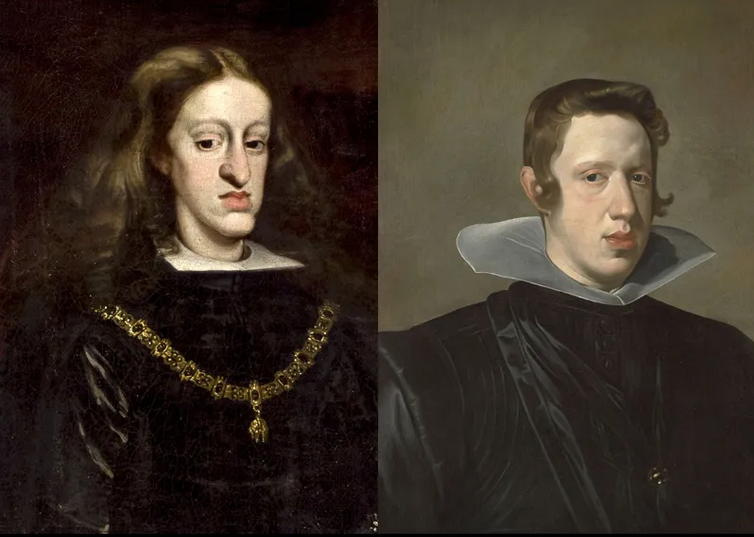
- Succession Crises and Inbreeding: Succession crises, such as the War of the Spanish Succession, were partly due to the complex marital policies of the Habsburgs, aimed at consolidating power. The issue of inbreeding, particularly noted in the Spanish branch, led to a decline in health and fertility, most famously epitomised by Charles II of Spain, whose physical and mental health issues were attributed to generations of inbreeding. This weakened the dynasty’s ability to maintain its vast holdings, contributing to its decline.

Picture: A portrait (by Juan Carreño de Miranda) of Charles II, the last of the Spanish Habsburg kings, and his father, Philip IV (painted by Diego Velázquez, of whom the king was a patron). Both men had prominent jaws, which a new study concludes is most likely the result of the family’s inbreeding. Public domain / Wikimedia Commons
Personalities of the Dynasty
Among the most significant Habsburg monarchs were Charles V and Maria Theresa. Their leadership styles, from Charles’s vast geopolitical strategy to Maria Theresa’s focus on internal reforms and state-building, profoundly influenced the empire’s direction.
- Charles V (1500-1558): Charles V, Holy Roman Emperor and King of Spain, was a pivotal Habsburg monarch whose reign saw the zenith of the family’s power. He ruled over an empire that spanned Europe and the Americas, famously declared as an empire on which “the sun never sets.” His governance style was characterised by his efforts to maintain the unity of his diverse realms through diplomacy and military might, often leading to conflicts such as the Habsburg-Valois Wars[29]. He was also a key figure in the Counter-Reformation, defending Catholicism against the Protestant Reformation.
- Maria Theresa (1717-1780): As the only female ruler of the Habsburg dominions and the last of the House of Habsburg, Maria Theresa’s reign was marked by progressive reforms aimed at strengthening the state’s infrastructure, economy, and military. She implemented measures such as compulsory education and reformed the tax system. Her rule significantly shaped the Habsburg Monarchy’s modernisation, laying the groundwork for future development.
Cultural Patrons
Many Habsburgs, such as those shown below, were notable patrons of the arts and sciences.
- Ferdinand I (1503-1564): Known for his patronage of the arts and education, Ferdinand I, Holy Roman Emperor, played a crucial role in the Renaissance’s cultural spread across Central Europe. He founded the University of Graz and was a significant supporter of music and the visual arts, commissioning works from leading artists of the time.
- Leopold I (1640-1705): His reign is noted for its patronage of music and the arts. Leopold I himself was a composer and a great patron of musicians such as Johann Fux and Johann Schmelzer. His contributions helped cement Vienna’s reputation as a cultural capital in Europe.
- Charles II, the last Habsburg king of Spain (1661-1700): He continued the dynasty’s tradition of artistic patronage amidst the political and economic challenges of his reign. He supported the arts by maintaining and expanding the royal art collections, contributing to the preservation of Spain’s cultural heritage. In particular, he was a patron of artists such as Velázquez. Despite financial limitations, Charles ensured the continuation of artistic and religious commissions, including works for churches and religious festivities. His reign, though marked by decline, still saw efforts to uphold the Habsburg legacy of support for the arts and culture.
The Habsburgs’ contributions helped foster a vibrant cultural and scientific life within their domains, leaving a lasting legacy in European intellectual and artistic history. Their’ extensive influence on global history, from colonial expansions and global trade to intricate diplomacy and cultural patronage, shaped not only the territories they directly ruled but also the wider world. Their responses to internal pressures, such as nationalism and succession crises, underscore the challenges of governing such a diverse and sprawling empire. Through both their achievements and their shortcomings, the Habsburgs played a pivotal role in the making of modern Europe and the global system.
Challenges and Decline
The Habsburg dynasty, despite its extensive power and influence over centuries, faced numerous challenges that ultimately led to its decline. Among these challenges, ethnic and nationalist movements and succession crises were particularly significant in eroding the fabric of Habsburg rule.
Ethnic and Nationalist Movements
The Habsburg Empire was a mish-mash of ethnicities, languages, and cultures, encompassing Germans, Hungarians, Czechs, Slovaks, Romanians, Croats, Serbs, Italians, and many other groups. This diversity, while a testament to the empire’s vast reach, also posed significant governance challenges, especially as the concept of nationalism began to take root in Europe.
- 19th Century Nationalism: The 19th century saw the rise of nationalist movements across Europe, with people increasingly identifying themselves based on ethnic, linguistic, and cultural commonalities. This was partly fuelled by the Romantic movement, which valorised national folklore, language, and heritage. In the Habsburg territories, these movements sought greater autonomy or outright independence, challenging the centralised imperial authority.
- Austro-Hungarian Compromise of 1867: In response to growing Hungarian nationalism, the empire was restructured into the dual monarchy of Austria-Hungary, granting significant autonomy to Hungary while trying to appease nationalist sentiments. However, this compromise did not satisfy other nationalist movements within the empire, leading to increased tensions.
- World War I and Its Aftermath: The outbreak of World War I further exacerbated nationalistic aspirations. The empire’s defeat and the subsequent Treaty of Saint-Germain and Treaty of Trianon dismembered the Habsburg territories, creating new nation-states and realigning borders along ethnic lines, thus ending the Habsburg rule.
Succession Crises
Succession crises were another significant challenge for the Habsburgs, affecting their stability and continuity:
- Charles VI and the Pragmatic Sanction: One of the most notable succession crises involved Emperor Charles VI (r. 1711–1740), who lacked a male heir. To ensure his daughter, Maria Theresa, could inherit his domains, Charles issued the Pragmatic Sanction, a legal framework recognised by European powers that allowed for female succession. However, upon his death, the lack of a male heir led to the War of the Austrian Succession, challenging Maria Theresa’s right to rule and destabilising the empire.
- The Problem of Inbreeding: The Habsburgs frequently married within the family to preserve their heritage and power, leading to a high degree of inbreeding. This practice had detrimental effects on the health of the dynasty’s members, including physical deformities and a higher incidence of genetic disorders. The most famous example is Charles II of Spain, known for his severe physical and mental disabilities, attributed to generations of inbreeding. His inability to produce an heir led to the War of the Spanish Succession, marking the end of the Spanish Habsburg line.
The decline of the Habsburgs was not the result of a single failure but a complex interplay of internal and external pressures. Ethnic and nationalist movements challenged the very notion of a multi-ethnic empire at a time when nationalism was reshaping political identities across Europe. Succession crises, compounded by the dynasty’s marriage policies, further undermined their stability and led to costly wars that drained their resources. Together, these challenges encapsulated the difficulties of maintaining a vast, heterogeneous empire in a changing world, ultimately leading to the Habsburgs’ downfall and the reshaping of the European map in the 20th century.
Legacy and Memory: An Expanded View
The Habsburg dynasty, with its centuries-long reign over vast and diverse territories, left an indelible mark on the fabric of European history. Their legacy is multifaceted, interweaving significant contributions to politics, culture, and the arts with the complexities and challenges of governing a sprawling, multi-ethnic empire.
Patronage of the Arts and Cultural Contributions
The Habsburgs were unparalleled patrons of the arts, fostering an era of extraordinary cultural and artistic flourishing. In cities like Vienna and Prague, their legacy is visible in grand palaces, opera houses, and churches that today stand as monuments to their era’s opulence and aesthetic achievements. These architectural marvels, alongside the dynasty’s sponsorship of composers, artists, and writers, significantly propelled the development of European art, particularly the Baroque and Rococo movements, which reflected the grandeur and power the Habsburgs sought to project.
Social Hierarchies and European Conflicts
However, the Habsburgs’ reign was not without its controversies. Their governance model, which often relied on rigid social hierarchies, faced criticism for perpetuating inequality and stifling social mobility. Furthermore, their central role in numerous European conflicts, from the protracted struggles against the Ottoman Empire to the devastating Thirty Years’ War, has been a subject of intense scrutiny. These wars not only shaped the political landscape of Europe but also led to significant human and economic costs.
Enduring Fascination and Study
The complexity of the Habsburg Empire, with its blend of different cultures, languages, and religions under a single rule, continues to captivate historians and scholars. Their ability to maintain dominion over such a diverse empire for centuries, their impact on the course of European history, and the legacy they left behind in the cultural and architectural heritage of the continent make the Habsburgs a perennial subject of study and fascination.
Historiography and the Habsburg Legacy
The interpretation of the Habsburg legacy has evolved over time, with historians and scholars reassessing their role in European history. Early historiography often focused on the political and military aspects of their reign, but contemporary perspectives have broadened to include an examination of their cultural contributions and the complexities of their multi-ethnic empire.
Revisionist views have also emerged, challenging traditional narratives and providing new insights into the Habsburgs’ governance, their approach to diversity, and their impact on modern European identity.
Cultural Memory and National Identities
In the former territories of the Habsburg Empire, the dynasty is remembered in various ways, reflecting the diverse experiences of these regions under Habsburg rule. Monuments, museums, and public commemorations serve as reminders of the Habsburg era, each telling a part of the empire’s story. In Austria and Hungary, for example, the Habsburg legacy is often celebrated for its cultural achievements and the era’s relative stability. In contrast, in other parts of Central and Eastern Europe, the memory of Habsburg rule is more complex, intertwined with national narratives of independence and identity.
These divergent memories play a crucial role in shaping contemporary national identities, illustrating how the legacy of the Habsburgs continues to influence the cultural and political landscapes of Europe. The dynasty’s ability to navigate the challenges of their time, their contributions to the arts and society, and the lasting impacts of their governance model provide valuable lessons and reflections for understanding the historical trajectory of Europe and its nations.
Comparing the Habsburg Dynasty with the Romans
Comparing the Habsburg dynasty to the Roman Empire reveals both similarities and differences in their approaches to governance, expansion, cultural integration, and legacy. Each represents a significant and influential power structure within European history, though they existed in vastly different time periods and under different geopolitical circumstances.
Governance and Administration
- Habsburgs: The Habsburgs employed a decentralised system of governance, granting considerable autonomy to the various regions within their empire. This was partly due to the diverse linguistic and cultural makeup of their territories. They ruled through a combination of marriages, alliances, and political negotiations, maintaining control over a vast array of lands across Europe from the late Middle Ages to the early 20th century.
- Romans: The Romans established a highly centralised form of governance, especially during the Empire, with power concentrated in Rome and later Constantinople (Byzantium). They developed sophisticated legal and administrative systems, which allowed them to manage a vast empire stretching from Britain to the Middle East. The Roman approach to governance included the incorporation of conquered peoples as citizens, a unique strategy that helped maintain control over distant territories.
Expansion and Military Strategy
- Habsburgs: The Habsburgs expanded their influence primarily through strategic marriages, diplomatic manoeuvres, and occasionally military campaigns. Their empire grew more through inheritance and unions than through outright conquest.
- Romans: The Roman Empire expanded through military conquest, establishing a network of roads, cities, and military outposts to secure their territories. The Roman legions were a key tool in both expansion and maintaining the peace (Pax Romana) across the empire.
Cultural Integration
- Habsburgs: The Habsburg Empire was characterised by a remarkable cultural and linguistic diversity. The Habsburgs largely allowed their subjects to retain their customs, languages, and local governance structures, which sometimes led to a sense of disunity or nationalism within their territories.
- Romans: The Romans excelled at integrating conquered peoples into their empire, often granting Roman citizenship and encouraging the adoption of Roman customs, laws, and language (Latin), which served as a unifying force across the empire. However, they also allowed a degree of cultural autonomy, as seen in their tolerance of various local religions and customs.
Legacy
- Habsburgs: The legacy of the Habsburgs is seen in the modern boundaries of Europe, the spread of their family members across European thrones, and their influence on European art, culture, and politics. Their rule eventually succumbed to the rising tide of nationalism and the cataclysm of World War I.
- Romans: The Roman Empire’s legacy is profound, influencing modern legal systems, languages (Romance languages), architecture, engineering, and governance concepts. The Roman Catholic Church also carries forward the legacy of Rome in a spiritual and administrative sense.
Whilst both the Habsburgs and Romans built extensive empires that shaped the course of European history, their methods of expansion, governance, and cultural integration differed significantly. The Habsburgs leaned more on diplomacy and familial alliances, whereas the Romans employed military conquest and cultural assimilation. Both, however, left enduring legacies that continue to influence the world today.
Size
When comparing the landmass of the Roman Empire at its peak to that of the Habsburg Monarchy at its greatest extent, the Roman Empire was larger.
- Habsburgs: The Habsburg Monarchy, at its largest extent in the early 18th century, especially during the reign of Charles VI or after the Treaty of Utrecht in 1713, covered about 4 million square kilometres. This included the Spanish Empire at its largest under Charles V before the division of the Habsburg lands through the Treaty of Utrecht[30], which transferred many Spanish territories to other European powers, significantly reducing the Habsburgs’ territorial control outside of Central Europe. After the treaty, the Habsburg territories were primarily in Central Europe, including what is now Austria, Hungary, the Czech Republic, Slovenia, Belgium, parts of Italy, and more, alongside their overseas colonies.
- Romans: The Roman Empire, at its zenith under Emperor Trajan in the early 2nd century AD, covered an estimated 5 million square kilometres. It encompassed large portions of Europe, including what is now Italy, Spain, France, Greece, and the Balkans, as well as parts of the Middle East and North Africa.

Picture: Growth of the Habsburg monarchy in central Europe.
Citation: Habsburg monarchy. (2024, April 4). In Wikipedia. https://en.wikipedia.org/wiki/Habsburg_monarchy
Attribution: Ramsay Muir, Public domain, via Wikimedia Commons
Miscellany
Broader Context on European Politics
The Habsburgs operated within an intricate European political framework characterized by shifting alliances and enduring rivalries. Their strategic engagement with France, particularly through the Habsburg-Valois Wars, was central to the power dynamics of Renaissance Europe. These conflicts, driven by disputes over territories like Burgundy and Italy, highlighted the competitive nature of Habsburg and French ambitions.
In contrast, the Habsburgs’ interactions with the Ottoman Empire, culminating in the pivotal Siege of Vienna in 1683, were central in defining the Christian-Muslim frontier in Europe. The successful defence against the Ottomans not only secured Central Europe but also marked the beginning of the Ottoman decline in the region.
The Habsburg dynasty’s interplay with France under the reign of monarchs such as Francis I and Henry II during the Habsburg-Valois Wars significantly shaped the political landscape of 16th – century Europe. These conflicts, largely for control over territories in Italy and along the Franco-German borders, showcase the era’s complex web of rivalries and alliances.
Meanwhile, Habsburg relations with England saw dramatic shifts, from Mary I’s marriage to Philip II, aligning England temporarily with Habsburg interests, to conflicts during the Elizabethan era, illustrating the Habsburgs’ adaptive foreign policy in response to Protestant Reformation and changing power dynamics.
Relations with England varied over the centuries, moving from enmity during the reign of Charles V and his rivalry with Henry VIII to alliances, as seen in the later years, especially against common foes like France and the Ottomans. This evolving landscape of alliances and conflicts underlines the Habsburgs’ adaptability and their significant influence on European geopolitics.
Case Studies
- Battle of Vienna (1683): It was a defining moment when Christian forces led by the Polish King John III Sobieski lifted the Ottoman siege, showcasing the Habsburgs’ role in European security and their ability to lead a coalition that included the Holy Roman Empire’s disparate entities and external allies like Poland. This battle was not just a military victory but also a symbolic moment of unity against a common threat, shaping the subsequent European alliances and Ottoman engagements.
- Implementation of the Pragmatic Sanction: Charles VI’s legal framework was engineered to ensure his daughter, Maria Theresa, could inherit the Habsburg territories intact. This manoeuvre reflected the challenges of female succession in a male-preferential dynastic system, leading to the War of the Austrian Succession. It underscores the delicate balance of power, the importance of legal structures in succession politics, and the extensive European response that tested the Habsburgs’ diplomatic resolve and military preparedness.
Comparison with Other Dynasties
Comparing the Habsburgs with contemporaneous dynasties like the Tudors of England and the Bourbons of France reveals distinct approaches to governance and empire-building. Unlike the Tudors, who centralised power within England and used marital alliances for national consolidation, the Habsburgs employed marriages to expand their influence across Europe.
The Bourbons, similar in their quest for centralised power, differed in their approach to religious uniformity and colonial expansion. The Habsburgs’ unique blend of dynastic marriages, religious tolerance (at times), and a sprawling, multi-ethnic empire set them apart in their governance and legacy.
Impact on Modern Europe
The Habsburgs’ enduring legacy in modern Europe can be seen in the cultural, political, and architectural landscapes. Their policies of religious tolerance, especially following the Peace of Westphalia, laid the early groundwork for the concept of state sovereignty and religious coexistence. The architectural splendours they commissioned, from Vienna’s Hofburg to the Schönbrunn Palace, continue to symbolise European cultural and historical heritage. Furthermore, the dissolution of their empire and the redrawing of Europe’s map after World War I contributed to the formation of modern nation-states, underscoring the Habsburg influence on contemporary European identities and borders.
Conclusion
The Habsburg dynasty, spanning nearly six centuries, represents a monumental chapter in European history, embodying the intricate interplay of power, culture, and identity across a vast and diverse empire. Their legacy, both celebrated and critiqued, offers profound insights into the complexities of dynastic rule and its lasting impact on the continent’s socio-political and cultural landscapes.
A Legacy of Cultural Flourishing and Architectural Grandeur
The Habsburgs’ unparalleled patronage of the arts catalysed a period of remarkable cultural and architectural innovation. Cities under their dominion, notably Vienna and Prague, stand today as testaments to this era’s aesthetic achievements, with majestic palaces and opera houses that continue to enchant visitors and scholars alike. Through their support of composers, artists, and architects, the Habsburgs not only showcased their power and prestige but also significantly contributed to the Baroque and Rococo movements’ development, leaving a lasting mark on European artistic heritage.
Governance Amidst Diversity and Conflict
However, the Habsburgs’ governance was not without its challenges. Their reign was marked by the daunting task of managing a multi-ethnic empire, fraught with the rising tides of nationalism and the complexities of maintaining unity amidst diversity. The Austro-Hungarian Compromise of 1867, while a notable attempt at addressing Hungarian nationalism, underscored the persistent struggles in balancing central authority with local autonomy. Furthermore, their central role in numerous European conflicts, notably against the Ottoman Empire and within the devastating Thirty Years’ War, reflects the dynasty’s intricate involvement in the continent’s shifting power dynamics.
The Enduring Fascination with the Habsburgs
The enduring fascination with the Habsburg dynasty stems not only from their political and military endeavours but also from their profound influence on Europe’s cultural and architectural domains. Historiography and cultural memory of the Habsburgs continue to evolve, offering new perspectives and challenging traditional narratives. This dynamic discourse reveals the complexity of their legacy, intertwined with contemporary national identities and cultural heritage across former Habsburg territories.
A Complex Picture of Legacy and Memory
The Habsburgs’ story is a complex picture painted through centuries of European history, characterised by ambitious expansions through strategic marriages, innovative governance amidst a diverse empire, and a deep-seated commitment to the arts and Catholicism. Their decline, precipitated by the challenges of nationalism, succession crises, and the cataclysm of World War I, marked the end of an era but also the beginning of a profound reconfiguration of Europe’s political and cultural landscape.
Reflecting on the Habsburg legacy, we come to a narrative rich with lessons on the intricacies of ruling over a diverse empire, the power of cultural patronage in shaping identities, and the enduring impact of historical figures on our contemporary world. The Habsburgs, with their blend of ambition, artistry, and authority, remain a subject of captivation and study, highlighting the indelible mark they have left on the tapestry of European history. Their legacy, embedded in the grandeur of their architectural marvels and the cultural innovations they championed, continues to inspire and challenge us, offering insights into the past that resonate profoundly in the present.
A Recap in Simple Terms

Imagine a really big family called the Habsburgs, who were like the kings and queens of a giant castle that spread across many lands where different people spoke different languages and had their own ways of living. This family was super important for hundreds of years because they were really good at marrying other royal families to make their kingdom even bigger, kind of like collecting a huge set of colourful and diverse LEGO sets from all over the place and putting them all together.
They built some of the most beautiful buildings that we can still visit today, like massive palaces and grand opera houses where musicians played beautiful music. But managing such a big kingdom was like trying to organise a gigantic party where everyone has different tastes in music, food, and games, which was really hard.
As time went by, parts of their big castle started to want their own parties, and the family found it tough to keep everyone happy and together. Eventually, after a really big and sad war, the family couldn’t keep their giant castle anymore, and it was broken into smaller houses where people could have their own parties.
Even though the Habsburg family doesn’t rule like they used to, we still remember them for the beautiful buildings they left behind, the music and art they loved, and how they tried to bring so many different people together under one roof. It’s like they gave us a giant museum of history and culture that we can learn from and enjoy.
Sources and Further Reading
Web:
- http://www.mkheritage.org.uk/archive/EoA/docs/Habsburgs.html
- https://en.m.wikipedia.org/wiki/House_of_Habsburg
- https://www.britannica.com/summary/House-of-Habsburg
- https://www.geni.com/projects/House-of-Habsburg/873
- https://www.habsburger.net/en/genealogical-table
- https://www.historyextra.com/period/medieval/habsburgs-dynasty-family-who-europe/
- https://www.historyextra.com/period/medieval/habsburgs-dynasty-family-who-europe/
- https://www.metmuseum.org/toah/hd/habs/hd_habs.htm
- https://www.monarchie.be/en/royal-family/history/origins-of-the-dynasty
- https://www.nationalgeographic.com/science/article/how-inbreeding-killed-off-a-line-of-kings
- https://www.schoenbrunn.at/en/about-schoenbrunn/the-habsburgs
- https://www.smithsonianmag.com/smart-news/distinctive-habsburg-jaw-was-likely-result-royal-familys-inbreeding-180973688/
- https://www.visitingvienna.com/culture/habsburgs/
- https://www.wallacecollection.org/explore/explore-in-depth/latest-films/the-habsburgs-and-the-spanish-empire/
Books:
- A Heart for Europe: The Lives of Emperor Charles and Empress Zita of Austria-Hungary, by James and Joanna Bogle, available from https://www.amazon.co.uk/HEART-EUROPE-Emperor-Charles-Austria-Hungary/dp/B0010PFVJE
- A History of the Habsburg Empire, 1273–1700, by Jean Berenger (Author) and C.A. Simpson (Translator), available from https://www.amazon.co.uk/History-Habsburg-Empire-1273-1700/dp/0582090105
- A History of the Habsburg Empire, 1526–1918, by Robert A. Kann, available from https://www.amazon.co.uk/History-Habsburg-Empire-1526-1918/dp/0520042069/
- A History of the Habsburg Empire, 1700–1918, by Jean Berenger (Author) and C.A. Simpson (Contributor), available from https://www.amazon.co.uk/History-Habsburg-Empire-1700-1918/dp/0582090075
- Elisabeth, Empress of Austria, by Alfred Buschek (Author), available from https://www.amazon.co.uk/Elisabeth-Empress-Austria-Alfred-Buschek/dp/0741458993/
- Empress Maria Theresa: The Earlier Years, 1717-1757, by Robert Pick, available from https://www.amazon.co.uk/Empress-Maria-Theresa-earlier-1717-1757/dp/B0000CN6TP
- Ferdinand I of Austria: The Politics of Dynasticism in the Age of the Reformation, by Paula Sutter Fichtner, available from https://www.goodreads.com/en/book/show/13561697
- Forging a Multinational State: State Making in Imperial Austria from the Enlightenment to the First World War, by John Deak, available from https://www.amazon.co.uk/Forging-Multinational-State-Imperial-Enlightenment/dp/0804795576/
- Franz Joseph and Elisabeth: The Last Great Monarchs of Austria-Hungary, by Karen Owens, available from https://www.amazon.com/Franz-Joseph-Elisabeth-Monarchs-Austria-Hungary/dp/0786476745
- Habsburg Splendor: Masterpieces from Vienna’s Imperial Collections, by Monica Kurzel-Runtscheiner (Author), Franz Pichorner (Author), Stefan Krause (Author), available from https://www.amazon.co.uk/Habsburg-Splendor-Masterpieces-Collections-Kunsthistorisches/dp/0300210868
- Joseph II: Volume 1, In the Shadow of Maria Theresa, 1741-1780, by Derek Beales, available from https://www.amazon.co.uk/Joseph-II-Shadow-Theresa-1741-1780/dp/0521242401
- Joseph II: Volume 2, Against the World, 1780-1790, by Derek Beales, available from https://www.amazon.co.uk/Joseph-Ii-Against-World-1780-1790/dp/1107616263/
- Leopold I of Austria, by John P. Spielman, available from https://www.amazon.co.uk/Leopold-I-Austria-Men-office/dp/0500870055
- Maria Theresa of Austria, by Edward Crankshaw, available from https://www.amazon.co.uk/Theresa-Biography-Memoirs-Edward-Crankshaw/dp/0094650306/
- Maximilian and Juarez, by Jasper Ridley, available from https://www.amazon.co.uk/Maximilian-Juarez-Jasper-Ridley/dp/1842121502/
- Rudolf II and His World: A Study in Intellectual History, 1576–1612, by R.J.W. Evans, available from https://www.amazon.co.uk/Rudolf-His-World-Intellectual-1576-1612/dp/019821961X/
- Sisi: Empress on Her Own, by Allison Pataki, available from https://www.amazon.co.uk/Sisi-Allison-Pataki/dp/0812989333
- The Enemy at the Gate: Habsburgs, Ottomans, and the Battle for Europe, by Andrew Wheatcroft, available from https://www.amazon.co.uk/Enemy-Gate-Habsburgs-Ottomans-Battle/dp/1844137414
- The Fall of the House of Habsburg, by Edward Crankshaw, available from https://www.amazon.co.uk/Fall-House-Habsburg-Edward-Crankshaw/dp/0140064591
- The Grand Strategy of the Habsburg Empire, by A. Wess Mitchell, available from https://www.amazon.co.uk/Grand-Strategy-Habsburg-Empire/dp/0691196443/
- The Habsburg Empire: A New History, by Pieter M. Judson, available from https://www.amazon.co.uk/Habsburg-Empire-New-History/dp/0674986768/
- The Habsburg Empire: A Very Short Introduction, by Martyn Rady, available from https://www.amazon.co.uk/Habsburg-Empire-Short-Introduction-Introductions/dp/0198792964
- The Habsburg Monarchy, 1490-1848: Attributes of Empire (European History in Perspective), by Paula Sutter Fichtner, available from https://www.amazon.co.uk/Habsburg-Monarchy-1490-1848-Attributes-Perspective/dp/033373727X/
- The Habsburg Monarchy, 1618–1815, by Charles W. Ingrao, available from https://www.amazon.co.uk/Habsburg-Monarchy-1618-1815-Approaches-European/dp/0521785057
- The Habsburg Monarchy, 1809–1918: A History of the Austrian Empire and Austria-Hungary, by A.J.P. Taylor, available from https://www.amazon.co.uk/Habsburg-Monarchy-1809-1918-Austrian-Austria-Hungary/dp/0140134980
- The Habsburgs: Dynasty, Culture and Politics, by Paula Sutter Fichtner, available from https://www.amazon.co.uk/Habsburgs-Dynasty-Culture-Politics-ebook/dp/B00MVXFDKQ/
- The Habsburgs: Embodying Empire, by Andrew Wheatcroft, available from https://www.amazon.co.uk/Habsburgs-Embodying-Empire-Andrew-Wheatcroft/dp/0140236341
- The Habsburgs: To Rule the World, by Martyn Rady, available from https://www.amazon.co.uk/Habsburgs-Rule-World-Martyn-Rady/dp/1541644506
- The Kaiser and His Times, by Michael Balfour, available from https://www.amazon.co.uk/Kaiser-His-Times-Michael-Balfour/dp/0571303765
- The Last Habsburg, by Gordon Brook-Shepherd, available from https://www.amazon.co.uk/last-Habsburg-Gordon-Brook-Shepherd/dp/B0006BZ0FI
- The Reign of Charles V, by William S. Maltby, available from https://www.amazon.co.uk/Reign-Charles-European-History-Perspective/dp/0333677676
- The War of the Spanish Succession 1701-1714, by James Falkner, available from https://www.amazon.co.uk/War-Spanish-Succession-1701-1714/dp/1399013483/
- Twilight of the Habsburgs: The Life and Times of Emperor Francis Joseph, by Alan Palmer, available from https://www.amazon.co.uk/Twilight-Habsburgs-Emperor-Francis-Joseph/dp/0871136651
- Vienna and the Fall of the Habsburg Empire: Total War and Everyday Life in World War I, by Maureen Healy, available from https://www.amazon.co.uk/Vienna-Fall-Habsburg-Empire-Everyday/dp/0521042194/
CAUTION: This paper is compiled from the sources stated but has not been externally reviewed. Parts of this paper include information provided via artificial intelligence which, although checked by the author, is not always accurate or reliable. Neither we nor any third parties provide any warranty or guarantee as to the accuracy, timeliness, performance, completeness or suitability of the information and materials covered in this paper for any particular purpose. Such information and materials may contain inaccuracies or errors and we expressly exclude liability for any such inaccuracies or errors to the fullest extent permitted by law. Your use of any information or materials on this website is entirely at your own risk, for which we shall not be liable. It shall be your own responsibility to ensure that any products, services or information available through this paper meet your specific requirements and you should neither take action nor exercise inaction without taking appropriate professional advice. The hyperlinks were current at the date of publication.
End Notes and Explanations
- Source: Compiled from my research using information available at the sources stated throughout the text, together with information provided by machine-generated artificial intelligence at: bing.com [chat] and https://chat.openai.com. Text used includes that on Wikipedia websites is available under the Creative Commons Attribution-ShareAlike License 4.0; additional terms may apply. By using those websites, I have agreed to the Terms of Use and Privacy Policy. Wikipedia® is a registered trademark of the Wikimedia Foundation, Inc., a non-profit organisation. ↑
- Explanation: The phrase “Let others wage war; you, fortunate Austria, marry,” is translated from Latin (Bella gerant alii, tu felix Austria nube). ↑
- Explanation: Count Radbot of Klettgau was a nobleman of the early 11th century, best known for founding the Habsburg Castle in what is now Switzerland. This castle became the ancestral seat of the Habsburg family, one of the most influential royal dynasties in European history. Radbot’s construction of the Habsburg Castle around the year 1020 laid the foundation for the family’s rise to prominence. His descendants expanded their power and territories through strategic marriages and military conquests, eventually ruling vast areas of Europe, including Austria, Hungary, Spain, the Netherlands, and parts of Italy. Undoubtedly, Count Radbot was a key figure in the early history of the Habsburg dynasty. ↑
- Explanation: Rudolf of Habsburg, born around 1218, was a significant figure in European history as the first member of the Habsburg family to be elected King of the Romans (Germany) in 1273, effectively making him a ruler of the Holy Roman Empire. His election marked the beginning of the Habsburg dynasty’s ascendancy in European politics, a dominance that would extend for centuries. Rudolf is known for his military and diplomatic skills, which he used to consolidate and expand Habsburg territories. Notably, he acquired the Duchies of Austria and Styria through conquest and clever negotiations, laying the groundwork for the Habsburgs’ long-term rule over these regions. Rudolf’s reign was characterized by efforts to establish peace in the realm, strengthen royal authority, and curb the power of unruly nobles. He passed away in 1291, leaving behind a legacy of Habsburg ascendance that would shape European history. See more at: https://en.wikipedia.org/wiki/Rudolf_I_of_Germany ↑
- Explanation: Maximilian I, born in 1459, was Holy Roman Emperor from 1508 until his death in 1519, although he never received a formal coronation by the Pope. As a member of the Habsburg dynasty, he expanded the influence of the family through both military campaigns and strategic marriages. Maximilian is often remembered for his ambitious efforts to centralise and reform the administration of the Holy Roman Empire, aiming to strengthen the power of the monarchy over the various principalities and dukedoms within the empire. He played a crucial role in European politics through his marriage to Mary of Burgundy, which brought the Low Countries and Burgundy into the Habsburg realm and set the stage for future conflicts over these territories. Maximilian’s matrimonial policies for his children also laid the foundation for the Spanish Habsburgs’ global empire; his son Philip married Joanna of Castile, making their son, Charles V, heir to vast European and American territories.
Maximilian’s reign marked a significant period in the transition from the medieval to the modern era, characterized by his support for the arts, science, and the growth of a more centralized bureaucratic state. He was also a patron of the Renaissance in the German-speaking lands and is credited with fostering the development of the printing press and the arts. His legacy includes not just the expansion of Habsburg territories but also significant cultural contributions and the groundwork for the centralisation of imperial power. ↑
- Explanation: Mary of Burgundy, born in 1457 and died in 1482, was the last ruler of the independent Duchy of Burgundy. She was the only child of Charles the Bold, Duke of Burgundy, and his wife, Isabella of Bourbon. After her father’s death in 1477, Mary inherited the vast Burgundian territories, which included not only Burgundy itself but also the Netherlands and parts of modern France and Germany. Mary’s inheritance made her one of the most sought-after brides in Europe. In 1477, she married Maximilian I of Habsburg, the future Holy Roman Emperor, significantly strengthening the Habsburg position in Europe through this alliance. Their marriage brought the Burgundian Netherlands under Habsburg control after her death, setting the stage for the future Spanish and Austrian Habsburg empires. Mary’s reign was marked by the Burgundian Wars and internal strife, as France sought to claim her inheritance. The Great Privilege of 1477, granted by Mary to the States General of the Netherlands to secure their support against France, was a significant moment in limiting ducal power in favor of the estates.Mary’s untimely death in 1482, from a horse riding accident, led to a period of turmoil and regency, as her son, Philip the Fair, was only a few years old. Her marriage and descendants would profoundly influence European politics for centuries, intertwining the fates of the Habsburg, Valois, and Tudor dynasties. See more at: https://en.wikipedia.org/wiki/Mary_of_Burgundy ↑
- Explanation: The War of Spanish Succession (1701-1714) was a conflict over who would inherit the Spanish Empire after the last Habsburg monarch of Spain, Charles II, died without an heir. The main contenders were Philip of Anjou, a grandson of Louis XIV of France, and Archduke Charles of Austria. Europe’s powers, fearing the balance of power would tilt too much in favor of France if Philip ascended to the Spanish throne, formed alliances to support or oppose his claim. The war concluded with the Peace of Utrecht in 1713, which allowed Philip to become Philip V of Spain but required him to renounce any claim to the French throne, preventing a union of France and Spain. The treaty also redistributed territories among the major European powers, notably enhancing British naval power with strategic gains like Gibraltar. The war reshaped the European political landscape, curbed the expansion of France, marked the rise of Britain as a global power, and led to the decline of Spain as a dominant European state. See more at: https://en.wikipedia.org/wiki/War_of_the_Spanish_Succession ↑
- Explanation: The Peace of Westphalia, concluded in 1648, ended the Thirty Years’ War in the Holy Roman Empire and the Eighty Years’ War between Spain and the Dutch Republic. It consisted of two main treaties, the Treaty of Osnabrück and the Treaty of Münster. This peace agreement is significant for establishing the principles of national sovereignty and equal legal status among states, laying the groundwork for the modern international system. It recognised the right of each prince to determine his state’s religion (cuius regio, eius religio), effectively acknowledging the coexistence of Protestant and Catholic states. It also led to territorial adjustments, the independence of the Dutch Republic, and the recognition of the Swiss Confederation’s independence. The Peace of Westphalia is often cited as the beginning of the state-centric international order and the end of the medieval concept of a universal Christian empire under the Holy Roman Emperor. See more at: https://en.wikipedia.org/wiki/Peace_of_Westphalia ↑
- Explanation: The Protestant Reformation was a major movement within Western Christianity in 16th century Europe that posed a religious and political challenge to the Roman Catholic Church and papal authority. Initiated by figures like Martin Luther, John Calvin, and Huldrych Zwingli, it led to the creation of Protestant churches that rejected the authority of the Pope. Luther’s 1517 publication of the 95 Theses, criticizing Church practices like the sale of indulgences, is commonly marked as the start of the Reformation. The movement radically transformed the religious and political landscape of Europe, leading to the establishment of various Protestant denominations, religious wars, and significant changes in society and governance. It also contributed to the Counter-Reformation within the Catholic Church, which sought to address the criticisms and reform its practices.See more at: https://education.nationalgeographic.org/resource/protestant-reformation/ ↑
- Explanation: The Peace of Augsburg, signed in 1555, was a treaty between Charles V, Holy Roman Emperor, and the Schmalkaldic League, an alliance of Lutheran princes, marking a significant turning point in the Reformation. This agreement officially recognised Lutheranism in the Holy Roman Empire, allowing rulers to choose between Lutheranism and Catholicism as the official religion of their territories—a principle known as “cuius regio, eius religio.” This meant that the religion of the ruler dictated the religion of the ruled. The Peace of Augsburg aimed to bring an end to religious conflicts between the two groups, though it didn’t extend tolerance to non-Lutheran Protestants, such as Calvinists, leading to future conflicts. See more at: https://en.wikipedia.org/wiki/Peace_of_Augsburg ↑
- Explanation: Lutheranism is a major branch of Protestant Christianity that identifies with the theology of Martin Luther, a 16th century German monk and theologian. Luther’s efforts to reform the theological and cultural practices of the Roman Catholic Church sparked the Protestant Reformation. Central to Lutheranism is the belief in justification by faith alone, meaning that salvation is achieved through faith in Jesus Christ, not by good works or indulgences. Lutheranism also emphasises the authority of the Scriptures as the sole source of ecclesiastical authority (“sola scriptura”) and holds to the two sacraments of Baptism and the Eucharist, as directly commanded by Christ. The Lutheran tradition led to the establishment of Protestant churches primarily in Germany, Scandinavia, and parts of the United States, with Luther’s teachings recorded in the Book of Concord. See more at: https://en.wikipedia.org/wiki/Lutheranism ↑
- Explanation: Philip V of Spain, born in 1683 and died in 1746, was the first Bourbon (see below) king of Spain. His reign, which began in 1700 and ended with his death (though he briefly abdicated in favour of his son Louis I in 1724, only to return to the throne later that year after Louis’ death), marked the start of the Bourbon dynasty in Spain, which continues to this day. Philip V’s accession to the throne prompted the War of the Spanish Succession (1701-1714), a conflict that engulfed much of Europe. The war ended with the Treaty of Utrecht (1713), which allowed Philip to remain king but required him to renounce any future claim to the French throne, to maintain the balance of power in Europe. His reign introduced significant reforms aimed at centralising and modernising the Spanish administration and military, influenced by French models. These reforms laid the groundwork for the modern Spanish state but also met with resistance from traditional Habsburg loyalists and regional bodies accustomed to a degree of autonomy.
“Borbón” is the Spanish form of “Bourbon,” referring to a European royal house of French origin. The Bourbon dynasty is most notably associated with France and Spain, among other countries. In France, the Bourbons came to power in the late 16th century, starting with Henry IV, and included such well-known monarchs as Louis XIV and Louis XVI, the latter of whom was dethroned during the French Revolution.
The Spanish branch of the Bourbon dynasty began with Philip V, the grandson of Louis XIV of France, who ascended to the Spanish throne in 1700. This initiated the War of the Spanish Succession, culminating in the Treaty of Utrecht (1713), which recognized Philip V as king of Spain on the condition that the French and Spanish crowns never be united. The term “Borbón” signifies this lineage and its continuing influence on Spanish monarchy, with the current king of Spain, Felipe VI, being a member of the House of Bourbon.
See more at: https://en.wikipedia.org/wiki/Philip_V_of_Spain ↑
- Explanation: The Enlightenment, also known as the Age of Reason, was an intellectual and philosophical movement that dominated the world of ideas in Europe during the 17th and 18th centuries. It centred on the idea that reason is the primary source of authority and legitimacy, advocating for science, rationality, and logic as the means to understand and reform society. Enlightenment thinkers challenged traditional doctrines and monarchies, promoting ideas of liberty, equality, fraternity, constitutional government, and separation of church and state. This period contributed significantly to scientific, political, and philosophical advances, laying the groundwork for modern democracy, human rights, and many of the values that underpin contemporary Western societies. Key figures include Voltaire, John Locke, Jean-Jacques Rousseau, and Immanuel Kant, among others. See more at: https://en.wikipedia.org/wiki/Age_of_Enlightenment ↑
- Explanation: The Hofburg Palace in Vienna, Austria, is a sprawling imperial complex that served as the principal winter residence of the Habsburg dynasty, rulers of the Austro-Hungarian Empire. Dating back to the 13th century, the palace has been expanded over the centuries to include various residences, chapels, museums, the imperial library, and the offices of the Austrian president. The Hofburg embodies the architectural, cultural, and historical legacy of the Austro-Hungarian Empire, showcasing styles from Gothic to Baroque, Renaissance, and Rococo. It was the heart of the Habsburg court and administrative centre, reflecting the power and prestige of one of Europe’s most influential royal families. Today, it’s a key attraction for visitors to Vienna, offering insights into Austria’s imperial past, art, and culture. See more at: https://en.wikipedia.org/wiki/Hofburg ↑
- Explanation: Schönbrunn Palace, located in Vienna, Austria, is a magnificent Baroque estate that served as the summer residence of the Habsburg monarchs. Built in the 17th century and remodelled in the 18th century under the reign of Empress Maria Theresa, Schönbrunn is renowned for its stunning architecture, beautiful gardens, and the rich history encapsulated within its walls. The palace features 1,441 rooms, each elaborately decorated and used for various functions, from imperial ceremonies to the personal living quarters of the royal family. The vast gardens surrounding the palace include the Gloriette, a Roman-inspired structure on a hill offering panoramic views of Vienna, as well as the world’s oldest zoo, founded in 1752. Schönbrunn Palace is not just an architectural marvel but also a cultural and historical monument, reflecting the opulence and cultural aspirations of the Habsburg dynasty. Today, it’s a UNESCO World Heritage site and one of Austria’s most visited tourist attractions, drawing millions of visitors to explore its history, art, and architecture. See more at: https://www.schoenbrunn.at/en/ ↑
- Explanation: The Belvedere Palace in Vienna, Austria, is a historic building complex consisting of two Baroque palaces: the Upper and Lower Belvedere, set in a beautifully landscaped garden. Built in the early 18th century as a summer residence for Prince Eugene of Savoy, an important general and art collector, the Belvedere is known for its exquisite architecture and as a prime example of Baroque style. The Upper Belvedere served primarily for representation and was used for hosting grand events and gatherings, showcasing an impressive art collection and elaborate staterooms. The Lower Belvedere, along with the Orangery and the Palace Stables, was more intimately connected to the daily life and administrative affairs of the prince.
Today, the Belvedere houses an art museum with a significant collection of Austrian art, including the world’s largest collection of paintings by Gustav Klimt, among which is the famous “The Kiss.” The museum also features works spanning from the Middle Ages to the present day, making it a central institution for Austrian art. The Belvedere Palace complex, with its historical significance, artistic collections, and stunning gardens, is a UNESCO World Heritage Site and a key attraction for visitors interested in the cultural heritage of Vienna. See more at: https://en.wikipedia.org/wiki/Belvedere,_Vienna ↑
- Explanation: The Baroque period, spanning from the late 16th to the early 18th century, was an era of dramatic, elaborate, and detailed art, music, and architecture. Originating in Italy, it spread across Europe, characterized by its emphasis on grandeur, movement, and emotional intensity. Famous for its ornate styles, the Baroque era produced notable works in painting, sculpture, and building design, reflecting the power and influence of the Catholic Church and royalty. See more at: https://www.britannica.com/summary/Baroque-art-and-architecture ↑
- Explanation: The Manila Galleons were Spanish trading ships that sailed once or twice a year between Manila in the Philippines and Acapulco, Mexico, from 1565 to 1815. They carried silver from the Americas to trade for luxury goods from Asia, such as spices, silk, and porcelain. This route linked Asia, the Americas, and Europe, playing a crucial role in the early global trade network. See more at: https://www.britannica.com/technology/Manila-galleon ↑
- Explanation: The beatification of Charles I of Austria in 2004 recognised him as a blessed figure in the Catholic Church, a step before sainthood. Charles I, the last Emperor of Austria and a ruler of the Austro-Hungarian Empire, reigned from 1916 until his abdication in 1918. He was noted for his attempts to bring peace during World War I and his devotion to his Catholic faith. Beatification was granted by Pope John Paul II, acknowledging Charles’s life of virtue and his efforts towards peace, despite the challenges of his reign. He is known to the Catholic Church as Blessed Karl of Austria. See more at: https://en.wikipedia.org/wiki/Charles_I_of_Austria ↑
- Explanation: The Treaty of Saint-Germain-en-Laye, signed on 10th September 1919, formally ended World War I between the Allies and Austria, which was part of the former Austro-Hungarian Empire. This treaty dismantled the Austro-Hungarian Empire, recognizing the independence of Hungary, Czechoslovakia, Poland, and the Kingdom of Serbs, Croats, and Slovenes (later Yugoslavia). Austria’s territory was significantly reduced, losing lands to these newly independent states and others like Italy and Romania. The treaty also imposed military restrictions on Austria and required reparations to be paid. The Treaty of Saint-Germain reshaped Central Europe, creating new national boundaries and significantly diminishing Austria’s power and territory. See more at: https://en.wikipedia.org/wiki/Treaty_of_Saint-Germain-en-Laye_(1919) ↑
- Explanation: The Treaty of Trianon was signed on 4th June 1920, formally ending World War I between most of the Allies and the Kingdom of Hungary, part of the former Austro-Hungarian Empire. The treaty drastically reduced Hungary’s territory, resulting in the loss of about two-thirds of its land and a significant portion of its population to neighboring countries. New borders were drawn, leaving large Hungarian communities outside of Hungary, in nations like Romania, Czechoslovakia, Yugoslavia, and Austria. The treaty reshaped the political landscape of Central Europe and had lasting impacts on regional relationships and Hungarian national identity. See more at: https://en.wikipedia.org/wiki/Treaty_of_Trianon ↑
- Explanation: Gregor Mendel (1822–1884) was an Austrian monk and scientist who is often called the “father of modern genetics” for his pioneering work in the study of heredity. Mendel conducted his most famous experiments in the mid-19th century using pea plants in the garden of the Augustinian Abbey of St. Thomas in Brno, Moravia (now in the Czech Republic). Through these experiments, he discovered the fundamental laws of inheritance, including the concepts of dominant and recessive traits, and the segregation and independent assortment of genes. Mendel’s work was initially overlooked by the scientific community, and it wasn’t until the turn of the 20th century—decades after his experiments—that his research was rediscovered and recognized as the foundation of genetics. His principles of inheritance provided the scientific basis for understanding how traits are passed from parents to offspring, fundamentally changing biology, agriculture, and medicine. See detailed bio at: https://en.wikipedia.org/wiki/Gregor_Mendel ↑
- Explanation: The Siege of Vienna in 1683 was a key event in European history, marking a turning point in the centuries-long conflict between European powers and the Ottoman Empire. It was the last significant attempt by the Ottoman Empire to expand territorially into Europe. On 14th July 1683, Ottoman forces under Grand Vizier Merzifonlu Kara Mustafa Pasha laid siege to Vienna, the capital of the Habsburg monarchy, with a large army. The city was strategically important, and its capture was intended to be a gateway for further Ottoman expansion into Central Europe. The Viennese defenders, led by Count Ernst Rüdiger von Starhemberg, held out against the siege for more than two months. They were significantly outnumbered and relied on fortifications around the city to withstand Ottoman attacks.
The siege reached its critical phase in September, as the Ottoman forces began to breach the walls of Vienna. However, a Christian relief army, composed of troops from the Holy Roman Empire and the Polish-Lithuanian Commonwealth, led by the Polish King John III Sobieski, arrived in time to challenge the Ottomans.
On 12th September 1683, the relief forces launched a massive counter-attack against the Ottoman besiegers. The battle culminated in a charge led by Sobieski at the head of his Polish Winged Hussars, which was decisive in breaking the Ottoman lines and lifting the siege. The defeat at Vienna marked the beginning of the end of Ottoman territorial expansion into Europe, leading to the gradual retreat of Ottoman forces from Central European territories. The victory at Vienna has since been celebrated as a pivotal moment in European history, symbolising the defence of Christian Europe against Ottoman expansion. See more at: https://en.wikipedia.org/wiki/Siege_of_Vienna_(1529) ↑
- Explanation: The Siege of Neuss, from 1474–75, was linked to the Cologne Diocesan Feud and part of the Burgundian Wars. The siege, led by Charles the Bold against the Imperial City of Neuss, was unsuccessful. Charles was compelled by the approach of a powerful Imperial army to raise the siege. Source: https://en.wikipedia.org/wiki/Siege_of_Neuss ↑
- Explanation: The Treaty of Senlis, concerning the Burgundian succession, was signed at Senlis, Oise on 23rd May 1493 between Maximilian I of Habsburg and his son Philip “the Handsome”, Archduke of Austria, and King Charles VIII of France. See more at: https://en.wikipedia.org/wiki/Treaty_of_Senlis ↑
- Explanation: The Peace of Zsitvatorok (or Treaty of Sitvatorok), signed in 1606, ended the war between the Habsburgs and the Ottomans. It stopped the Habsburgs’ tribute payments to the Ottomans, symbolizing equal status between the two empires. The treaty stabilized relations, reducing conflicts for a time, and marked a significant step in European diplomacy. See more at: https://en.wikipedia.org/wiki/Peace_of_Zsitvatorok ↑
- Explanation: The Mughal Empire was a powerful and influential empire that ruled large parts of the Indian subcontinent from the early 16th to the mid-19th century. It was founded in 1526 by Babur, a descendant of Genghis Khan and Tamerlane. The empire is known for its rich cultural contributions, including significant developments in art, architecture, and literature. Iconic architectural wonders like the Taj Mahal and the Red Fort exemplify Mughal contributions. The empire reached its peak under Emperor Akbar, who is celebrated for his policies of religious tolerance and governance. The Mughal Empire played a crucial role in shaping the history, culture, and political landscape of India. See more at: https://en.wikipedia.org/wiki/Mughal_Empire ↑
- Explanation: The Qing Dynasty was the last imperial dynasty of China, ruling from 1644 to 1912. Founded by the Manchus, who were originally from Northeast Asia, the Qing Dynasty followed the Ming Dynasty and expanded China’s borders to include Taiwan, Tibet, Mongolia, and Xinjiang, making it one of the largest empires in Chinese history. The dynasty is known for its strong central administration, cultural achievements, and for opening up China to increased foreign trade and influence, especially in its later years. However, it also faced internal rebellions and external pressures from Western powers, leading to the “Century of Humiliation.” The Qing Dynasty’s decline culminated in the 1911 Revolution, which led to the establishment of the Republic of China and the end of over two thousand years of imperial rule. See more at: https://en.wikipedia.org/wiki/Qing_dynasty ↑
- Explanation: The Habsburg-Valois Wars were a series of conflicts between the 16th century that pitted the Habsburg dynasty of Spain and the Holy Roman Empire against the Valois kings of France. These wars were largely driven by the rivalry for European dominance and control over territories in Italy, the Low Countries, and other regions. The struggle was part of the larger European power dynamics that included religious conflicts during the Protestant Reformation. The wars saw several major battles and shifting alliances, and although they concluded without a definitive victor, they significantly drained both sides’ resources and shaped the political landscape of Renaissance Europe. See more at: https://www.encyclopedia.com/history/encyclopedias-almanacs-transcripts-and-maps/habsburg-valois-wars ↑
- Explanation: The Treaty of Utrecht, signed in 1713, was a series of individual peace treaties, rather than a single document, that helped end the War of the Spanish Succession (1701–1714). This conflict had embroiled various European powers, including France, Spain, Great Britain, the Dutch Republic, Portugal, and several German and Italian states, over who had the rightful claim to the Spanish throne following the death of the childless Charles II of Spain. Key provisions of the Treaty of Utrecht included:
Philip V, grandson of Louis XIV of France, was recognized as the legitimate king of Spain, but the crowns of France and Spain were never to be united.
Spain ceded several territories to other European powers: the Spanish Netherlands, Naples, Milan, and Sardinia went to Austria; Sicily went to Savoy; and Gibraltar and Minorca were ceded to Great Britain.
The British were granted the exclusive right to slave trade with Spanish America, known as the Asiento.
The treaties acknowledged the Protestant succession in Britain and formally ended French support for Jacobite claims to the British throne.
The Treaty of Utrecht is considered a milestone in European history, marking the rise of Great Britain as a dominant naval and colonial power, initiating a period of relative peace in Europe, and reshaping the map of European overseas empires. It reflected the balance-of-power principle that would dominate European politics for years to come. See more at: https://en.wikipedia.org/wiki/Peace_of_Utrecht ↑
