
Introduction[1]
The House of Plantagenet was a royal dynasty that originated from the lands of Anjou in France. Modern historians use the name Plantagenet to identify four distinct royal houses: the Angevins, who were also Counts of Anjou; the main body of the Plantagenets following the loss of Anjou; and the Plantagenets’ two cadet branches[2] – the Houses of Lancaster and York.
The dynasty is renowned for its pivotal role in English history. It came to prominence when Henry II, who already held the title Count of Anjou, married Eleanor of Aquitaine and became King of England in 1154. The Plantagenets ruled over England from Henry II’s ascension until the death of Richard III in 1485, which marked the end of the Wars of the Roses and the beginning of the Tudor dynasty.
The Plantagenet kings included some of the most famous monarchs of England, such as:
- Richard the Lionheart (Richard I), known for his role in the Third Crusade.
- King John, who was forced by his barons to sign the Magna Carta in 1215, a document that is often cited as an early step in the evolution of constitutional government.
- Edward I, who initiated the conquest of Wales and attempted to conquer Scotland.
- Edward III, under whom the English throne claimed the French crown, leading to the Hundred Years’ War[3] between England and France.
- Henry V, who was renowned for his military successes against the French during that same war.

Title: A 13th-century depiction of Henry II and his legitimate children: William, Henry, Richard, Matilda, Geoffrey, Eleanor, Joan and John
Citation: House of Plantagenet. (2024, March 25). In Wikipedia. https://en.wikipedia.org/wiki/House_of_Plantagenet
Attribution: Anonymus, Genealogical roll of the kings of England (British Library, Royal 14 B VI), Public domain, via Wikimedia Commons
Origins
The Plantagenet dynasty originated from a junior line of the initial Counts of Anjou, a lineage founded by Fulk I of Anjou in the early 10th century. The Plantagenets governed England for over three centuries, from 1154 to 1485, providing the country with fourteen kings. The famous name Plantagenet is believed to have originated from a moniker used by Geoffrey, Count of Anjou, who was Henry II’s father. This nickname was linked to his custom of wearing a sprig of broom, known as “planta genista,” in his helmet.[4]
Author Dan Jones wrote[5] that ‘the first Plantagenet kings inherited a blood-soaked realm from the Normans and transformed it into an empire that stretched at its peak from Scotland to Jerusalem.’ The Plantagenets are known for their internal family conflicts, notably the conflicts between sons and their fathers, like Henry II’s sons, who rebelled against him with the encouragement of their mother, Eleanor of Aquitaine. The later years of the Plantagenet dynasty were marked by the Wars of the Roses[6], a series of civil wars for control of the throne of England between the House of Lancaster and the House of York.
The end of the Plantagenet dynasty came when Richard III, the last king of the House of York, was defeated at the Battle of Bosworth Field[7] by Henry Tudor, thereby marking the beginning of the Tudor dynasty.
The impact of the Plantagenet rule is significant in English history, shaping the monarchy, legal system, and architecture, with many castles and churches built during this era still standing today.
Lineage
The Plantagenet dynasty ruled England for over 300 years, from the mid-12th century to the late 15th century, encompassing a remarkable and transformative period in English history. Here’s a broad overview of the Plantagenet line from start to finish:
The Founding and Early Plantagenets
- Henry II (1154-1189): The dynasty began with Henry II. He came to power after marrying Eleanor of Aquitaine, which brought vast territories in France under his control. He implemented legal reforms that laid the foundation for the English common law system.
- Richard I (1189-1199): Known as “Richard the Lionheart,” renowned for his role in the Third Crusade, his reign was marked by his absence from England and his military endeavours.
- John (1199-1216): John’s reign saw the loss of Normandy to France, domestic unrest, and the sealing of the Magna Carta in 1215, which limited the king’s power and is a cornerstone of modern democracy.
- Henry III (1216-1272): His long reign was characterised by attempts to reclaim lost lands, internal strife, and the beginning of the English Parliament as a permanent institution.
- Edward I (1272-1307): Known for his military campaigns in Wales and Scotland and for summoning the Model Parliament[8] in 1295, establishing a precedent for a more representative government.
High and Late Plantagenets
- Edward II (1307-1327): His reign was marked by military defeats, such as at Bannockburn in 1314, and internal conflict, leading to his deposition and murder.
- Edward III (1327-1377): His rule saw the start of the Hundred Years’ War with France and notable victories at Crécy and Poitiers. The period also witnessed the Black Death[9].
- Richard II (1377-1399): The son of Edward, the Black Prince[10], Richard’s reign saw the Peasants’ Revolt[11] of 1381. He was eventually deposed by his cousin Henry Bolingbroke.
The House of Lancaster (Plantagenet Cadet Branch)
- Henry IV (1399-1413): Henry Bolingbroke seized the throne, starting the Lancastrian branch. Rebellions and the beginning of the Lancastrian kings marked his reign.
- Henry V (1413-1422): Famous for his victory at Agincourt[12] (1415) during the Hundred Years’ War, his short reign was dominated by military campaigns in France.
- Henry VI (1422-1461, 1470-1471): His reign saw the loss of English territories in France and the beginning of the Wars of the Roses. He was deposed twice and eventually murdered.
The House of York (Plantagenet Cadet Branch)
- Edward IV (1461-1470, 1471-1483): His reign was interrupted by a brief readeption[13] of Henry VI but ultimately solidified Yorkist control.
- Edward V (April-June 1483): His short reign was marked by his deposition and disappearance, presumably murdered, in the Tower of London.
- Richard III (1483-1485): The last Plantagenet king, his defeat and death at the Battle of Bosworth Field ended Plantagenet rule and ushered in the Tudor dynasty with Henry VII.
This lineage represents a dynamic period in English history, marked by significant legal, social, and political changes that laid the groundwork for modern England. The centralisation of royal power characterised the Plantagenet era, the establishment of a legal framework, and the beginning of the struggle toward a more balanced system of governance between the monarchy and the realm’s nobility.
Brief Profiles of Monarchs in The Plantagenet Dynasty Years
The following brief summaries provide a snapshot of the complexities and significant events of each monarch’s reign, highlighting the challenges, achievements, and legacies that defined their rule and impacted English history. Further details about Richard I, John, Henry III, and Henry VI are set out after these brief profiles.
Richard I (1189-1199)
- Reign Features: Known as “Richard the Lionheart,” Richard I is celebrated for his role in the Third Crusade, aiming to reclaim Jerusalem from Saladin. Though he achieved several military victories, he failed to recapture Jerusalem.
- Challenges: Spending much of his reign abroad, which, coupled with his ransom (he was captured by Duke Leopold V of Austria), strained England’s finances. However, his leadership in the Crusades cemented his legacy as a legendary warrior king.
- Legacy: Richard’s reign is often remembered more for his crusading efforts than for his governance of England, where he spent very little time.
John (1199-1216)
- Reign Features: John’s reign is often noted for his failures in France, losing significant territories, and his conflicts with the nobility and the Papacy, leading to his excommunication at one point.
- Magna Carta: Facing rebellion, John was forced to seal the Magna Carta in 1215, a document limiting the king’s power and establishing legal rights, laying foundational principles for future constitutional governance.
- Legacy: Despite his reputation as a tyrannical ruler, John’s reign significantly influenced the development of the English legal system and the limitation of monarchic authority.
Henry III (1216-1272)
- Reign Features: Came to the throne as a child during a period of baronial rebellion. His reign was marked by efforts to reclaim and consolidate royal power and to rebuild the royal finances after his father’s disastrous reign.
- Achievements and Challenges: Focused on the arts and construction, notably rebuilding Westminster Abbey. His reign saw internal conflict, leading to the Provisions of Oxford (see later for an explanation), an early form of constitutional government, although this was later rescinded.
- Legacy: Henry’s long reign stabilised the monarchy but was also marked by struggles between the monarchy and the nobility over governance and rights, setting the stage for further constitutional developments.
Edward I (1272-1307)
- Reign Features: Known for his military campaigns and attempts to conquer Wales and Scotland, successfully annexing Wales into England and significantly impacting Scottish independence efforts.
- Legal Reforms: Instituted significant legal reforms that improved the administration of justice and governance, including the Statutes of Westminster. His reign also saw the development of Parliament as a critical institution of governance.
- Legacy: Edward’s legislative reforms and his efforts to create a unified British monarchy through conquest and legal integration had long-lasting impacts on the structure of the British state and legal system.
Edward II (1307-1327)
- Challenges: Edward II’s reign was marked by military defeats, notably at the Battle of Bannockburn[14], and internal strife. His favouritism towards certain courtiers, like Piers Gaveston, caused discontent among the nobles.
- Deposition: His wife, Isabella of France, and her lover, Roger Mortimer, led a rebellion against him. Edward was deposed in favour of his son, Edward III, in 1327 and is believed to have been murdered at Berkeley Castle (located in the town of Berkeley, in Gloucestershire, England).
Edward III (1327-1377)
- Military Achievements: Launched the Hundred Years’ War against France[15], achieving victories at Crécy and Poitiers. His reign saw the rise of England as a dominant military power in Europe.
- Legacy: Established the Order of the Garter[16] and saw the development of the English Parliament into a bicameral institution. His reign marked a period of relative stability and prosperity in England.
Richard II (1377-1399)
- Reign Features: His reign began with promise but was soon marred by the Peasants’ Revolt in 1381 and conflicts with nobles. Richard’s autocratic style and retaliation against dissent led to discontent.
- Deposition: In 1399, Henry Bolingbroke, later Henry IV, deposed him. Richard II died in captivity[17], likely from starvation, marking the first time a reigning monarch was forcefully removed from the throne.
Henry IV (1399-1413)
- Challenges: His reign was plagued by rebellions and the need to legitimise his seizure of the throne from Richard II. He faced plots and insurrections, notably by the Percys[18] in the north.
- Achievements: Maintained his hold on the throne despite ongoing challenges, including health issues. His reign stabilised the monarchy after the tumultuous end of Richard II’s rule.
Henry V (1413-1422)
- Military Success: Famous for his victory at the Battle of Agincourt in 1415, a pivotal moment in the Hundred Years’ War that elevated his status as a warrior king.
- Legacy: His campaigns in France culminated in the Treaty of Troyes[19] in 1420, recognising him as heir to the French throne, though he died before he could become king of France.
Henry VI (1422-1461, 1470-1471)
- Reign Features: Henry VI’s reign is notable for its significant challenges, including the loss of nearly all English territories in France, which marked the end of the Hundred Years’ War, and for the internal strife that led to the Wars of the Roses. Henry was only nine months old when he became king, and his long minority was marked by regency and the influence of various nobles and factions.
- Mental Health and Governance: Henry experienced periods of mental illness that incapacitated him and led to power vacuums, significantly impacting his ability to govern. His weak leadership and the lack of a strong royal authority contributed to the outbreak of the Wars of the Roses between the rival houses of Lancaster (his own house) and York.
- Wars of the Roses and Depositions: The Wars of the Roses were a series of civil wars for control of the throne of England. Henry VI was deposed twice during these conflicts: first by Edward IV of the House of York in 1461 and then restored to the throne briefly in 1470-1471 before being deposed again by Edward IV.
Edward IV (1461-1470, 1471-1483)
- Wars of the Roses: A key Yorkist leader during the Wars of the Roses, he deposed Henry VI to become king. His reign was interrupted by a brief restoration of Henry VI.
- Reign and Restoration: After regaining the throne, he consolidated his power, improved the economy, and maintained relative peace and stability in England.
Edward V (April-June 1483)
- Short Reign: His reign was brief and is most notable for his and his brother’s mysterious disappearance in the Tower of London, leading to speculation of murder.
- Significance: Edward V’s deposition facilitated Richard III’s rise to power, marking a controversial and tragic chapter in English history.
Richard III (1483-1485)
- Controversy: His acquisition of the throne was marred by accusations of usurpation and involvement in the disappearance of his nephews, the “Princes in the Tower.”
- Defeat and Death: Richard III’s reign ended with his death at the Battle of Bosworth Field, the last significant battle of the Wars of the Roses, ushering in the Tudor dynasty with Henry VII.

Battle of Bosworth Field
Citation: Battle of Bosworth Field. (2024, March 24). In Wikipedia. https://en.wikipedia.org/wiki/Battle_of_Bosworth_Field
Attribution: Philip James de Loutherbourg, Public domain, via Wikimedia Commons
Richard I (1189-1199): Richard the Lionheart
Richard I of England, known as Richard the Lionheart due to his reputation as a great military leader and warrior, reigned from 1189 until he died in 1199. His reign is most notable for his participation in the Third Crusade, his conflicts with Philip II of France, and his legendary personal qualities and leadership.
Early Life and Accession to the Throne
Richard was born on 8th September 1157, the third son of Henry II of England and Eleanor of Aquitaine. Even before becoming king, Richard showed military prowess and leadership in quelling rebellions against his father. Upon Henry II’s death in 1189, Richard ascended the throne of England. His coronation was marred by anti-Jewish riots, which Richard attempted to quell, reflecting the period’s turbulent religious and social tensions.
Participation in the Third Crusade
Richard’s reign is predominantly marked by his role in the Third Crusade (1189–1192), aimed at recapturing Jerusalem from Saladin, the Sultan of Egypt and Syria. Richard departed England in 1190, leaving the kingdom in the hands of regents. He is known for his victories at Acre and the Battle of Arsuf, demonstrating great military skill and earning him respect and renown as a crusader. Despite his successes, Richard failed to recapture Jerusalem, the primary objective of the crusade. Nevertheless, he negotiated a settlement with Saladin that allowed Christian pilgrims unfettered access to the holy city.
Conflicts and Diplomacy
Richard’s tenure was also characterized by his ongoing conflicts with Philip II of France. Their disputes over territories in France led to intermittent warfare and strained relations between the two kingdoms. Richard spent much of his reign either at war or preparing for it, which required significant financial resources, leading to the imposition of taxes and the selling of titles and lands.
Capture and Ransom
On his return from the crusade, Richard was captured by Leopold V, Duke of Austria, and later handed over to the Holy Roman Emperor Henry VI, who demanded a ransom for Richard’s release. The ransom set was a colossal sum, leading to the levying of taxes and contributions from all of England’s social strata. His release in 1194 allowed Richard to return to England, although he spent little of his remaining years in the kingdom.
Later Years and Death
After his return, Richard focused on securing his territories in France and fortifying his holdings against Philip II’s advances. He died on 6th April 1199 from an infection caused by a crossbow bolt wound received during the siege of the castle of Châlus-Chabrol in Limousin, France. Richard designated his brother John as his successor despite their tumultuous relationship.
Legacy
Richard the Lionheart’s legacy is a complex one. He is celebrated for his military accomplishments and knightly virtues, epitomizing the ideal Christian monarch of the Middle Ages. However, his frequent absences from England, the financial burdens his campaigns placed on his subjects, and his focus on foreign crusades over domestic governance have led to a more nuanced evaluation of his reign. Despite these criticisms, Richard remains one of the most famous and romanticised figures in English history.

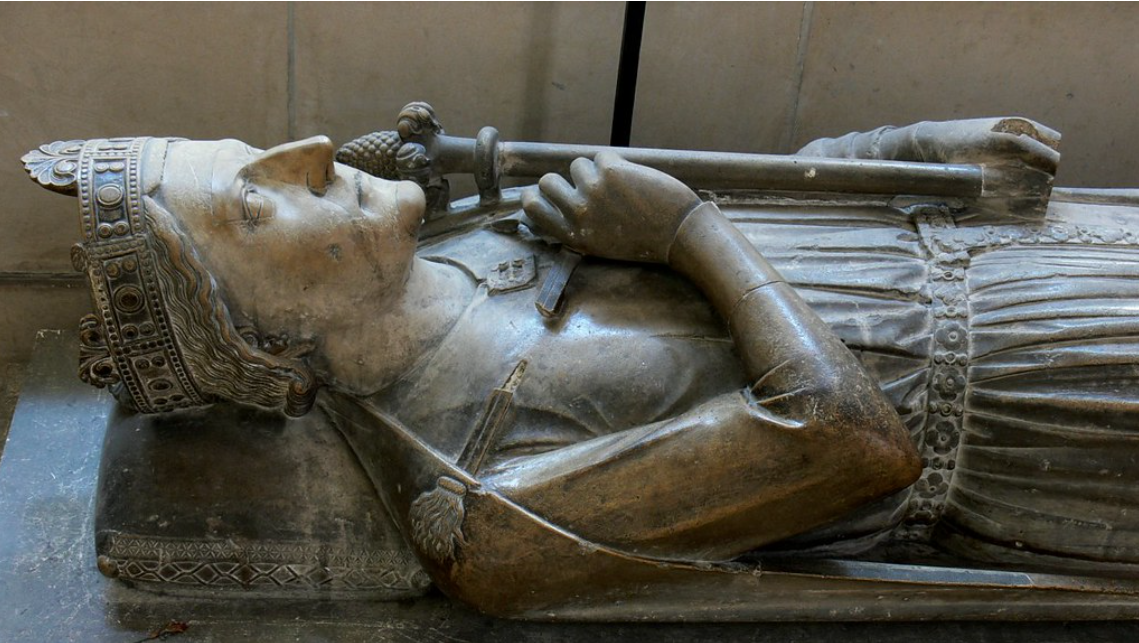
Picture: “King Richard I tomb” by Walwyn is licensed under CC BY-NC 2.0.
Courtesy of Openverse.org
John: The King with a Negative Reputation
King John of England, reigning from 1199 until he died in 1216, is often remembered as one of the most controversial monarchs in English history. His reign was marked by significant conflicts, both domestically and abroad, leading to the loss of English territories in France and the historic signing of the Magna Carta, a document that has come to symbolize the rule of law and the limits of royal authority.
Early Reign and Loss of Territories
John inherited a vast empire but was quickly embroiled in conflict with King Philip II of France, the Papacy, and his own English barons. His early reign saw the loss of Normandy and other key territories in France, significantly diminishing the Angevin Empire established by his father, Henry II, and maintained by his brother, Richard the Lionheart. These losses were largely due to John’s military failures and his mismanagement of alliances and territories.
Conflict with the Church
John’s reign was further troubled by his dispute with Pope Innocent III over the appointment of the Archbishop of Canterbury. The disagreement led to the Pope placing England under an interdict in 1208 and excommunicating John in 1209. The conflict was resolved in 1213 when John made a submission to the papacy, recognising the Pope’s overlordship over England in exchange for the lifting of the interdict and his excommunication. This move was deeply unpopular with his barons, as it seemed to undermine the kingdom’s independence.
The Magna Carta
The most enduring legacy of John’s reign is undoubtedly the Magna Carta, sealed at Runnymede in 1215. This foundational document was the result of the escalating conflict between the king and his barons, who were frustrated by his heavy taxation and arbitrary justice. The Magna Carta established principles that the king was subject to the law and that citizens had certain unalienable rights, laying the groundwork for constitutional governance. Though John sought to annul the charter almost immediately with papal support, leading to the First Barons’ War, the Magna Carta’s principles survived and were reaffirmed by his successors.
Death and Succession
King John’s final years were marked by continued unrest and military campaigns aimed at regaining lost territories and quelling rebellion among the barons. He died in October 1216, possibly from dysentery, while still engaged in the First Barons’ War. His death led to the accession of his nine-year-old son, Henry III, under whom the Magna Carta was reissued, and peace was gradually restored.
Legacy
John’s reputation as a king has been largely negative, portrayed as a tyrant by contemporaries and later historians alike. His reign is often cited as a cautionary tale of the dangers of unchecked royal power. Despite his failings, the Magna Carta’s issuance during his reign had a profound impact on the development of legal and constitutional principles in England and beyond, influencing the course of democratic governance.

Picture: “Richard III, King of England, Uncle of Elizabeth of York, Great Uncle of Henry VIII” by lisby1 is marked with Public Domain Mark 1.0.
Courtesy of Openverse.org
The Second Barons War and the Battle of Lewes: Henry III
The Battle of Lewes occurred on 14th May 1264 and was a pivotal moment in the Second Barons’ War in England. The conflict arose from a deep-seated dissatisfaction with the rule of King Henry III, which was compounded by his failure to adhere to the Provisions of Oxford, the set of constitutional reforms demanded by the barons to limit royal authority and ensure greater administrative efficiency.
Background
The tensions between Henry III and his barons had been escalating for years, largely due to the king’s financial demands to fund his ambitions in Sicily and his favouritism towards his foreign relatives and allies. Simon de Montfort, Earl of Leicester, emerged as the leader of the baronial opposition, advocating for significant reforms to curb the king’s power and enhance the role of the nobility and commoners in governance.
The Battle
The Battle of Lewes was fought near the town of Lewes in Sussex, England. Simon de Montfort’s forces, though outnumbered, were well-disciplined and strategically positioned. They managed to surprise Henry III’s army, securing a significant victory. The battle saw the capture of King Henry III and his son, Prince Edward (later King Edward I), effectively placing the country under de Montfort’s control.
Aftermath
The victory at Lewes led to the Mise of Lewes[20], a settlement that reinforced the Provisions of Oxford and gave Simon de Montfort the power to govern in Henry’s name. This period saw the calling of a parliament in 1265, which was notable for including not only nobles but also representatives from the boroughs, setting a precedent for the future composition of the English Parliament.
However, the triumph was short-lived. The royalist forces, led by Prince Edward, regrouped and defeated de Montfort’s army at the Battle of Evesham in 1265, resulting in de Montfort’s death and the reestablishment of royal authority. Despite this, the Battle of Lewes and the subsequent events significantly influenced the development of parliamentary democracy in England by demonstrating the power of the nobility and commoners to check royal authority and influence governance.
Disaster: Henry VI’s Reign
Henry VI’s reign was marked by significant challenges and instability, leading to his deposition twice and eventual murder. The reasons for this included:
- Mental Health and Leadership: Henry VI experienced periods of mental illness, during which he was incapable of governing. His bouts of incapacity and generally weak leadership created power vacuums, leading to nobility factions vying for control. His inability to assert strong leadership contributed to the loss of English territories in France, diminishing his standing among the nobility and the populace.
- Losses in France: Henry VI’s reign saw the near-complete loss of the English territories in France, a significant blow to English prestige and power. These losses were partly due to the resurgence of the French under Charles VII, aided by figures like Joan of Arc, but were also attributed to Henry’s ineffective leadership and military strategy.
- Wars of the Roses: The dynastic conflicts known as the Wars of the Roses emerged from disputes over his succession, given his incapacity and lack of a male heir until late in his reign. The House of York challenged the Lancastrian hold on the throne, leading to widespread civil unrest and conflict. Henry’s weak rule and the factionalism at court provided the impetus for the Yorkist claims.
- First Deposition (1461): Henry VI was first deposed in 1461 after the Battle of Towton, a decisive Yorkist victory. Edward IV of the House of York claimed the throne, citing Henry’s inability to govern and the losses in France as justification.
- Brief Restoration (1470-1471): Henry VI was briefly restored to the throne in 1470 during a period known as the Readeption of Henry VI, thanks to the efforts of Richard Neville, Earl of Warwick, and conflicts within the Yorkist leadership. However, this restoration was short-lived.
- Second Deposition and Murder (1471): Edward IV regained power in 1471, leading to Henry’s final deposition. Henry VI was imprisoned in the Tower of London, where he died in May 1471. It is widely believed that he was murdered to eliminate any further Lancastrian claims to the throne, ensuring the Yorkist hold on power.

16th-century portrait of Henry (National Portrait Gallery, London)
Citation: Henry VI of England. (2024, March 14). In Wikipedia. https://en.wikipedia.org/wiki/Henry_VI_of_England
Attribution: National Portrait Gallery, Public domain, via Wikimedia Commons
Henry VI’s tragic life and his reign were marked by periods of instability and conflict, culminating in his murder, which underscored the brutal realities of political power struggles during the Wars of the Roses.
The ‘Provisions of Oxford’: An Explanation
The Provisions of Oxford, established in 1258, were a series of reforms and governmental regulations imposed upon King Henry III of England by a group of his barons. These reforms were a response to widespread dissatisfaction with the king’s rule, particularly his financial mismanagement, his failure in foreign policies, and his favouritism towards his foreign relatives and allies.
The Provisions were agreed upon during a council held in Oxford and are considered one of the earliest examples of constitutional reform in England. The key features of the Provisions of Oxford included:
- Restriction of Royal Power: The Provisions sought to limit the king’s authority by mandating that he govern with the advice of a council of barons rather than at his own discretion.
- Establishment of a Council: A council of 15 barons was established to advise the king and oversee the administration. This council was to meet three times a year to ensure the king adhered to the provisions.
- Parliamentary Meetings: The Provisions called for Parliaments to be held three times a year, where grievances could be addressed, and national affairs could be discussed. This was a precursor to the more structured parliamentary system that would develop later.
- Appointment of Officials: The Provisions required that key royal officials, such as the justiciar, chancellor, and treasurer, be appointed with the approval of the barons’ council, reducing the king’s control over important positions.
The Provisions of Oxford were revolutionary in that they attempted to establish a form of shared governance and accountability for the king, laying the groundwork for the constitutional monarchy that would develop in England. However, the Provisions were short-lived. By 1261, with papal support, King Henry III had repudiated the Provisions of Oxford, leading to the outbreak of the Second Barons’ War (1264-1267). Despite their failure to enact lasting change at the time, the Provisions of Oxford are seen as a significant first step towards the establishment of parliamentary democracy in England.
The Assize of Clarendon
The Assize of Clarendon, enacted in 1166, was a crucial legal reform introduced by King Henry II of England, marking a significant development in the English legal system. This set of regulations was established following a council held at Clarendon Palace, near Salisbury, with the primary aim of strengthening the king’s control over the administration of justice across England.
The key features and implications of the Assize of Clarendon include:
- Establishment of Jury System: One of the most significant contributions of the Assize was the establishment of a precursor to the modern jury system. It mandated the formation of a jury of local men in each county to investigate crimes and report on them to the royal justices. This was a move away from the earlier, more arbitrary methods of trial and evidence, such as trial by ordeal or combat.
- Centralisation of Justice: The Assize facilitated the centralisation of judicial authority under the king, as it allowed royal justices to oversee the enforcement of laws based on the investigations conducted by the local juries. This reduced the influence of local lords over legal matters and increased the crown’s power.
- Standardisation of Legal Processes: By laying down specific procedures for the investigation and prosecution of crimes, the Assize of Clarendon helped standardise legal processes across England. This was a step toward the development of a more uniform and fair legal system.
- Expansion of Royal Courts: The Assize contributed to the expansion and importance of royal courts as central places for the administration of justice, further diminishing the role of feudal courts.
- Focus on Serious Crimes: The Assize primarily targeted serious crimes, such as robbery, murder, and theft. It prescribed methods for the apprehension and trial of suspects, including provisions for the seizure of their property and the use of torture for obtaining confessions in certain cases.
- Impact on English Legal Tradition: The procedures established by the Assize of Clarendon laid the groundwork for subsequent legal reforms and were instrumental in the evolution of the common law. Its emphasis on evidence-based verdicts through the use of juries influenced the development of the legal principle that an accused is presumed innocent until proven guilty.
In summary, the Assize of Clarendon represents a pivotal moment in the history of English law, introducing reforms that would shape the judicial landscape for centuries to come. Its emphasis on the jury system and the centralization of legal authority under the monarchy were crucial steps in the development of a legal system that valued evidence and standardised procedures over arbitrary judgment.
A Large and Bloody Battle – Towton 1461
The Battle of Towton, fought on 29th March 1461 during the Wars of the Roses, is considered one of the largest and bloodiest battles on English soil. It took place in a snowstorm on Palm Sunday near Towton in Yorkshire. This battle was a decisive conflict between the forces of the House of York, led by Edward IV, and the House of Lancaster, led by Henry VI, although Henry did not participate in the battle himself.
Background
The Wars of the Roses were a series of dynastic conflicts for the throne of England, marked by the rivalry between the houses of York and Lancaster, both branches of the royal House of Plantagenet. The immediate cause of the battle was the claim to the throne by Edward IV of York, which was contested by the reigning Lancastrian king, Henry VI.

Edward’s presence was crucial to Yorkist victory at Towton.
Citation: Battle of Towton. (2024, January 20). In Wikipedia. https://en.wikipedia.org/wiki/Battle_of_Towton
Attribution: Based on the signatures (see File:John Quartley’s Battle of Towton.jpg), engraved by Charles Oliver Murray(1842–1923)[1] after John Quartley (fl. 1835–67),[2], Public domain, via Wikimedia Commons
The Battle
The battle was characterised by its sheer scale, the ferocity of the combat, and the appalling weather conditions. Estimates of the numbers involved vary widely, with figures ranging up to 75,000 men. The Yorkist forces employed a strategic manoeuver, feigning retreat to draw the Lancastrians into a disadvantageous position before launching a counterattack.
The fighting was brutal and prolonged, lasting around 10 hours. The Lancastrians were eventually overwhelmed, partly due to the arrival of Yorkist reinforcements. The fleeing Lancastrians were pursued by the Yorkists, leading to massive casualties. The use of the landscape, particularly the River Cock, contributed to the high death toll, as many Lancastrians were killed or drowned in their attempt to escape.
Aftermath
The casualty figures for the Battle of Towton are believed to be exceptionally high, with contemporary accounts suggesting that as many as 28,000 men died, although modern estimates suggest slightly lower numbers. This represented a significant portion of the fighting men of England at the time.
The victory at Towton secured Edward IV’s position on the throne, leading to his coronation and the establishment of Yorkist control over England for the next decade. The battle effectively decimated the Lancastrian leadership and significantly weakened their ability to challenge Yorkist dominance, although the Wars of the Roses would continue intermittently for several more decades.
The Battle of Towton stands out in the annals of English history for its brutality, the extreme conditions under which it was fought, and its decisive role in the Wars of the Roses, marking a turning point in the struggle for control of the English throne.
Extinction
The male line of the House of Plantagenet is considered extinct. The last Plantagenet king, Richard III, died without a legitimate male heir.
The Wars of the Roses were fought between two rival branches of the House of Plantagenet: the House of Lancaster[21] and the House of York[22], both of which were descended from King Edward III of England. The conflict arose from the claims to the throne by these two houses, both seeking to secure the line of succession through their respective Plantagenet lineage.
The House of Lancaster was descended from John of Gaunt, the third surviving son of Edward III, while the House of York was descended from both the fourth son, Edmund of Langley, and through the female line from the second surviving son, Lionel of Antwerp. This complex genealogy led to competing claims and a protracted series of conflicts, which ultimately ended with the emergence of the Tudor dynasty after the Battle of Bosworth Field in 1485. Henry Tudor, who became Henry VII (see below), was himself a descendant of the Lancastrians, thus uniting the feuding houses through his marriage to Elizabeth of York, which symbolically ended the dynastic wars.
Marriage to Elizabeth of York
When Henry VII became the king of England, there were 18 relatives from the Plantagenet dynasty who, based on lineage, could have been considered to have a more legitimate claim to the throne than him. By the year 1510, this situation was further complicated as 16 more children from the Yorkist branch of the family were born, potentially strengthening the claims against Henry. However, Henry VII managed to address and somewhat neutralise these challenges through his marriage to Elizabeth of York, the oldest daughter of Edward IV. This union meant that all of their offspring would be direct heirs to both the Lancastrian and Yorkist claims, merging the two lines. The historian Polydore Vergil even remarked on the strong physical and character resemblance between Henry VIII, one of Henry VII’s children, and his grandfather Edward IV. According to Vergil, just as the people of England dearly beloved Edward IV, so was Henry VIII, who inherited his grandfather’s looks, noble qualities, and generosity, making him highly celebrated and esteemed by the English populace.
Noteworthy (1): The Influence of William Shakespeare on the Perception of the Plantagenets
William Shakespeare’s history plays, written at the turn of the 16th century, have had a profound impact on the way the Plantagenet kings and their reigns are perceived. These plays not only provide entertainment but also offer a narrative that has shaped historical understanding and cultural attitudes toward these medieval monarchs. The key Plantagenet kings depicted in Shakespeare’s works include Richard II, Henry IV, Henry V, and Richard III, among others, each characterised in a manner that blends historical events with dramatic embellishments.
Richard II
In “Richard II,” Shakespeare presents a monarch who is politically inept and disconnected from his subjects. The play explores themes of power, identity, and the divine right of kings, portraying Richard’s eventual downfall and the rise of Henry Bolingbroke (Henry IV) as a commentary on leadership and the fragility of authority. Richard II’s character is often seen as flawed and tragic, a king who loses touch with reality and his people, leading to his deposition and murder.
Henry IV
The plays “Henry IV, Part 1” and “Henry IV, Part 2” delve into the reign of Henry IV, focusing on his struggle to maintain power amidst rebellion and internal conflict. These plays also introduce one of Shakespeare’s most beloved characters, Prince Hal (later Henry V), and his journey from a wayward prince to a responsible heir. The character of Henry IV is depicted as a complex figure, one who wrestles with guilt over his seizure of the throne from Richard II and faces challenges both from his adversaries and his own son.
Henry V
“Henry V” is often celebrated as a patriotic play that showcases the young king’s transformation from a prodigal prince to a capable and inspiring leader. The play highlights Henry’s military achievements, most notably the Battle of Agincourt, and his ability to unify and motivate his men. Shakespeare portrays Henry V as the ideal monarch, heroic and just, a ruler who combined courage with wisdom and earns the respect of both his followers and his enemies.
Richard III
In “Richard III,” Shakespeare introduces a villainous monarch, a character that has become synonymous with manipulation and treachery. The play covers Richard’s bloody rise to power and his short reign, marked by deceit, murder, and intrigue. Shakespeare’s Richard III is a masterful depiction of evil, a king who uses his cunning and ruthlessness to achieve his ambitions, ultimately leading to his downfall and the end of the Plantagenet dynasty.
Shakespeare’s history plays have been instrumental in crafting the legacy of the Plantagenet kings, merging historical facts with dramatic fiction to create compelling narratives that have endured for centuries. These plays not only reflect the political and social dynamics of Shakespeare’s England but also continue to influence perceptions of English history and monarchy. Through his portrayal of these medieval kings, Shakespeare offers insights into the nature of power, leadership, and the human condition, themes that remain relevant today.
Noteworthy (2): William Marshal – the Greatest Knight of the Plantagenet Era
He served at the right hand of five English monarchs and helped negotiate Magna Carta’s Terms, but often is barely remembered: William Marshal, also known as William the Marshal (1146/1147 – 1219), was one of the most prominent and respected figures in medieval English history. Born into the Anglo-Norman nobility, Marshal rose from relatively modest beginnings to become a key figure in the courts of several English kings, including Henry II, Richard I (the Lionheart), John, and Henry III. He served as a knight, military commander, and statesman, earning a reputation as the epitome of chivalry and knighthood:
- Early Life and Rise to Fame: William Marshal’s early life set the stage for his legendary career. He initially served in the household of his cousin, William de Tancarville, where he received training in the arts of war and chivalry. His prowess in tournaments and battles quickly became apparent, making him a celebrated figure across Europe.
- Service to Kings: Marshal’s loyalty and military skills brought him into the service of several English monarchs. He was a staunch supporter of King Henry II and played a crucial role in the turbulent reign of King Henry’s son, King Richard I, participating in the Third Crusade and acting as a capable administrator and warrior. Under King John, despite their differences, Marshal’s loyalty to the crown remained unwavering, and he was instrumental in the negotiations leading to the signing of the Magna Carta in 1215, a document that would become a cornerstone of English liberty.
- Regent to Henry III: Perhaps the pinnacle of William Marshal’s career came after the death of King John in 1216, when he was appointed as the regent for the nine-year-old Henry III. In this capacity, he was responsible for defending the kingdom against both internal rebellions and foreign invasions, notably leading the royalist forces to victory at the Battle of Lincoln in 1217. His governance helped stabilize England during a period of significant upheaval.
- Legacy: William Marshal’s death in 1219 marked the end of an era. He was buried in the Temple Church in London, a testament to his association with the Knights Templar and his enduring legacy as a paragon of knighthood. His life was notably chronicled in the “History of William Marshal,” a contemporary biography that provides a valuable insight into the life of this remarkable man and the medieval society in which he lived.
Marshal’s legacy is that of a true knight, embodying the virtues of chivalry, loyalty, and honour. His remarkable life story reflects the complexities and the political dynamics of medieval England, and his contributions to English history have made him a legendary figure, often referred to as the “greatest knight” of his age. His support for the Plantagenet kings was rooted in a combination of loyalty, duty, political wisdom, and personal ambition, reflecting the complex interplay of feudal obligations and individual agency in medieval Europe. His career spanned the reigns of several Plantagenet monarchs, each of whom he served with a loyalty that became legendary.
There are several reasons why Marshal supported the Plantagenet kings, including:
- Feudal Loyalty and Oath of Fealty: As a knight and nobleman in medieval England, William Marshal was bound by the feudal system, which was based on a series of reciprocal legal and military obligations among the warrior nobility. Knights and nobles swore oaths of fealty (allegiance) to their lords in exchange for protection and the grant of lands to live off. Marshal’s initial allegiance to the Plantagenets would have been partly due to these feudal obligations.
- Personal Honour and Chivalric Ideals: Marshal was renowned for his adherence to the chivalric code, which emphasized honour, valour, and loyalty. Supporting his king was not only a feudal obligation but also a matter of personal honour. Throughout his life, Marshal demonstrated a commitment to these ideals, earning him respect and fame as the embodiment of knighthood.
- Political and Social Advancement: Supporting the reigning monarchs could bring significant rewards, including lands, titles, and influence. For William Marshal, his loyalty and service to the Plantagenet kings facilitated his rise from a landless knight to the Regent of England. This relationship was mutually beneficial; the kings relied on Marshal’s military prowess and wise counsel, while Marshal’s status and wealth grew.
- Stability and Governance: Marshal’s support for the Plantagenet kings was also motivated by a desire for stability and effective governance. During times of rebellion or invasion, he often played a key role in defending the realm and maintaining order. His support was crucial in times of crisis, such as during the reign of King John when the monarchy faced rebellion and the threat of invasion, leading to the sealing of the Magna Carta, an event in which Marshal played a significant role.
Loyalty Across Reigns
William Marshal served under several Plantagenet kings, adapting his loyalty as the crown passed from one monarch to another. This adaptability was a testament to his commitment to the institution of the monarchy and the well-being of the realm, rather than to any single monarch’s personal agenda.
In essence, William Marshal’s support for the Plantagenet kings was a reflection of his character, his understanding of feudal obligations, and his strategic approach to navigating the complex political landscape of medieval England. His life and career illustrate how individual loyalty and service could influence the broader course of history in the feudal age.
Conclusions
Analytical Insights
The Plantagenet dynasty, spanning over three centuries, profoundly shaped the trajectory of English history. Their governance laid the groundwork for the modern British state, introducing legal reforms that have endured through the ages. The establishment of the Magna Carta under King John, despite its immediate context of baronial rebellion, set a precedent for the rule of law that transcended its time, influencing the development of constitutional monarchies worldwide. The concept of a king bound by the laws of the land—a notion novel for the 13th century—echoes in today’s democracies.
Edward I’s Model Parliament of 1295, inviting commoners alongside the nobility, planted the seeds for a representative government, underscoring the gradual shift from absolute monarchy to a more inclusive form of governance. Moreover, the legal and administrative reforms initiated by the Plantagenets, particularly under Henry II, streamlined the judicial process, contributing to the foundation of English Common Law.
The legacy of the Plantagenets, however, is not without its complexities. The dynasty’s internal conflicts and the devastating Wars of the Roses illustrate the volatility inherent in feudal monarchies and the struggles for power that defined medieval politics. These internecine conflicts paved the way for the Tudor consolidation of power, signalling a shift towards a more centralized state.
Engagement with Historiography
Historians’ perspectives on the Plantagenets are varied and often contentious, particularly regarding figures like Richard III, whose reputation has oscillated between that of a malevolent usurper and a misunderstood monarch. The Richard III Society and other revisionist historians argue that Richard’s vilification was largely the work of Tudor propagandists, notably Thomas More and William Shakespeare. In contrast, traditional accounts draw on contemporaneous sources portraying Richard as a schemer who usurped the throne from his nephews.
The Magna Carta’s significance, too, has been a subject of historical debate. While some view it as the cornerstone of English liberty and democracy, others argue that its immediate impact was limited, primarily serving the interests of the baronial elite. It was only over centuries, through reinterpretation and reinvention, that the Magna Carta came to be seen as a symbol of universal rights and justice.
Comparative Insights and Lesser-Known Facts
Comparing the Plantagenets to contemporary European dynasties, such as the Capetians in France or the Hohenstaufens in the Holy Roman Empire, reveals common challenges of medieval rule, including feudal tensions, territorial disputes, and the balancing act between royal authority and the rights of the nobility. Like their Plantagenet counterparts, these dynasties navigated the complexities of expanding territorial control, managing vassal relations, and consolidating power.
Lesser-known facts about the Plantagenets add colour to their historical narrative. For instance, Henry II’s court was a cultural hub, attracting scholars, poets, and artists from across Europe, reflecting the dynasty’s role in the flowering of medieval culture. Another intriguing aspect is the legal system introduced by Henry II, such as the Assize of Clarendon, which laid the foundations for jury trials.
The Plantagenets’ architectural legacy, including the construction of iconic structures such as the Tower of London and Westminster Abbey, reflects their enduring influence on English cultural and historical landscapes. These contributions, alongside the dynasty’s pivotal role in shaping the English legal system and governance, underscore the Plantagenets’ complex legacy—a blend of conquest, conflict, and cultural flourishing that has indelibly marked the annals of English history.
A Recap in Simple Terms
Imagine a really long time ago in England, there was a family called the Plantagenets who were in charge for over 300 years. They were like the captains of a ship but for the whole country. This family had a lot of kings, and they did a bunch of important things:
- Henry II was like the builder. He married a queen who had a lot of land, making him super powerful. He also made rules so that people had to follow the law, which made things fairer.
- Richard the Lionheart was like a superhero king who went on big adventures to faraway lands to fight religious injustices.
- King John wasn’t liked very much because he made people pay a lot of money and lost some battles. But, he had to sign a very important paper called the Magna Carta, which was like saying even the king has to follow the rules.
- Edward I was like a builder and a knight; he built castles in Wales and tried to win Scotland, too. He also started something called the Model Parliament, inviting more people to help make decisions, kind of like a very early version of a group project.
- Edward III thought he should be king of France as well as England. It started a very, very long fight called the Hundred Years’ War.
- His grandson, Henry V, was famous for winning a big battle during this war.
But, not everything was perfect. The kings didn’t always get along with their families or the other nobles. They had some serious family arguments that led to a big fight called the Wars of the Roses. Imagine two sides of the family wearing different coloured roses, red and white, and having a huge tug-of-war over who gets to be king.
In the end, the last Plantagenet king, Richard III, lost his crown to Henry Tudor, which started a new chapter with the Tudor family in charge.
So, the Plantagenets were like a family that had a lot of bosses who did big things – some good, some not so good. They built castles, fought in big battles, and made laws that are still important today. They’re like a mix of builders, warriors, and rule-makers who lived in a time of knights and castles.
CAUTION: This paper is compiled from the sources stated but has not been externally reviewed. Parts of this paper include information provided via artificial intelligence which, although checked by the author, is not always accurate or reliable. Neither we nor any third parties provide any warranty or guarantee as to the accuracy, timeliness, performance, completeness or suitability of the information and materials covered in this paper for any particular purpose. Such information and materials may contain inaccuracies or errors and we expressly exclude liability for any such inaccuracies or errors to the fullest extent permitted by law. Your use of any information or materials on this website is entirely at your own risk, for which we shall not be liable. It shall be your own responsibility to ensure that any products, services or information available through this paper meet your specific requirements and you should neither take action nor exercise inaction without taking appropriate professional advice. The hyperlinks were current at the date of publication.
Sources and Further Reading
Web Sources:
- https://en.wikibooks.org/wiki/Wikijunior:Kings_and_Queens_of_England/The_Plantagenets
- https://en.wikipedia.org/wiki/Battle_of_Bosworth_Field
- https://eurohistoryjournal.blogspot.com/2024/02/the-plantagenet-family-tree-intriguing.html
- https://military-history.fandom.com/wiki/House_of_Plantagenet
- https://simple.wikipedia.org/wiki/House_of_Plantagenet
- https://www.bbc.co.uk/teach/class-clips-video/history-gcse-the-plantagenets/z6tfhcw
- https://www.britannica.com/topic/house-of-Plantagenet
- https://www.englishmonarchs.co.uk/plantagenet_18.htm
- https://www.historyofengland.net/kings-and-queens/the-plantagenets-1154-1485-introduction
- https://www.theguardian.com/lifeandstyle/2011/aug/13/great-dynasties-plantagenets
- https://www.worldhistory.org/collection/66/the-plantagenets/
Books:
- A Great and Terrible King: Edward I and the Forging of Britain, by Marc Morris, available from https://www.amazon.co.uk/Great-Terrible-King-Forging-Britain/dp/0099481758/
- Agincourt: Battle of the Scarred King, by Dr Michael Livingston (Author), Bernard Cornwell (Foreword), available from https://www.amazon.co.uk/Agincourt-Scarred-Dr-Michael-Livingston/dp/1472855205/
- Agincourt: Henry V and the Battle That Made England, by Juliet Barker, available from https://www.amazon.co.uk/Agincourt-Henry-Battle-That-England/dp/0316015040
- Agincourt: The Fight for France, by Ranulph Fiennes, available from https://www.amazon.co.uk/Agincourt-France-Ranulph-Fiennes-Sir/dp/1681773228
- Blood Roses: The Houses of Lancaster and York Before the Wars of the Roses, by Kathryn Warner, available from https://www.amazon.co.uk/Blood-Roses-Houses-Lancaster-before/dp/0750994851/
- Edward I: A New King Arthur?, by Andy King, available from https://www.amazon.co.uk/Edward-Penguin-Monarchs-King-Arthur/dp/0141978775
- Edward II: The Unconventional King, by Kathryn Warner, available from https://www.amazon.co.uk/Edward-II-Unconventional-Kathryn-Warner/dp/1445650541
- Edward III and the Triumph of England: The Battle of Crécy and the Order of the Garter, by Richard Barber, available from https://www.amazon.co.uk/Edward-III-Triumph-England-Company/dp/0141020679/
- Edward III: A Heroic Failure, by Jonathan Sumption, available from https://www.amazon.co.uk/Edward-III-Penguin-Monarchs-Failure/dp/0141988673/
- Fatal Colours: Towton 1461 – England’s Most Brutal Battle, by George Goodwin, available from https://www.amazon.co.uk/Fatal-Colours-Towton-Englands-Brutal/dp/0753828170
- Henry II, by Wilfred Lewis Warren, available from https://www.amazon.co.uk/Henry-II-Wilfred-Lewis-Warren/dp/0520022823/
- Henry III: A Simple and God-Fearing King, by Stephen Church, available from https://www.amazon.co.uk/Henry-III-Penguin-Monarchs-God-Fearing/dp/024138043X
- Henry V and the Conquest of France 1416-53, by Paul Knight, available from https://www.amazon.co.uk/Henry-Conquest-France-1416-53-Men-at-Arms/dp/185532699X
- Henry V: The Conscience of a King, by Malcolm Vale, available from https://www.amazon.co.uk/Henry-V-Conscience-King-Vale/dp/0300270070/
- Henry VI, by Bertram Wolffe, available from https://www.amazon.co.uk/Henry-English-Monarchs-Bertram-Wolffe/dp/0300089260
- King John: Treachery, Tyranny and the Road to Magna Carta, by Marc Morris, available from https://www.amazon.co.uk/King-John-Treachery-Tyranny-Magna/dp/0099591820/
- Lancaster and York: The Wars of the Roses, by Alison Weir, available from https://www.amazon.co.uk/Lancaster-York-Wars-Roses-Alison/dp/B00C6OS1YK/
- Magna Carta (Penguin Classics), by Prof David Carpenter (Author), available from https://www.amazon.co.uk/Magna-Carta-Penguin-Classics-Carpenter/dp/0241953375/
- Richard II: A True King’s Fall, by Kathryn Warner, available from https://www.amazon.co.uk/Richard-II-True-Kings-Fall/dp/1445694417/
- Richard III and the Princes in the Tower, by Alison Weir, available from https://www.amazon.co.uk/Richard-Princes-Tower-Alison-Weir/dp/1784700045
- Richard III: England’s Most Controversial King, by Chris Skidmore, available from https://www.amazon.co.uk/Richard-III-Englands-Most-Controversial/dp/1250045487
- The Fears of Henry IV: The Life of England’s Self-Made King, by Ian Mortimer, available from https://www.amazon.co.uk/Fears-Henry-IV-Englands-Self-Made/dp/1844135292
- The First Plantagenets: The Kings that Made Britain, by Derek Wilson, available from https://www.amazon.co.uk/Plantagenets-Kings-That-Made-Britain/dp/1782069410/
- The Greatest Knight: The Remarkable Life of William Marshal, the Power Behind Five English Thrones, by Thomas Asbridge, available from https://www.amazon.co.uk/Greatest-Knight-Remarkable-William-Marshal/dp/1471196445/
- The Hollow Crown: The Wars of the Roses and the Rise of the Tudors, by Dan Jones, available from https://www.amazon.co.uk/Hollow-Crown-Wars-Roses-Tudors/dp/0571288081/
- The Hundred Years War: A People’s History, by David Green, available from https://www.amazon.co.uk/Hundred-Years-War-Peoples-History/dp/0300216106
- The Hundred Years War: The English in France 1337-1453, by Desmond Seward, available from https://www.amazon.co.uk/Brief-History-Hundred-Years-War/dp/1841196789/
- The Hundred Years War: Volume 1: Trial by Battle, by Jonathan Sumption, available from https://www.amazon.co.uk/Trial-Battle-Hundred-Years-Vol/dp/0571200958/
- The Hundred Years War: Volume 2: Trial by Fire, by Jonathan Sumption, available from https://www.amazon.co.uk/Hundred-Years-War-Vol-Trial/dp/0571207375/
- The Hundred Years War: Volume 3: Divided Houses, by Jonathan Sumption, available from https://www.amazon.co.uk/Hundred-Years-War-Vol-Divided/dp/0571240127
- The Hundred Years War: Volume 4: Cursed Kings, by Jonathan Sumption, available from https://www.amazon.co.uk/Hundred-Years-War-Vol-Cursed/dp/0571274544
- The Last White Rose: The Secret Wars of the Tudors, by Desmond Seward, available from https://www.amazon.co.uk/Last-White-Rose-Secret-Tudors/dp/1849019800
- The Longbow, by Mike Loades, available from https://www.amazon.co.uk/Longbow-Weapon-Mike-Loades/dp/1782000852
- The Origins of the English Parliament 924-1327, by J.R. Maddicott, available from https://www.amazon.co.uk/Origins-Parliament-924-1327-Maddicott-2010-07-01/dp/B01JXSNRUY
- The Plantagenets: The Kings Who Made England, by Dan Jones (Author), available from https://www.amazon.co.uk/gp/product/0007213948/
- The Plantagenets: The Kings Who Made England, by Dan Jones, available from https://www.amazon.co.uk/Plantagenets-Dan-Jones/dp/0007213948/
- The Plantagenets: The Kings That Made Britain by Derek Wilson, available from https://www.amazon.co.uk/Plantagenets-Kings-That-Made-Britain/dp/1782069410/
- The Plantagenets: The Warrior Kings and Queens Who Made England, by Dan Jones, available from https://www.amazon.co.uk/Plantagenets-Warrior-Kings-Queens-England/dp/0143124927
- The Reign of Richard Lionheart: Ruler of The Angevin Empire, 1189-1199, by Ralph V. Turner, available from https://www.amazon.co.uk/Reign-Richard-Lionheart-1189-1199-Medieval/dp/0582256593
- The Road to Bosworth Field: A New History of the Wars of the Roses, by Trevor Royle, available from https://www.amazon.co.uk/Road-Bosworth-Field-Lancaster-1400-1487/dp/0316727679
- The Time Traveler’s Guide to Medieval England: A Handbook for Visitors to the Fourteenth Century, by Ian Mortimer, available from https://www.amazon.co.uk/Time-Travellers-Guide-Medieval-England/dp/1845950992/
- The Wars of the Roses: England’s First Civil War, by Trevor Royle, available from https://www.amazon.co.uk/Wars-Roses-Englands-First-Civil/dp/034911790X/
- The Wars of the Roses: Peace and Conflict in 15th Century England, by John Gillingham, available from https://www.amazon.co.uk/Wars-Roses-John-Gillingham/dp/1724025023/
- The Wars of the Roses: The Fall of the Plantagenets and the Rise of the Tudors, by Dan Jones, available from https://www.amazon.co.uk/Wars-Roses-Fall-Plantagenets-Tudors/dp/0143127888
- The Wars of the Roses: Through the Lives of Five Men and Women of the Fifteenth Century, by Desmond Seward, available from https://www.amazon.co.uk/Wars-Roses-Through-Fifteenth-Century/dp/0670842583/
End Notes and Explanations
- Source: Compiled from my research using information available at the sources stated throughout the text, together with information provided by machine-generated artificial intelligence at: bing.com [chat] and https://chat.openai.com. Text used includes that on Wikipedia websites is available under the Creative Commons Attribution-ShareAlike License 4.0; additional terms may apply. By using those websites, I have agreed to the Terms of Use and Privacy Policy. Wikipedia® is a registered trademark of the Wikimedia Foundation, Inc., a non-profit organisation. ↑
- Explanation: The term “cadet branches” refers to the lines of descent from younger sons or descendants of a royal or noble family, as opposed to the senior line which descends from the eldest son. These branches are considered “junior” and often do not inherit the main title or estate of the family, but may inherit or be granted secondary titles, lands, or positions. The term is derived from the French word “cadet” for a younger son.
In the context of the Plantagenets, a prominent royal dynasty in England that ruled from the mid-12th to the late 15th century, the two cadet branches refer to the House of Lancaster and the House of York. Both of these families descended from the sons of Edward III, King of England, who was a member of the Plantagenet dynasty. The Lancasters descended from John of Gaunt, Edward’s fourth son, while the Yorks descended from Edward’s third son, Lionel of Antwerp, and also from Edward’s fourth son, Edmund of Langley, through intermarriage and complex lineage. These two branches were central figures in the Wars of the Roses, a series of civil wars fought for control of the throne of England. ↑
- Explanation: The Hundred Years’ War (1337-1453) was a prolonged conflict between England and France, marked by several phases of warfare interspersed with periods of truce and uneasy peace. The main issues at stake were territorial disputes and claims to the French throne by English monarchs, starting with Edward III. The war saw the rise of significant military innovations and the decline of chivalry and feudal armies in favor of professional soldiers. It concluded with the French recapturing most of the territories controlled by the English on the continent, significantly weakening English influence in France, and establishing France as a strong centralised state. ↑
- Source: https://www.englishmonarchs.co.uk/plantagenet_18.htm ↑
- Source: Book Title: The Plantagenets: The Warrior Kings and Queens Who Made England↑
- Explanation: Wars of the Roses (1455-1485) was a series of dynastic conflicts fought between supporters of two rival branches of the royal Plantagenet family: the House of Lancaster (associated with a red rose) and the House of York (associated with a white rose). The wars were fought over control of the English throne and were characterised by several periods of warfare and political maneuvering. The conflict ended with the victory of the Lancastrian Henry Tudor, who defeated Richard III at the Battle of Bosworth Field, married Elizabeth of York to unite the two houses, and established the Tudor dynasty as Henry VII. ↑
- Explanation: The Battle of Bosworth Field (22nd August 1485) was the decisive battle in the Wars of the Roses, which resulted in the defeat and death of King Richard III of the House of York and the ascent of Henry Tudor (Henry VII) of the House of Lancaster to the throne. This battle effectively ended the Wars of the Roses and marked the beginning of the Tudor dynasty, which would rule England for over a century. The victory of Henry VII also symbolised the end of the medieval period in England and the start of the Renaissance and the early modern period. ↑
- Explanation: The Model Parliament is a term used to describe the English Parliament summoned by King Edward I in November 1295. It is considered “model” because it set a precedent for later Parliaments, including representatives from a broader segment of English society than had previously been included in such gatherings. This particular Parliament is seen as an important step in the development of the parliamentary system in England because it included not only the nobility and clergy but also commoners, represented by knights from the shires and burgesses from the towns and cities. The inclusion of these commoners was significant because it meant that the Parliament now more fully represented the English population, a concept that would evolve into the modern democratic principle of representative government. The Model Parliament was called in the context of Edward I’s expensive military campaigns in Wales, Scotland, and overseas, which required substantial funding that he sought to legitimize and secure through broader consensus and support.
The structure established during the Model Parliament laid foundational principles for the future, including the division into two houses — the House of Commons and the House of Lords — that characterises the British Parliament today. The Model Parliament is thus seen as a critical moment in the evolution of parliamentary democracy, contributing to the shaping of political representation and the relationship between the monarchy and the people. ↑
- Explanation: The Black Death was a devastating global epidemic of bubonic plague that struck Europe and Asia in the mid-14th century, peaking in Europe between 1347 and 1351. It killed an estimated one-third of Europe’s population, significantly affecting the continent’s social, economic, and cultural landscape. The plague was caused by the bacterium Yersinia pestis, transmitted to humans through the bite of infected fleas carried by black rats, leading to widespread mortality and profound impacts on medieval society. ↑
- Explanation: The Black Prince is a posthumous nickname given to Edward of Woodstock, Prince of Wales (1330–1376), the eldest son of King Edward III of England and Philippa of Hainault. He was an exceptional military leader and one of the most celebrated figures of the Hundred Years’ War between England and France. Despite never becoming king himself—he died before his father, Edward III—the Black Prince played a crucial role in the early stages of the Hundred Years’ War and left a significant impact on English military history. ↑
- Explanation: The Peasants’ Revolt, also known as Wat Tyler’s Rebellion, was a major uprising across large parts of England in 1381. It was sparked by socio-economic and political tensions following the Black Death, high taxes imposed due to the ongoing Hundred Years’ War, and widespread dissatisfaction with the feudal system, including harsh labor laws and serfdom. The revolt was notable for its scale and the direct challenge it posed to royal authority. Led by figures such as Wat Tyler, John Ball, and Jack Straw, the rebels marched on London, presenting demands for the abolition of serfdom and other reforms. The rebellion was eventually suppressed by King Richard II and his nobles, but it marked a significant early protest against feudal injustices and had lasting impacts on English society and governance. ↑
- Explanation: The Battle of Agincourt took place on 25th October 1415, during the Hundred Years’ War between England and France. Under King Henry V, the English army achieved a decisive victory against a numerically superior French force. The battle is renowned for its demonstration of the effectiveness of the English longbow, which played a critical role in the victory. Fought near Agincourt (now Azincourt) in northern France, the battle occurred after Henry V had renewed the English claim to the French throne and invaded France. Despite the English army being exhausted, outnumbered, and suffering from disease after a siege at Harfleur, Henry’s forces utilized the longbow to devastating effect against the heavily armored French knights and nobility, who were bogged down in the muddy battlefield.
The English victory at Agincourt decimated the French military aristocracy, significantly shifted the momentum of the Hundred Years’ War in favor of England, and immortalized Henry V as one of England’s greatest warrior kings. The battle has been celebrated in English history and culture, notably in William Shakespeare’s play “Henry V,” which dramatizes Henry’s campaign in France and the victory at Agincourt. ↑
- Explanation: The term “readeption” refers to the restoration of a monarch or ruler to the throne after having been deposed or exiled. It’s a somewhat rare and specific term, used particularly in the context of English history to describe the return of King Henry VI to the throne of England during the Wars of the Roses. Henry VI was initially deposed by Edward IV of the House of York, but in a turn of events in 1470, he was restored to the throne for a brief period known as the Readeption of Henry VI. This period was short-lived, however, as Edward IV regained the throne in 1471, leading to Henry VI’s final deposition and eventual death in the Tower of London. The term captures the idea of reclaiming or re-assuming a position of power or authority that had been lost. ↑
- Explanation: The Battle of Bannockburn, fought on 23rd and 24th June 1314, near Stirling, Scotland, was a significant Scottish victory during the First War of Scottish Independence against England. Led by King Robert the Bruce of Scotland against King Edward II of England, this battle marked a pivotal moment in Scotland’s struggle for independence. Edward II marched north with a large army, intending to relieve the besieged Stirling Castle, a strategic point controlling access to the highlands. Robert the Bruce, with a smaller but highly motivated and well-prepared force, met the English army at Bannockburn. Utilizing the terrain to his advantage and employing superior tactics, Bruce managed to surround the English forces. The Scottish army’s decisive victory was characterised by the effective use of schiltron formations—dense groupings of spearmen—to counter the English cavalry. The defeat at Bannockburn severely weakened English claims over Scotland and demonstrated Scotland’s capability to achieve independence. It also solidified Robert the Bruce’s position as a national leader and hero. The battle remains a symbol of Scottish national pride and a key event in Scotland’s historical narrative of independence. ↑
- Explanation: Edward III’s decision to launch the Hundred Years’ War against France in 1337 was influenced by several factors, primarily revolving around territorial rights, feudal disputes, and the question of sovereignty. The main reasons include:
Claims to the French Throne
Edward III’s mother, Isabella of France, was the sister of three French kings: Louis X, Philip V, and Charles IV. When the last of these brothers died in 1328 without a male heir, the French throne passed to Philip VI, the first Valois king, under the application of the Salic Law, which precluded inheritance through the female line. However, Edward III, through his mother, claimed a right to the French throne, arguing that he had a superior claim to Philip VI. This claim was the formal pretext for the war, especially after diplomatic efforts failed to resolve the dispute.
Control Over Gascony
Gascony, in southwestern France, was held by the kings of England but was a fiefdom of the French crown. The tension over the duchy’s status and Edward’s refusal to pay homage to Philip VI for it exacerbated the conflict. Philip’s efforts to assert control over Gascony threatened English interests, and led to further friction between the two monarchs.
Commercial Interests and Alliances
The wool trade was vital for the English economy, with much of it passing through Flanders, which was part of France but had strong economic ties with England. The French attempted to disrupt this trade as part of their broader conflict with England. Additionally, the complex network of European alliances often put England and France on opposite sides of regional disputes, further straining relations.
Maritime Incidents
There were several maritime incidents between English and French ships, leading to escalating tensions at sea. These skirmishes over shipping rights and piracy contributed to the deterioration of relations between the two countries.
Broader Ambitions
Edward III’s personal ambitions and the desire to assert his authority and expand his territories played a significant role. The notion of chivalric warfare and the pursuit of glory on the battlefield were important aspects of medieval kingship, influencing Edward’s decision-making.
The combination of all these factors led Edward III to claim the French throne and launch a series of campaigns that would evolve into the Hundred Years’ War, a prolonged conflict that shaped the medieval history of both England and France. ↑
- Explanation: The Order of the Garter is the oldest and most prestigious order of chivalry in the United Kingdom, founded by King Edward III in 1348. Legend has it that the order was inspired by an incident at a ball where the king picked up a garter that fell from the leg of Joan, Countess of Salisbury, and tied it around his own leg, uttering the phrase, “Honi soit qui mal y pense” (“Shame on him who thinks evil of it”). This became the motto of the order.
The Order of the Garter is dedicated to the image and arms of St. George, the patron saint of England. Its membership is limited to the sovereign, the Prince of Wales, and no more than 24 companion members, though royal family members and foreign monarchs can also be appointed. The order’s members are selected by the sovereign and are typically people who have held public office, contributed to national life, or served the sovereign personally.
The Order of the Garter’s spiritual home is St. George’s Chapel at Windsor Castle, where members are honored with plaques and stall plates that commemorate their membership. The order’s ceremonies and rituals, including the annual Garter Day procession, are among the most elaborate and traditional in the British honours system. ↑
- Explanation: Richard II died in captivity at Pontefract Castle, located in West Yorkshire, England, in February 1400. After being deposed by his cousin Henry Bolingbroke, who became Henry IV, Richard II was initially held at the Tower of London before being moved to Pontefract Castle. It was there that Richard’s life came to a mysterious end, with the exact circumstances of his death remaining a matter of historical speculation. Some sources suggest he may have been starved to death, while others propose that he died under less direct circumstances. His death marked the end of his direct line of the Plantagenet dynasty, paving the way for the Lancastrian kings. ↑
- Explanation: In relation to Henry IV, the Percys were one of the most powerful noble families in England and played a significant role in the political and military turmoil of his reign. The family’s full title was the Percy Family of Northumberland, and they were influential landowners in the north of England. Their prominence during Henry IV’s reign is largely due to their involvement in a series of rebellions against the king, known collectively as the Percy Rebellion or the Revolt of 1403.
The most notable members of the Percy family involved in these events were:
Henry Percy (1341-1408), 1st Earl of Northumberland: A key supporter of Henry Bolingbroke (Henry IV) in his bid to dethrone Richard II, Northumberland expected to be rewarded for his support. However, he became disillusioned with Henry IV’s rule, partly due to grievances over lands and titles and the king’s policies.
Henry Percy (1364-1403), nicknamed “Hotspur,” son of the 1st Earl: Renowned for his bravery and military prowess, Hotspur became one of the leading figures in the rebellion against Henry IV. His grievances also stemmed from issues of land, the handling of the Scottish borders, and the detention of Edmund Mortimer.
The Percys, initially supporters of Henry IV during his usurpation of the throne from Richard II, became disillusioned with his rule for several reasons, including disputes over the ransom and custody of Scottish prisoners taken at the Battle of Homildon Hill (1402), and Henry’s perceived ingratitude and failure to adequately reward them for their support in his accession to the throne. The climax of their discontent was the Battle of Shrewsbury in 1403, where Henry IV’s forces defeated the rebels. Hotspur was killed in the battle, and the Earl of Northumberland subsequently faced temporary disgrace but later rebelled again. The Percy family’s opposition to Henry IV underscored the fragility of his reign and the challenges he faced from the nobility. ↑
- Explanation: The Treaty of Troyes was a significant agreement signed on 21st May 1420, during the latter stages of the Hundred Years’ War between England and France. This treaty was remarkable because it essentially disinherited the legitimate heir to the French throne, the Dauphin Charles (later Charles VII), in favor of Henry V of England and his heirs. According to the terms of the treaty:
Henry V was married to Catherine of Valois, the daughter of King Charles VI of France.
Henry V was recognised as the heir and regent of France, which meant that upon the death of Charles VI, Henry would become the ruler of both England and France.
The agreement was made partly due to the French king’s mental illness and the influence of the Burgundian faction in France, which was in conflict with the Armagnac faction, supporters of the Dauphin.
The treaty aimed to end the conflict between the two kingdoms and establish a unified rule under Henry V and his descendants. However, the death of Henry V in 1422, shortly before that of Charles VI, complicated the situation. Henry VI of England, Henry V’s infant son, was proclaimed King of France and England, but the Dauphin Charles continued to contest his claim. This led to further hostilities and ultimately, the eventual recognition of Charles VII as the king of France after his coronation in 1429, significantly aided by Joan of Arc’s efforts, marking the decline of English power in France. ↑
- Explanation: The phrase The Mise of Lewes was an agreement reached in 1264 after the Battle of Lewes during the Second Barons’ War in England. This conflict was primarily between King Henry III and a group of rebel barons led by Simon de Montfort, Earl of Leicester. The barons were dissatisfied with the King’s rule, particularly his financial mismanagement and disregard for the Provisions of Oxford, a set of reforms agreed upon in 1258 aimed at limiting royal authority and increasing baronial influence over governance.
After Simon de Montfort’s victory at the Battle of Lewes, where King Henry III was captured, the Mise of Lewes was established as a sort of peace agreement. While not a detailed treaty, it essentially confirmed the barons’ control over the government and reinforced the Provisions of Oxford by ensuring that the governance of the country would be conducted according to these earlier reforms. The Mise of Lewes thus represented a temporary resolution to the conflict, emphasizing the need for the monarchy to adhere to the principles set out in the Provisions of Oxford, including the consultation with and consent of the barons in matters of state.
However, this agreement did not bring a lasting peace, as tensions and conflicts continued, leading to further confrontations and the eventual defeat of the baronial forces at the Battle of Evesham in 1265. ↑
- Explanation: The House of Lancaster is one of the cadet branches of the Plantagenet dynasty, which became a central player in the Wars of the Roses, the series of English civil wars fought for control of the throne of England. The Lancastrian claim to the throne originated from John of Gaunt, the 1st Duke of Lancaster, who was the third surviving son of King Edward III. The symbol associated with the Lancasters is the red rose.
The House of Lancaster came to the English throne in 1399 when Henry Bolingbroke, a grandson of Edward III through John of Gaunt, deposed his cousin Richard II to become Henry IV. This established the Lancastrian line of kings, which included his son Henry V, famed for his victory at the Battle of Agincourt in 1415 during the Hundred Years’ War, and Henry VI, whose reign saw the loss of English territories in France and the eruption of the Wars of the Roses against the rival House of York.
The House of Lancaster’s claim to the throne was contested by the House of York, leading to the Wars of the Roses. Despite initial victories and the reign of Henry VI, the Lancastrians were eventually defeated. The turning point came with the death of Prince Edward of Westminster, Henry VI’s son, at the Battle of Tewkesbury in 1471, and the murder of Henry VI himself, extinguishing the male line of the Lancastrian claim to the throne.
The conflict between the Lancasters and the Yorks was eventually resolved through the marriage of Henry Tudor, a Lancastrian claimant, to Elizabeth of York, which united the two houses and ended the Wars of the Roses. Henry Tudor’s ascent to the throne as Henry VII in 1485 marked the beginning of the Tudor dynasty and a period of relative peace and stability in England. ↑
- Explanation: The House of York is another significant cadet branch of the royal Plantagenet family, emerging as a key player during the Wars of the Roses, a series of English civil wars for control of the throne of England against their rivals, the House of Lancaster. The Yorkist claim to the throne originated from both Edward III’s younger sons: Lionel of Antwerp, Duke of Clarence, and Edmund of Langley, Duke of York, though primarily through the latter line. The symbol associated with the House of York is the white rose.
The House of York came prominently into play in the mid-15th century with Richard, Duke of York, who was a direct descendant of both Lionel and Edmund. He initially contested the weak rule of Henry VI of the House of Lancaster, claiming a better royal bloodline descent and, therefore, a superior claim to the throne. This contest over legitimacy sparked the Wars of the Roses.
Richard, Duke of York, was killed in the Battle of Wakefield in 1460, but his cause was taken up by his sons. Edward, Earl of March, succeeded in defeating the Lancastrians to become King Edward IV in 1461, marking the first time the Yorkist dynasty held the throne. His reign saw a temporary restoration of stability and economic growth but was marred by internal conflicts within the York family and external threats from the Lancastrians.
Edward IV’s death in 1483 led to a brief and controversial reign of his young son, Edward V, who was deposed by his uncle, Richard III, the last Yorkist king. Richard’s rule was short-lived; he was defeated and killed at the Battle of Bosworth Field in 1485 by Henry Tudor (Henry VII), a Lancastrian claimant, effectively ending the Yorkist line and the Wars of the Roses. Henry VII’s marriage to Elizabeth of York symbolically united the two houses, marking the end of the conflict and the beginning of the Tudor dynasty.
The House of York, with its distinct lineage and claim to the throne, played a central role in one of the most tumultuous and defining periods in English history, leaving a lasting legacy on the political landscape of England. ↑
